Quiet Luxury Outfit Formulas Editors Swear By for Polished Style
Forget logos: the outfit formulas fashion editors actually reach for prioritize precise tailoring, neutral palettes, and fabric quality over anything with a monogram.
There is a particular kind of dressing that communicates wealth without announcing it, where the fit of a trouser or the drape of a coat says more than any brand name stitched to a lapel. Quiet luxury, as a sensibility, has moved well past trend status into something editors treat as a baseline uniform: a set of repeatable outfit formulas built on tailoring, restraint, and materials that speak for themselves.
Fashion editor and style writer Natalie Dixon laid out the specific combinations that define this approach, and what makes them worth examining is not their novelty but their precision. These are not vague suggestions about "investing in basics." They are specific pairings rooted in silhouette logic, fabric hierarchy, and the kind of tonal discipline that separates a genuinely polished look from one that simply lacks pattern.
The Case for Neutral Architecture
The foundation of every quiet luxury formula is a committed neutrals palette: ivory, camel, stone, slate, chocolate, and the particular shade of off-white that reads as intentional rather than faded. What makes this work as a system rather than a limitation is the way neutrals allow texture to carry the visual weight. A camel coat over an ivory knit over sand-coloured wide-leg trousers reads as a complete, considered outfit precisely because the eye moves across surfaces rather than colours. The tonal layering asks more of your fabric choices, which is exactly the point.
This is why editors operating in this space invest disproportionately in knitwear and outerwear. A fine-gauge cashmere turtleneck, even an unpretentious one, transforms any combination it enters. The same logic applies to a well-structured coat: proportion and shoulder line do the communicating that a logo otherwise would.
Tailoring as the Non-Negotiable
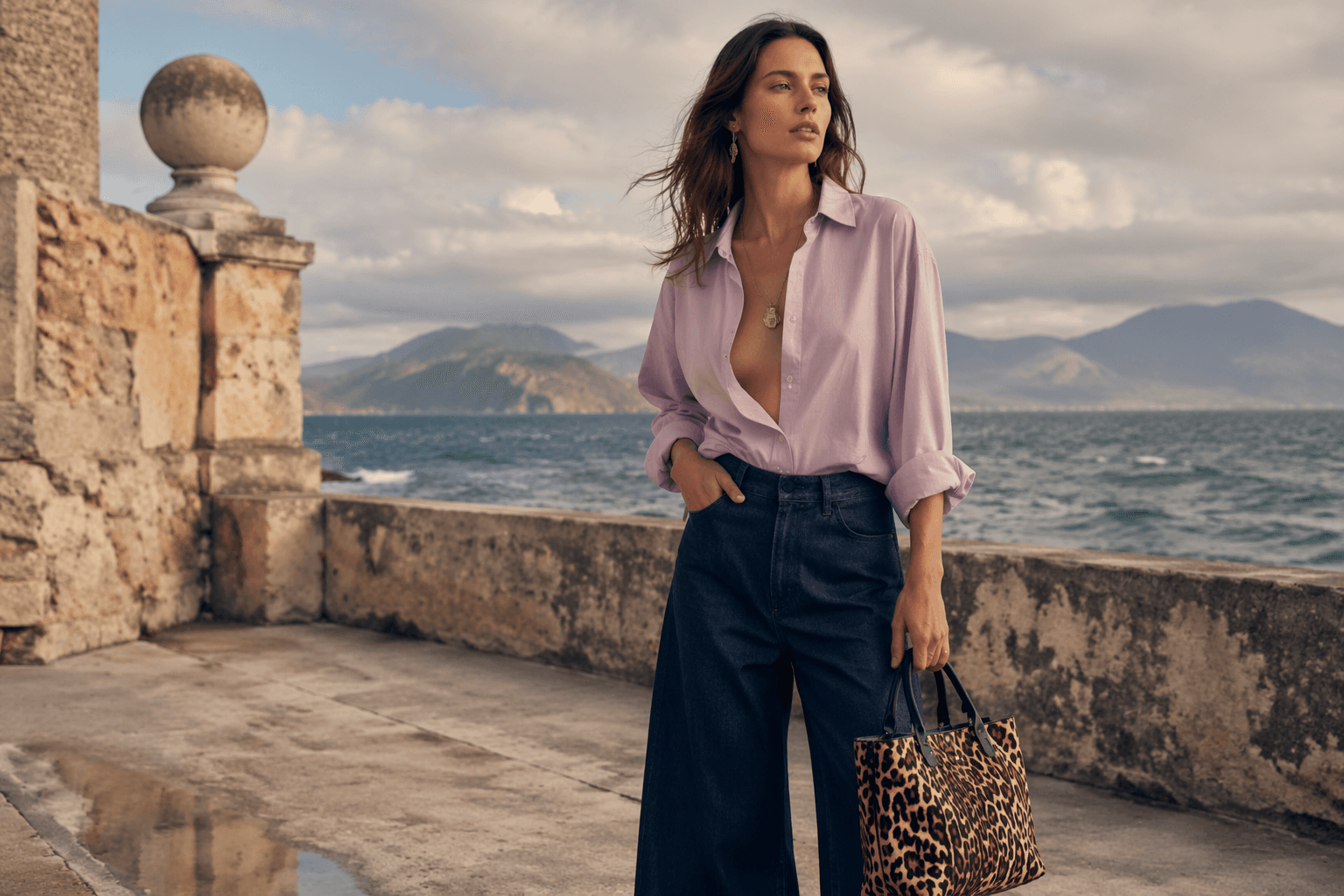
No quiet luxury formula survives poor fit. The entire premise of the aesthetic rests on the idea that the clothes look as though they were made for the body wearing them, not pulled from a rail. Wide-leg trousers work because of where they sit on the waist and how they break at the shoe. A blazer reads as expensive when its shoulder seam lands exactly right and the sleeve length hits the wrist bone with conviction.
This is also why the blazer-as-outfit-anchor formula is so persistent among editors. A single, well-cut blazer in a neutral, seasonless fabric, worn over a simple knit or even a fitted t-shirt, with straight or wide-leg trousers, creates a silhouette that reads as complete. Nothing needs to be added. The tailoring does the work of every accessory you might otherwise feel compelled to reach for.
The Shirt Dress and Its Particular Authority
Among the specific formulas that recur in quiet luxury dressing, the shirt dress holds an almost editorial consensus. In a clean fabric, whether poplin, silk-adjacent viscose, or a crisp linen, at a length that skims the knee or falls just below, it functions as a single-piece solution that already contains its own tailoring logic. Belted or left loose, it signals a kind of ease that more complicated outfits visibly labour toward.
Editors tend to style it with minimal footwear: a clean loafer, a simple leather flat, or a low-heeled mule in a complementary neutral. The restraint is the point. Add one considered accessory, a structured bag, a fine gold chain at the right length, and the formula is complete. Every element is doing precisely its job and nothing more.
Knitwear Tucked Into Everything
The tuck is a quiet luxury signature: a fine knit, cashmere or a quality merino, worn tucked into high-waisted tailored trousers or a midi skirt creates the kind of waist definition that reads as deliberate without appearing to try. It is one of those formulas that looks effortless because the effort is invisible, hidden in the quality of the knit's weight and the cut of the trouser's rise.
A ribbed knit tucked into a pencil skirt in a matching or adjacent neutral is one of the more effective iterations: the monochromatic pull of the pairing creates a long, uninterrupted vertical line that is inherently polished. Alternatively, a wide-leg pant in a fluid fabric, worn with a fine knit tucked and a belt at the waist, creates a proportion that photographs beautifully and reads even better in person.
The Coat as the Whole Argument
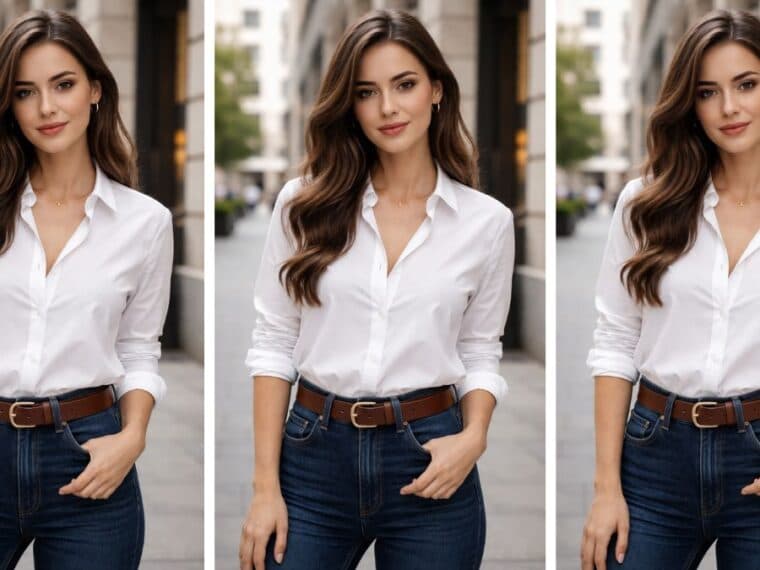
Perhaps the single most powerful quiet luxury formula is the great coat worn over something deliberately simple. A long, structured coat in camel, charcoal, or deep navy placed over a white shirt and straight-leg dark denim creates a look where the coat carries all the weight and the components beneath it need only be clean and well-fitted.
The formula works because it inverts the usual logic of getting dressed: rather than building up to something, you start with the statement, which is the coat, and simplify everything beneath it. The denim need not be precious; the shirt need not be unusual. The coat's construction, fabric, and silhouette do what a more elaborate outfit would do with considerably more effort.
Accessories as Precision Instruments
Quiet luxury editing extends to accessories, where the principle is function over decoration. A structured leather bag in a single, saturated neutral (tan, black, deep cognac) reads more expensively than anything embellished or logo-forward at the same price point. The same is true of footwear: a clean leather loafer in black or tan, or a pointed-toe flat with genuine sole construction, communicates quality through material and shape rather than hardware.
Jewellery in this register is fine and deliberate: a single chain at the right length, a small gold hoop, a thin bangle. The approach treats accessories as punctuation rather than statement, which is what gives the overall look its particular authority. When everything is chosen with this kind of precision, nothing needs to shout.
Why the Formula Approach Works
What makes these outfit combinations repeatable and genuinely useful is that they are built on principles, not product. The quiet luxury formula is not about owning specific pieces from specific houses; it is about understanding how silhouette, proportion, fabric weight, and tonal discipline interact to create the impression of effortless polish.
The editors who dress this way are not working harder to look put-together. They have simply reduced the number of decisions that need making each morning by understanding what combination of elements reliably produces a result. That is, in the end, the most practical argument for quiet luxury: not aspiration, but efficiency.
This article was produced by Prism’s automated news system from verified source data, official records, and press releases, then run through automated quality and moderation checks before publishing. The system is built and supervised by the people who set the standards it runs under. Read our full AI policy.
Did this article answer your question?