Roxy x Miaou revives ’90s surf style with body-confident femininity
Roxy and Miaou turn ’90s surf nostalgia into corseted beach-to-night pieces, with a 14-item capsule, the new Maui Heel and prices around $80 to $250.

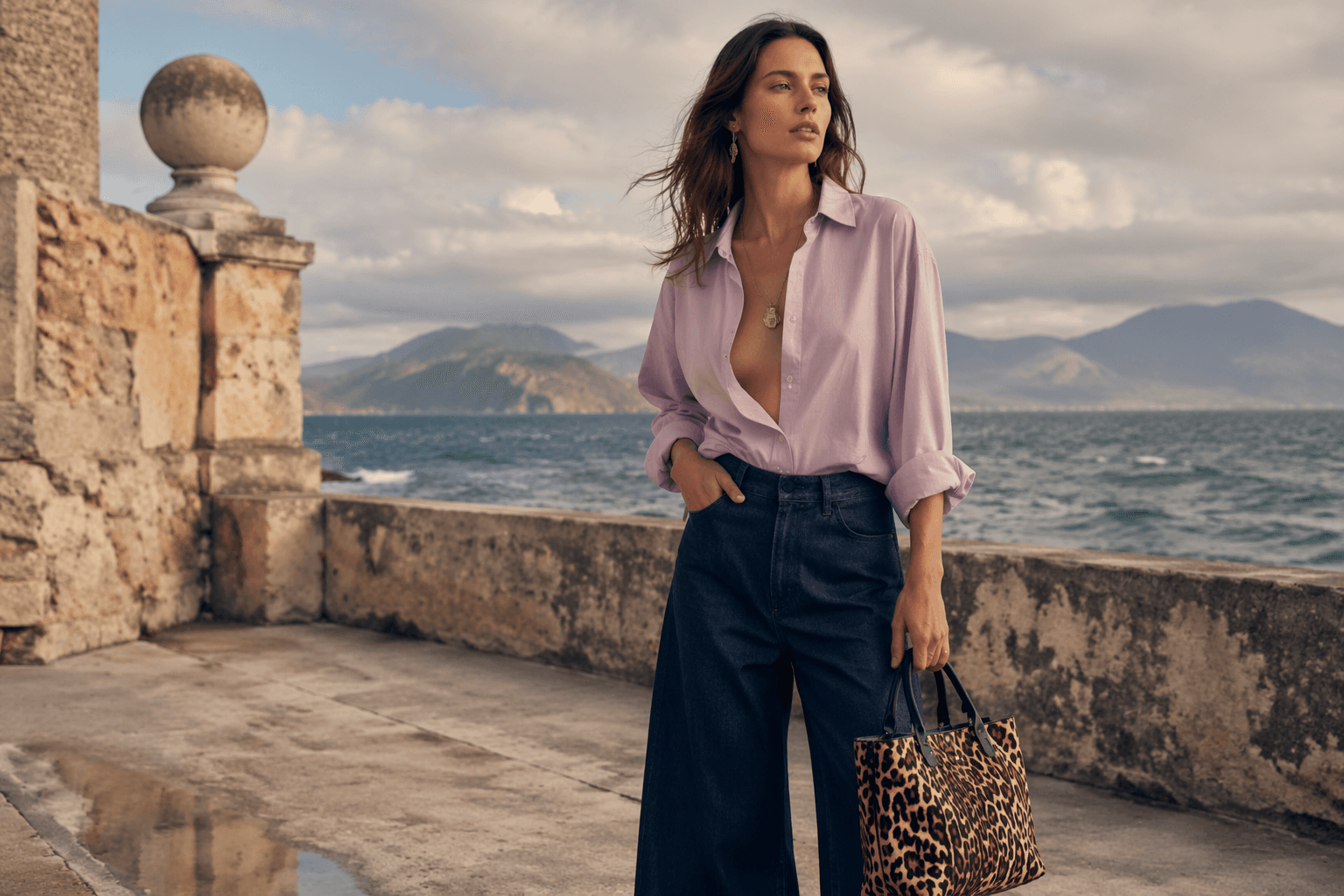
Roxy x Miaou works because it refuses to flatten surf style into nostalgia alone. The 14-piece capsule takes the sun-faded language of ’90s beach dressing and sharpens it with corset seams, lace-up details and Miaou’s first heeled shoe, so the result feels less like resortwear and more like a summer uniform for going out.
Why this collaboration lands now
The pairing makes strategic sense before it even makes aesthetic sense. Roxy carries mass recognition and the kind of surf credibility that comes from being founded in 1990 as the first brand dedicated to female surfers, while Miaou brings the fashion-world shorthand of fit-first, body-aware dressing. Alexia Elkaim built Miaou in 2016 around silhouettes that flatter curves instead of disguising them, and that point of view gives the collaboration its edge.
Miaou founder Alexia Elkaim and Roxy brand lead Danielle Mckenzie met around 2020 through a mutual friend in the surf industry, and the connection shows in the collection’s tone. Mckenzie framed the partnership around “femininity, attitude and this idea of the freedom to be yourself,” while Elkaim pointed to Natalie Linden’s 2008 book Surf Girl Roxy as the spark that made the project feel emotionally specific rather than merely archival. That matters, because the strongest brand collaborations do not just trade logos. They translate memory into something you can actually wear.
Roxy’s legacy gives the capsule cultural weight. Lisa Andersen joined the team in 1994, a reminder that the brand’s history has always been tied to women who changed the image of surf culture from the inside. Miaou brings the opposite kind of authority, the kind that comes from a loyal audience that already trusts its fit, its curve awareness and its sense of how clothing should shape the body. Put together, the brands are speaking to a customer who wants a piece with identity, not another anonymous beach top.

What the 14 pieces actually look like
The collection spans swimwear, ready-to-wear and footwear, and that breadth is part of the point. Rather than stopping at bikinis, Roxy x Miaou builds a small wardrobe around the same idea, using navy, butter yellow and wave- and hibiscus-inspired prints to keep the palette coastal without sliding into cliché. The clothes look beach-born, but they are cut with enough intention to leave the sand behind.
The most revealing pieces are the corset-inspired tops and lace-up board shorts with white piping. Corsetry changes the emotional register immediately. It pulls the collection away from easy, loose resort dressing and toward something more structured, more flirtatious and more self-possessed, while the board shorts keep the surf code intact. That tension is the collection’s biggest strength: it preserves the looseness of beach dressing but gives it a waist, a shape and a point of view.
Miaou’s bestselling Elektra skirt appears here in navy tricot knit, which is exactly the kind of move that turns a collaboration into a wardrobe story. A recognizable silhouette can make the drop feel anchored, but the material and color shift it into Roxy’s world. The shrunken T-shirts and string bikinis continue the surf reference without over-explaining it, letting the palette and proportions do the work.

Then there is the Maui Heel, the collaboration’s most telling piece and Miaou’s first heeled shoe. The sculptural resin wedge thong sandal takes the most familiar beach-shoe shape and lifts it, literally, into something more nightlife-coded. It is the clearest sign that this is not just about recalling surf culture, but about recasting it for a customer who wants her summer wardrobe to travel from daylight to dinner.
The bigger fashion shift behind the drop
This collaboration arrives in step with a broader move back toward surf references, board shorts and beach-to-street codes. The appetite now is for pieces that feel recognizable but not generic, and that is where Roxy x Miaou has an advantage over standard resort capsules. A butterfly-print cover-up may read as seasonal, but a corset top in butter yellow or a resin wedge thong sandal with fashion credibility feels more like a personality statement.
That is also why the body-confident angle matters. The collection’s language of femininity is not soft-focus or precious. It is assertive, cut close to the body and anchored in clothes that understand shape as part of the mood. In a summer market crowded with interchangeable swim sets and safe linen separates, that sense of attitude becomes the differentiator.

Paradise Cove in Malibu gives the campaign the right visual backdrop, with beach light that flatters both the nostalgia and the modernity. Shot against that California setting, the collection reads as if it belongs in a memory and a current outfit at the same time. That balance is rare, and it is exactly why the collaboration feels sharper than a straightforward heritage revival.
Availability, price and the business of the drop
Roxy describes the collaboration as a limited-edition collection available now on the brands’ sites and at select retailers, and one report places the launch on June 17, 2026. Prices are reported to range from about $80 to $250, which keeps the capsule in the accessible-collab lane rather than pushing it into luxury territory. That is a smart position for something built on surf nostalgia, because the audience is being asked to buy into a mood, not just a markup.
The range also signals how collaboration dressing has changed. A collection like this has to feel collectible enough to stand apart, but not so precious that it loses the easy energy that made surf style compelling in the first place. Roxy x Miaou gets that balance right by letting the beach heritage stay visible while giving the clothes enough shape, sex appeal and fashion credibility to read as current.
This article was produced by Prism’s automated news system from verified source data, official records, and press releases, then run through automated quality and moderation checks before publishing. The system is built and supervised by the people who set the standards it runs under. Read our full AI policy.
Did this article answer your question?