Silk scarf dressing becomes summer's most versatile style trick
Silk scarves are stepping out of the accessory category and into dresses, tops, and warm-weather layers that feel sensual, polished, and easy to wear.

Silk scarf dressing has finally found its real moment because it solves the summer dressing dilemma with uncommon grace: it looks light, feels cool, and carries just enough allure to read finished rather than thrown on. What began as a scarf obsession is now a wardrobe language, turning into tops, dresses, belts, and soft accessories that work hardest on vacation, when you want clothes that pack small and photograph beautifully.
Why the scarf has become a garment
The momentum did not appear overnight. Fashionista’s summer 2025 scarf coverage showed Google Trends data with "head scarf" searches at an all-time high and "scarf necklace" searches more than quadrupling that year, which helps explain why the shape feels less like a novelty and more like a habit. By the time scarf details started appearing in spring 2026 dress trends, the idea had already moved beyond the neck and hairline and into the silhouette itself.
That shift matters because scarf dressing has a built-in versatility that most trend pieces lack. Refinery29 previously tracked silk scarves being styled as tops, belts, sarongs, bag handle accessories, and headscarves, which is a useful map of how the trend actually lives in real wardrobes. The appeal is not just visual. It is the way a single piece of silk can change register depending on how you knot it, drape it, or anchor it to the body.
What makes it feel sensual, not just nostalgic
There is a long pop-cultural memory behind the look, and that history keeps it from feeling flimsy. Fashionista tied the scarf-top conversation to Christina Aguilera’s barely-there 2002 VMAs appearance, a reminder that a scarf worn as clothing has always carried a charge. Today, though, the mood is softer and more considered: Copenhagen Fashion Week Spring 2026 coverage pointed to Danish designers doubling down on silk scarves and Y2K aesthetics, which suggests the idea is moving from one-off styling trick into a more complete wardrobe system.
That is also where the mood changes from retro to relevant. Refinery29’s spring 2026 dress-trend coverage described scarf details as part of an antique-inspired, soft, romantic direction, and that is the key distinction for summer 2026. The best versions do not scream "costume"; they skim the body, create movement, and give skin a frame. They are sensual in the most modern way, showing restraint where a lesser trend would overstate itself.
How to wear the look without losing polish
The smartest scarf pieces are the ones that understand underpinnings. A scarf top needs structure somewhere, whether that is a secure halter tie, a built-in lining, or a bra that disappears under the drape, because the elegance of the look depends on control. The same logic applies to scarf dresses: when the fabric is gathered and knotted close to the body, the effect is sleek; when it floats too freely, it can tip from effortless into improvised.
That is why the trend works best when the rest of the styling stays calm. A printed scarf top already delivers pattern, sheen, and movement, so pairing it with simple accessories keeps the eye focused on the silhouette. Think minimal sandals, a clean clutch, and jewelry that does not compete with the knot or print. If the scarf is doing the visual work, everything else should behave like a quiet frame.
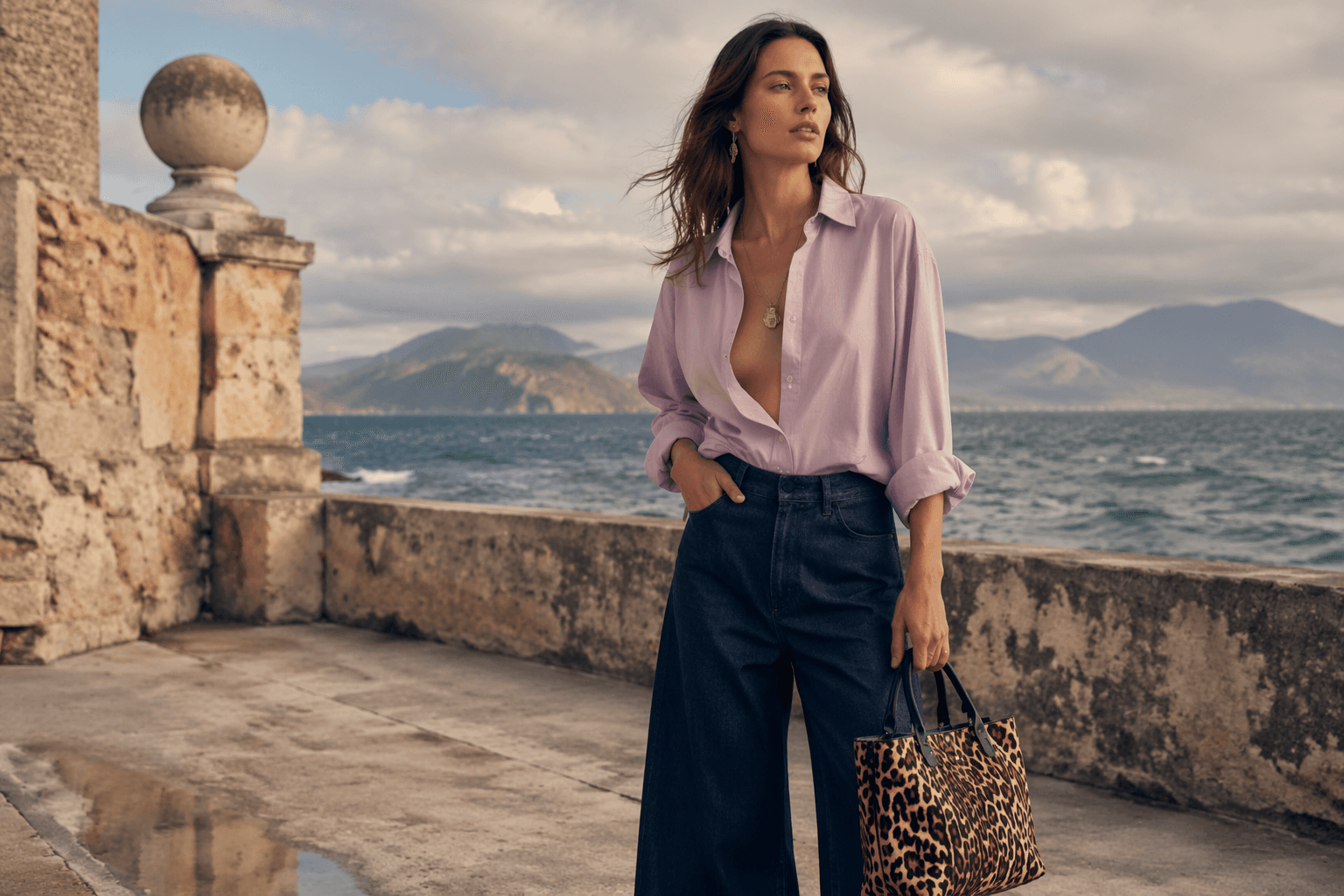
The most useful thing about scarf dressing is how easily it shifts from one occasion to another. A scarf top with wide-leg trousers can take you to dinner; a scarf dress feels right for a beach lunch, a summer wedding after-party, or a city evening when you want bare shoulders without sacrificing polish. Even the more casual interpretations, like a headscarf or a bag-handle wrap, carry the same energy: they sharpen the outfit without adding weight.
The pieces to look for now
The current shopping picture shows how wide the category has become. Fashionista’s 2025 coverage named Hermès, Burberry, Louis Vuitton, Acne Studios, and Lost Pattern among the brands scarf shoppers were gravitating toward, which speaks to the range of price points and style attitudes inside the trend. At the accessible end, Refinery29’s summer 2026 shopping coverage included an H&M blouse with a scarf collar and a Soleil Soleil headscarf, proof that the look can be translated into both full garments and smaller styling gestures.
That range is exactly why scarf dressing feels stronger than a microtrend. You can buy into it with one accessory and learn the language, or go straight to a dress or blouse that builds the drape into the design. The best pieces share the same qualities: fluid silk, thoughtful knotting, and enough structure to keep the silhouette secure while still moving against the body.
How to style prints, texture, and skin
Printed scarves are where the look becomes most editorial, but they also require discipline. A bold print can be beautiful against bare arms, sun-warmed skin, and simple tailoring, yet the surrounding outfit should stay pared back so the pattern reads intentional rather than busy. Neutral bottoms, monochrome layers, and streamlined shoes let the scarf carry the narrative without turning the whole outfit into a collage.
Texture matters too. Silk brings the shine, which is part of the appeal, but the contrast becomes richer when it meets matte cotton, crisp linen, or a smooth leather accessory. That mix makes scarf dressing feel contemporary and grounded, not costume-like. It also makes the look especially effective for summer vacation wardrobes, where one airy piece often has to do the work of several.
The reason scarf dressing is lasting longer than expected is that it offers an old fashion truth in a new form: elegance is often about subtraction. A well-placed knot, a clean shoulder line, and a little silk against the skin can feel more luxurious than a full outfit, and this summer, that is exactly the point.
This article was produced by Prism’s automated news system from verified source data, official records, and press releases, then run through automated quality and moderation checks before publishing. The system is built and supervised by the people who set the standards it runs under. Read our full AI policy.
Did this article answer your question?