Spring 2026's most compelling fashion collaborations turn style into storytelling
Spring 2026's best collaborations wear their ideas lightly, turning pub lore and film memory into clothes worth keeping.
Why these collaborations matter
Jonathan Anderson knows how to make a reference feel like an instinct. In his second collaboration with Guinness, he takes brewery heritage and pub culture out of novelty territory and folds them into a 17-piece wardrobe that feels sturdy, witty, and very much meant to be worn. That is the difference between a collab that lives on a mood board and one that earns closet space: it should sharpen both brands’ identities without turning either into a costume.
The strongest spring partnerships do exactly that. They give you shape, texture, and a point of view, not just a logo exchange. In this round-up, the most convincing collaborations are the ones that translate a world into clothes, then leave enough room for real life inside the fantasy.
JW Anderson x Guinness: workwear with a London pub gloss
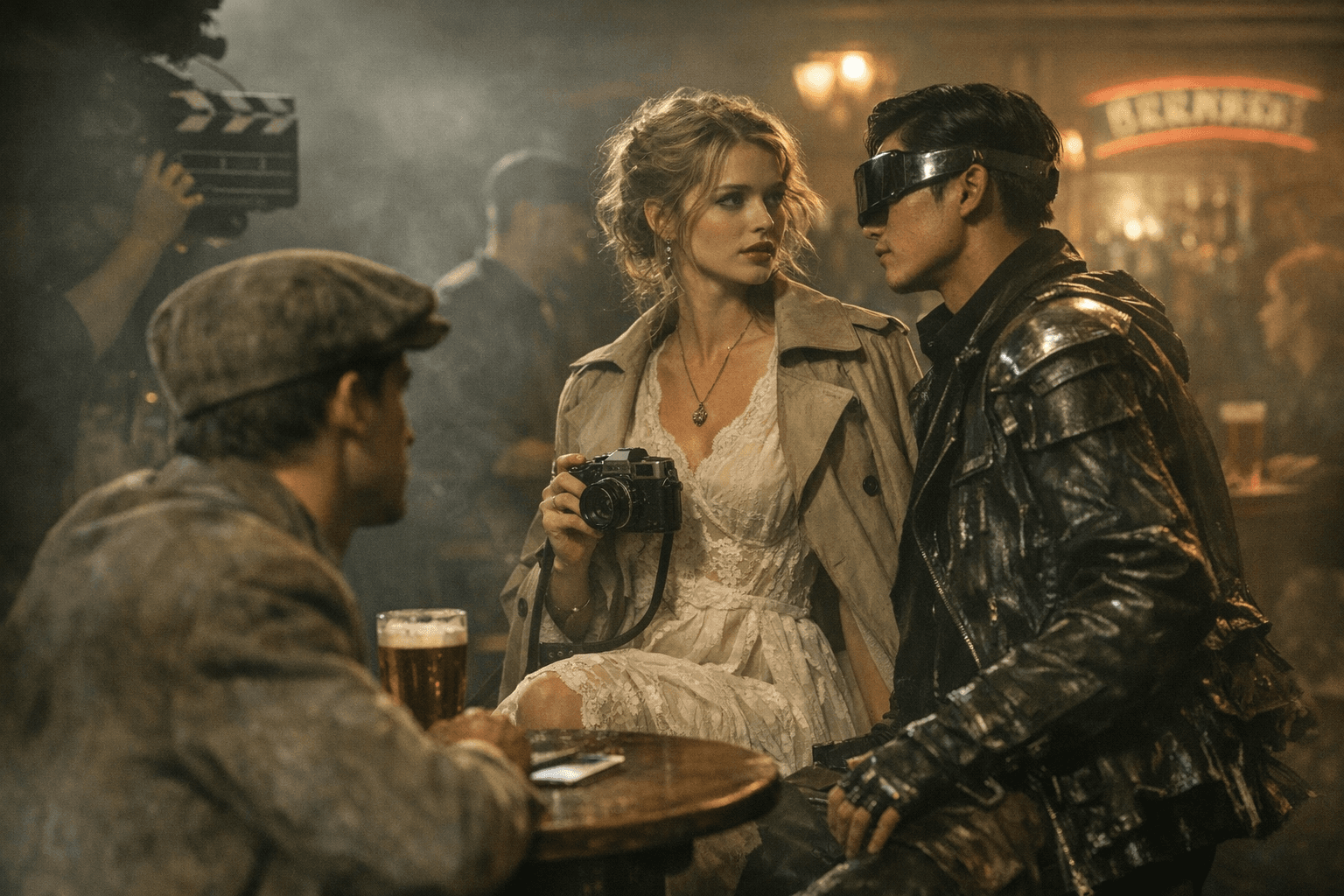
JW Anderson x Guinness is the sort of collaboration that makes sense the second you see it. The pair first linked up in 2024 with a four-piece capsule; this season, they have expanded that idea into a 17-piece collection that reads like a fuller wardrobe rather than a one-note drop. The campaign, fronted by Little Simz and Joe Alwyn and shot at The Devonshire in Soho, gives the clothes a lived-in, late-night energy that suits the concept perfectly.
The design language pulls from vintage brewery uniforms, archival Guinness advertising, and traditional Irish pub culture, but the collection avoids becoming a literal museum of pint-glass references. Instead, it leans into the useful and the characterful: dungarees, workwear jackets, towelling separates, track shorts, scarves, and graphic knitwear. The mood is practical with a bit of theatre, the kind of wardrobe that can move from city pavement to pub banquette without losing its edge.
What makes this collaboration feel especially compelling is the scale of the offering. JW Anderson’s official shop lists it as unisex ready-to-wear and accessories, with prices running from about £200 for T-shirts to £1,295 for the carpet jumper. That spread matters. It creates an entry point for the curious and a collectible tier for the devoted, which is often where a collaboration becomes more than a marketing moment. A bottle-top print T-shirt at £200 feels like a smart, accessible hook. A workwear dungaree at £795 and a carpet jumper at £1,295 move into statement territory, but they do so with enough material personality to justify the leap.
One of the most convincing details is the use of text and print, especially a white shirt that carries a poem first printed in a 1938 Guinness advertisement. That kind of archival quotation gives the collaboration its depth. It is not just borrowing a visual code, it is reviving a piece of cultural memory and letting it live again on a garment you might actually wear.
Tilda Swinton x HADES: a six-piece capsule with the intimacy of an art object
If JW Anderson x Guinness is about pub culture reframed as wearable utility, Tilda Swinton x HADES is about intimacy, authorship, and a more private kind of glamour. Titled Notes from the Precipice, the six-piece collection was developed in close partnership with Swinton over two years, which immediately separates it from the faster, flashier kind of celebrity tie-in. Swinton first came to HADES as a customer, and that origin story matters. It suggests affinity before commerce, which is usually where the most persuasive collaborations begin.
The collection draws inspiration from Swinton herself and from four films in her filmography: Female Perversions, Last of England, Orlando, and Suspiria. That is a rich and coherent frame, because these are not casual references. They point to transformation, restlessness, and a kind of intellectual glamour that HADES, the knitwear label founded by Cassie Holland and Isabel Holland, knows how to handle. All of the text appears in Swinton’s own handwriting, which gives the capsule a diaristic feel, as though each piece carries a private annotation.
The garments themselves keep the scale tight and considered. There are jumpers, hand-screenprinted skirts and dresses, plus two notable firsts for the brand: lighter, looser cotton jumpers and a new bag shape in a cotton-silk blend. That is exactly the sort of evolution a serious collaboration should deliver. It should not simply slap a face onto existing silhouettes. It should produce something the brand had not made before, but would now be expected to make again.
HADES says each piece comes with a zine containing three essays on the films and a manifesto for the protection of U.K. fashion manufacturing. That addition is not just packaging. It gives the project a cultural spine and a sense of commitment to craft that extends beyond the garment itself. The zine makes the capsule feel collectible in the truest sense, not because it is scarce, but because it has context.
The April 30 drop date also places the collaboration firmly in spring’s conversation, but it feels less like a seasonal hit than a small archive in motion. Where some celebrity collaborations feel designed to generate noise, this one feels designed to leave a paper trail.
What makes a collaboration worth the hanger space
The collaborations worth buying are the ones that do three things at once. They must respect both identities, they must introduce something materially new, and they must produce pieces that can survive beyond the campaign image. JW Anderson x Guinness succeeds because it translates brewery lore into clothes with real wardrobe value. HADES succeeds because it turns Tilda Swinton’s presence into an authorship exercise, not a branding exercise.
Together, they show the spectrum of what a fashion collaboration can be. One is broader, more public, and easier to imagine folded into daily dressing. The other is smaller, more literary, and closer to an artist’s edition. Neither feels disposable. Both understand that the best partnerships do not shout their cleverness first. They let the cut, the cloth, and the story do the talking, and that is what makes them last after the fashion-week applause has faded.
This article was produced by Prism’s automated news system from verified source data, official records, and press releases, then run through automated quality and moderation checks before publishing. The system is built and supervised by the people who set the standards it runs under. Read our full AI policy.
Know something we missed? Have a correction or additional information?
Submit a Tip