The Must-Have Clothing Pieces Stylists Never Leave Out of Any Wardrobe (Essentials List)
We wear just 20% of our clothes 80% of the time. These 15 stylist-approved essentials diagnose and fix the 'nothing to wear' problem at its root.
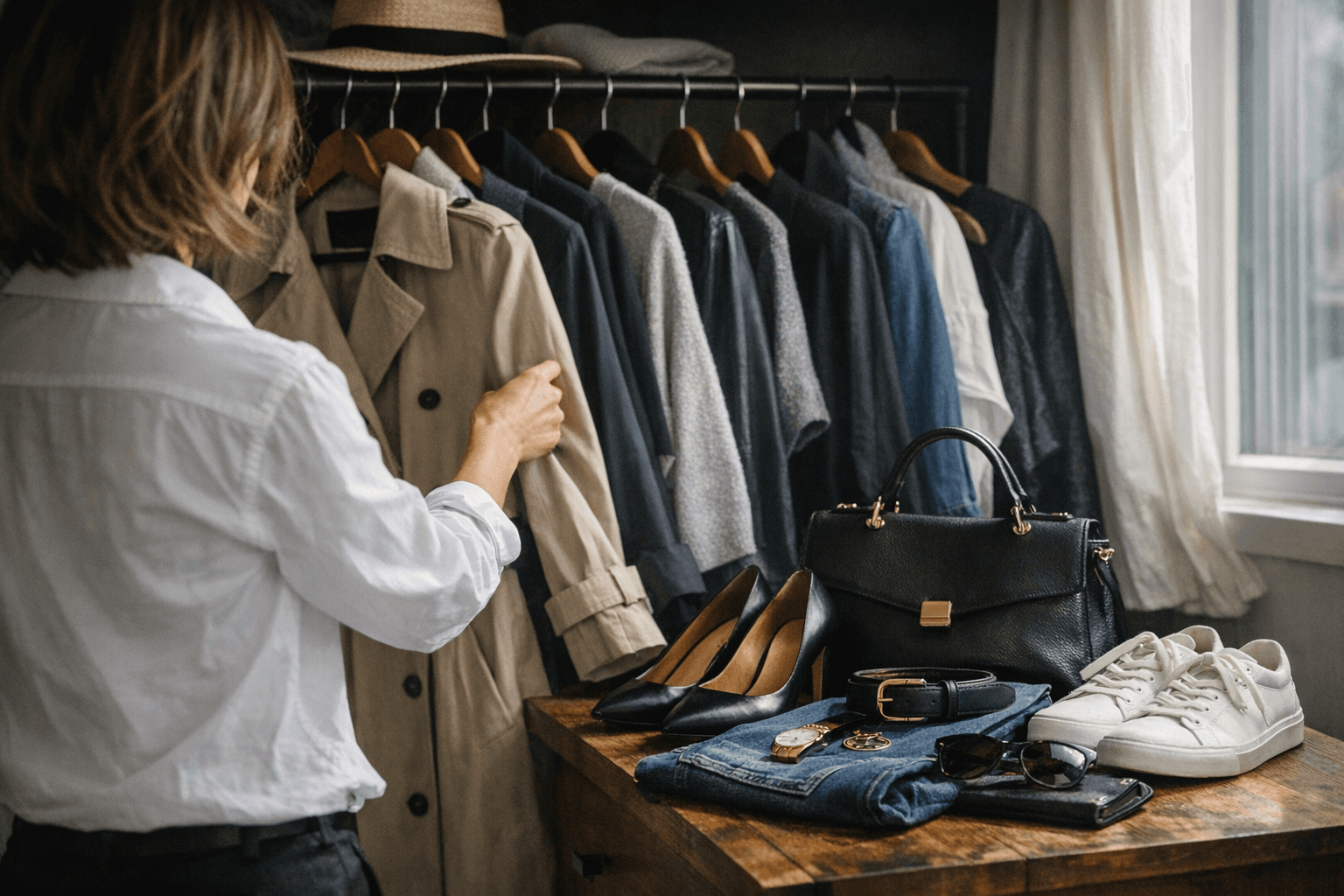
Most closets do not suffer from a shortage problem. They suffer from a connector problem. Studies consistently show that the average person reaches for the same 20% of their wardrobe 80% of the time, which means the remaining clothes exist largely as visual noise, filling hanging space without generating outfits. The "I have nothing to wear" spiral is almost never about volume. It is about owning pieces that cannot talk to each other. The prescription, which stylists have quietly applied for decades, is not a bigger wardrobe. It is a better-edited one.
Susie Faux, the owner of a London boutique called Wardrobe, gave this idea its name in the 1970s when she revived the concept of the capsule wardrobe: a tight collection of essential, seasonless pieces that do not go out of fashion and can be endlessly recombined. The concept gained mainstream momentum when Donna Karan launched her "7 Easy Pieces" collection in 1985, built around the working woman's real life rather than the runway fantasy. Both women were diagnosing the same problem that closets are full of today. Not the wrong quantity, the wrong architecture.
The 15-piece approach outlined below does not ask you to throw everything out. It asks you to identify the five missing connectors, the specific garment categories that make everything else functional, and build from there. Each connector earns its place by generating at least three complete outfits on its own. That is the standard. If a piece cannot pass it, it does not belong in this conversation.
The Five Connectors
Connector 1: The Tailored Blazer
A single blazer in a neutral tone, whether navy, black, camel, or grey, is the most efficient piece in any wardrobe by a clear margin. It does not just dress things up; it restructures them entirely. Outfit one: throw it over a white T-shirt and straight-leg jeans with clean sneakers for the kind of Saturday errand look that reads as intentional rather than incidental. Outfit two: pair it with tailored black trousers and a tucked-in white button-down for a desk-to-dinner combination that requires no mid-day outfit change. Outfit three: layer it over a little black dress with ankle boots and it transforms an evening piece into something you can wear to a lunch meeting. One blazer, three completely different registers. Celebrity stylist Karla Welch, who dresses clients across red carpet and editorial contexts, has called the blazer "a really universal piece that kind of pulls a look all together," noting she'll reach for it with everything from sweatpants to white T-shirts to formal trousers.
Connector 2: Classic Blue Jeans
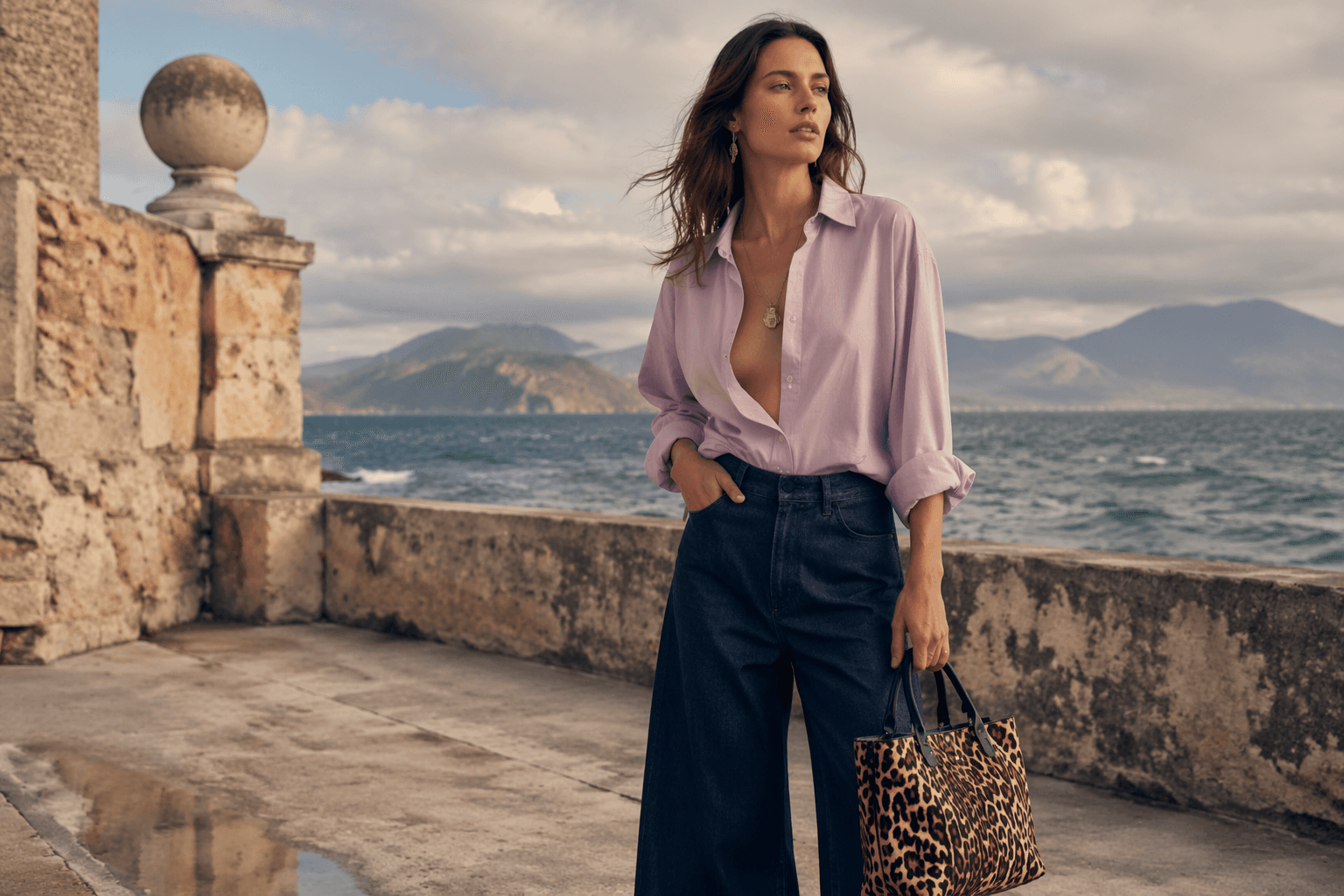
The specific cut matters here. A straight-leg or wide-leg silhouette in a dark or medium wash is the version that transitions most cleanly between casual and dressed-up without announcing which direction it is going. Outfit one: dark wash straight-leg jeans with a quality white T-shirt and blazer covers nearly every low-to-mid formality occasion on the calendar. Outfit two: the same jeans with a crisp white button-down, half-tucked, and loafers creates a smart-casual combination that works for gallery openings, casual Fridays, and dinner reservations alike. Outfit three: swap the flat shoe for a heeled mule, add a silk or satin top, and the same pair of jeans pivots into an evening look that does not read as underdressed. The wide-leg variation, in particular, has proven durable across multiple fashion cycles precisely because it reads as both relaxed and considered.
Connector 3: The Crisp White Button-Down
The white button-down is the most underestimated layer in the wardrobe because it tends to be worn only one way: fully buttoned, tucked in, formally. That is leaving two-thirds of its outfit potential on the table. Outfit one: tucked into tailored black trousers with a mid-height heel makes it genuinely boardroom-ready without a jacket. Outfit two: worn open over a white T-shirt, with jeans and sneakers, the button-down becomes a lightweight layer with a relaxed, off-duty quality. Outfit three: knotted at the waist over a midi skirt with flat sandals shifts the same shirt into weekend territory. The key is fit: a slightly oversized cut in a quality cotton poplin allows for all three interpretations without looking ill-fitting in any of them.
Connector 4: Tailored Black Trousers
If jeans are the connector for casual-to-smart occasions, black trousers are the connector for smart-to-formal ones. They hold more formality in their silhouette and transfer it to whatever is paired with them. Outfit one: black trousers with a white T-shirt and blazer creates an office look that is sharp without being rigid. Outfit two: paired with the white button-down and a simple heel, the same trousers deliver a polished evening look that takes under five minutes to assemble. Outfit three: add a fine-gauge ribbed knit or cashmere-blend sweater and ankle boots and you have a cooler-weather combination that reads as effortlessly chic rather than deliberately styled. The trouser silhouette, whether a straight cut or a slightly wide leg, determines how much of the outfit's energy comes from the bottom versus the top.
Connector 5: The Quality White T-Shirt
The white T-shirt is the foundational connector, the piece that makes every other item in this list more functional by giving it something clean and neutral to work against. It pairs with denim, sits under blazers, layers beneath button-downs, and holds its own under tailored trousers. The quality distinction is not a luxury concern; it is a practical one. A well-constructed white T-shirt in a medium-weight jersey, cut to skim rather than cling, looks deliberately chosen. A thin, shapeless one undermines everything layered over it. Outfit one: alone with jeans and white sneakers. Outfit two: tucked into a midi skirt with loafers. Outfit three: under an open button-down with straight-leg trousers. The white tee is the piece stylists reach for when they need everything else to look more expensive.
The Anchor Piece: The Little Black Dress
The LBD operates differently from the five connectors because it is a complete outfit in one garment rather than a building block. Its value is in its adaptability across formality levels. Styled with sneakers and a blazer layered over it, it reads as daytime. Add simple heels and a small bag and it handles dinner or a work event. Swap in ankle boots and a leather jacket and it carries through to something with more edge. The silhouette should be simple enough to accept all three interpretations, which means avoiding anything with prominent embellishment, an extreme hem, or detailing that fixes it firmly to one dress code.
The Closet-Audit Checklist
Before adding anything new, run this audit on what you already own:
- Does your blazer fit through the shoulders without alteration? A blazer that needs tailoring to work does not count yet.
- Do your jeans have a wash that reads as at least smart-casual, or are they a single-use weekend pair?
- Is your white T-shirt genuinely opaque and well-fitting, or is it a gym layer that has migrated to daytime?
- Can your trousers go from a work desk to an evening table without a change?
- Is your button-down crisp enough to wear without ironing, or does it require prep every time?
- Does your LBD genuinely adapt across at least three occasions, or does it live at one formality level only?
Any piece that fails its question is a gap, not a garment. That gap is the first thing to fill.
Buy-This-First Ranking
If you are building from scratch or identifying which single purchase has the highest return, this is the order that generates the most outfit combinations fastest:
1. Tailored blazer in a neutral tone (creates the highest number of outfit combinations per piece, immediately)
2. Classic straight-leg or wide-leg jeans in a dark wash (the most versatile bottom across all formality levels)
3. Quality white T-shirt (unlocks the value of every other piece it touches)
4. Crisp white button-down in a relaxed fit (three styling modes from one garment)
5. Tailored black trousers (fills the smart-to-formal gap that jeans cannot cover)
6. Little black dress (the single-piece outfit anchor that handles occasions none of the above can solve alone)
The architecture of an effortless wardrobe is not about owning more. It is about owning pieces that each carry their weight across multiple contexts and that speak to each other fluently. Fifteen carefully chosen items will consistently outperform a closet of sixty disconnected ones; that is not a philosophy, it is a dressing-room fact that stylists have been proving since Susie Faux first put the idea into words.
This article was produced by Prism’s automated news system from verified source data, official records, and press releases, then run through automated quality and moderation checks before publishing. The system is built and supervised by the people who set the standards it runs under. Read our full AI policy.
Did this article answer your question?