The Ten Runway Shows That Defined Fashion Month With Wearable, Pared-Back Design
Ten shows, one clear message: the A/W 2026 season rewarded designers who chose craft and wearability over spectacle, and the runway is better for it.
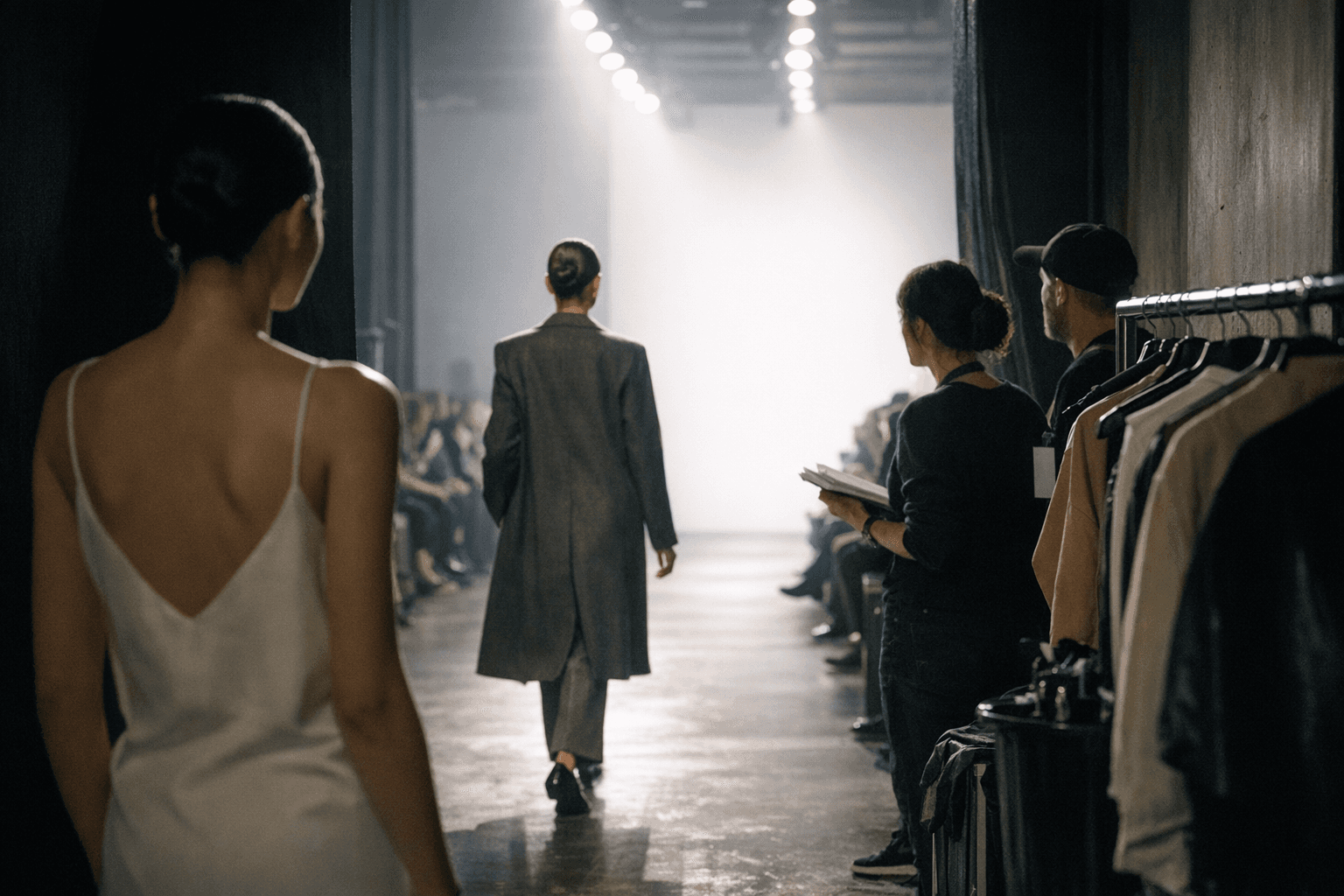
Ten shows landed on Business of Fashion's definitive ranking of the Autumn/Winter 2026 season, and they share a common thread: clothes that earn their place in a real wardrobe. BoF's editors selected Chanel, Tom Ford, Junya Watanabe, Issey Miyake, Givenchy, The Row, Prada, Erdem, Dior, and Jil Sander as the best shows of the A/W 2026 season. It wasn't the flashiest season on record. After a season shaped less by shock debuts and more by second and third chapters, BoF's Tim Blanks and Imran Amed took stock of a fashion month that rewarded designers settling into their roles. The takeaway from New York to Paris: pared-back, purposeful design is back at the centre of the conversation.
1. Chanel
For both Blanks and Amed, Chanel was the season's standout story. Since taking over as creative director, Matthieu Blazy has framed his collections as a fictional conversation with Coco Chanel herself, and for his second mainline collection he took his cue from an interview she gave to French newspaper Le Figaro in the 1950s. In the Grand Palais, workwear-inspired overshirts and tweed blousons could read as underwhelming in isolation; switch their matching knee-length skirts for a pair of jeans, however, and you got a savvy update on the classic tweed jacket, one that worked equally well for women and men, a growing cohort of Chanel customers.
2. Dior
Jonathan Anderson staged his A/W 2026 runway for Dior in Paris' Jardin des Tuileries, constructing a circular show set around one of the park's ponds, populated with Monet-esque lily pads meticulously constructed to look like the real thing. In the bright spring sunshine, it backdropped a collection of romance and lightness, from Belle Époque ruffles and feather-trimmed outerwear to floral appliqué and bow adornment. Anderson opened with an audacious collaboration with filmmaker and journalist Adam Curtis on a short film that blended fashion with slasher horror; as Tim Blanks noted, "It was sort of an act of contextualisation for what he intends for the house."
3. Prada
Miuccia Prada engaged with the natural world this season, building a collection around the idea of layered female identity. As Prada articulated in her show notes, "as a woman, your life is layered: each day demands not only a shifting of clothes, but a richness of identities within yourself." The result was precisely the kind of considered, intellectually grounded dressing that makes Prada a perennial anchor on any best-of-season list: pieces that hold their meaning beyond the runway.
4. Jil Sander
At Jil Sander, Simone Bellotti showed his sophomore collection after an acclaimed debut last season. Bellotti sought creative liberation and abandon, evidenced by bold flashes of electric blue hosiery that cut through his otherwise precise, architectural silhouettes. The shades of blue and red, the sharp silhouettes, and the casting felt so fresh and beautiful as it came down the runway — a sign that Bellotti is carving out a genuinely original identity at a house with a legacy of radical minimalism.
5. Givenchy
Sarah Burton's ability to cut and tailor suits commands respect in the fashion industry. Though she never trained on Savile Row, she learned her craft as the right-hand woman of the late Alexander McQueen. This season, her reputation for meticulous fittings was on full display: suit jackets featured lapels turned inwards, double-pleated trousers offered a ballooned fit, and velvet tunics sublimated the curves of their wearers. Sculptural jewellery made from wood and leather brought an organic, sinuous feel to the collection, while elbow-length gloves pooled around wrists. It was the type of collection that could only come out of deep experience and a craft honed over time.
6. The Row
An unexpected sapphire-blue dress at The Row made a compelling case for breathing new stylistic life into fall's colour story without abandoning the house's signature restraint. Mary-Kate and Ashley Olsen continued to build their argument for clothing as architecture: structured silence in a season that rewarded loudness elsewhere. The Row remains the reference point for anyone who believes that the absence of noise is its own form of power.
7. Tom Ford
Critics hailed Tom Ford as one of the standout moments of the season, with Haider Ackermann continuing to refine the house's identity in his sophomore outing. At Tom Ford, crisp white suiting interplayed with shirting and tied-up knits, pointing toward an investment wardrobe mentality rather than season-specific dressing. The attitude mirrors what Michael Rider articulated for Celine: a vision "built on quality, for timelessness and for style," with designs that emphasise well-crafted, collectible pieces meant to last well beyond ephemeral trends.
8. Junya Watanabe
This season offered more spectacle than just unconventional materials from Watanabe. In a more choreographed display than usual, he called in Poland-born movement director Pat Boguslawski, who directed a languid yet melodramatic routine where models threw garments onto chairs with tango-inspired passion. The reference was reinforced through Eugene Souleiman's hair design, with sculpted curls slicked to foreheads and cheeks in the manner of Josephine Baker, and glamorous make-up by Isamaya Ffrench. Beneath the theatrics, the clothes themselves were the point: Watanabe's singular ability to make structural experimentation feel entirely wearable.
9. Erdem
From razor-sharp tailoring to rich, romantic texture, the season offered spectacular standouts for fall wardrobing, and Erdem Moralıoğlu sat squarely within that current. Crinkled and crushed fabrics appeared on dresses at Erdem, lending a laissez-faire quality to silhouettes that were simultaneously precise in their construction. Moralıoğlu's characteristic layering of literary reference with technical virtuosity resulted in a collection that felt deeply personal and entirely buyable in equal measure.
10. Issey Miyake
Issey Miyake closed out BoF's ranking as a reminder of what fashion looks like when the thinking is truly long-term. The house's commitment to pleating, texture, and functional beauty has never been a trend; it is a position. As Blanks observed of the broader season, new designers' visions are now landing in stores, meeting customers, and beginning to show whether they can convert attention into traction — and by that measure, Miyake's approach, rooted in the idea that clothing should move with the body and improve with wear, remains one of the most commercially durable propositions on any runway calendar.
After the frenzy of big-name debuts last season, A/W 2026 saw this new class of designers settle into their roles and hone their visions — and the results made for one of the more satisfying fashion months in recent memory. The season's best shows were not the ones that shouted. They were the ones that made you want to get dressed.
This article was produced by Prism’s automated news system from verified source data, official records, and press releases, then run through automated quality and moderation checks before publishing. The system is built and supervised by the people who set the standards it runs under. Read our full AI policy.
Did this article answer your question?