The Viral Sudoku Packing Method That Turns 9 Pieces Into 27 Outfits
Nine pieces, 27 outfits: Australian travel creator Natalie Shaquer's packing sudoku method went viral for a reason, and the math actually holds up.
%3Amax_bytes(150000)%3Astrip_icc()%3Afocal(999x0%3A1001x2)%2Fsudoku-packing3-31226-a53680911d1744858f1b8a7079963400.jpg&w=1920&q=75)
Nine pieces of clothing. That's it. If Australian travel creator Natalie Shaquer is right, that's all you need to dress yourself for an entire trip, with 27 distinct outfit combinations to pull from. Her packing sudoku method has surpassed 4 million views and traveled, conceptually speaking, from Australia to Slovakia to South Africa. The promise, as one evaluator put it, is "mathematically seductive." And once you understand the logic, it's hard to argue.
The Grid, Explained
The method works like this: you select nine core clothing pieces, three tops, three bottoms, and three layering pieces, and physically arrange them in a 3×3 grid. The Sudoku analogy is precise. Every row and every column must contain one top, one bottom, and one layer, mirroring the puzzle rule that each number appears exactly once per row and once per column.
The critical constraint is what separates this from ordinary capsule wardrobe advice. "You choose nine core pieces, three tops, three bottoms and three layering pieces, and physically lay them out in a grid," Shaquer explains. "The rule is simple but strict: Every piece must work with every other piece. If one item only works with one outfit, it doesn't belong."
That last sentence is where most overpacking begins to unravel. The patterned statement blazer you love but can only wear with one specific trouser? Disqualified. The cropped linen top that reads as daywear only? Reconsidered. Every item in the grid must earn its place by playing well with every other item, not just its obvious partners.
The Math
Three tops multiplied by three bottoms multiplied by three layering pieces yields 27 theoretical outfit combinations. The arithmetic is simple enough that you can verify it in your head, and according to evaluators who have stress-tested the system across different travel scenarios, the math does hold up. What that means in practical terms is that a single carry-on, packed with nine deliberate pieces, gives you nearly a month's worth of distinct-looking outfits if you're rotating cleverly and leaning on accessories to shift the mood.
In an era where major U.S. carriers are strictly enforcing 22-inch carry-on limits, that kind of wardrobe compression carries obvious appeal. The nine-piece grid isn't just an organizational trick; it's a direct response to shrinking overhead-bin real estate.
Where It Came From
Natalie Shaquer is a travel creator based in Australia whose original video introducing the packing-sudoku framework has reached more than 4 million people worldwide. The concept spread organically across social media, picked up by travelers and style enthusiasts across vastly different geographies, a sign that the overpacking problem is genuinely universal. You can find her original post under the handle @thenatalieway.travel, where the grid format is demonstrated visually.
Reader's Digest spoke with Shaquer directly to evaluate the method, and the writer who came to the conversation self-described as "intrigued yet skeptical." That framing resonates: a packing system that claims to solve a deeply personal problem (the inability to leave home without options for every conceivable mood) sounds, on paper, almost too tidy. The writer, who regularly travels to warm-weather destinations including the Caribbean and takes Mediterranean cruises in summer, noted that anything promising to reduce the clothes dragged around in 95-degree heat was at least worth investigating. After speaking with Shaquer, they wrote that "what she explained made me look at packing very differently."
Who It Actually Works For
The enthusiasm is real, but so are the trade-offs. The Sudoku method, as one rigorous evaluation concluded, "operates on the assumption of a 'steady state' trip." For city breaks, business travel, and itineraries where smart-casual is the dominant register, the grid performs beautifully. The traveler who moves from meetings to dinners to museum afternoons without radical costume changes will find the nine-piece constraint not just workable but liberating.
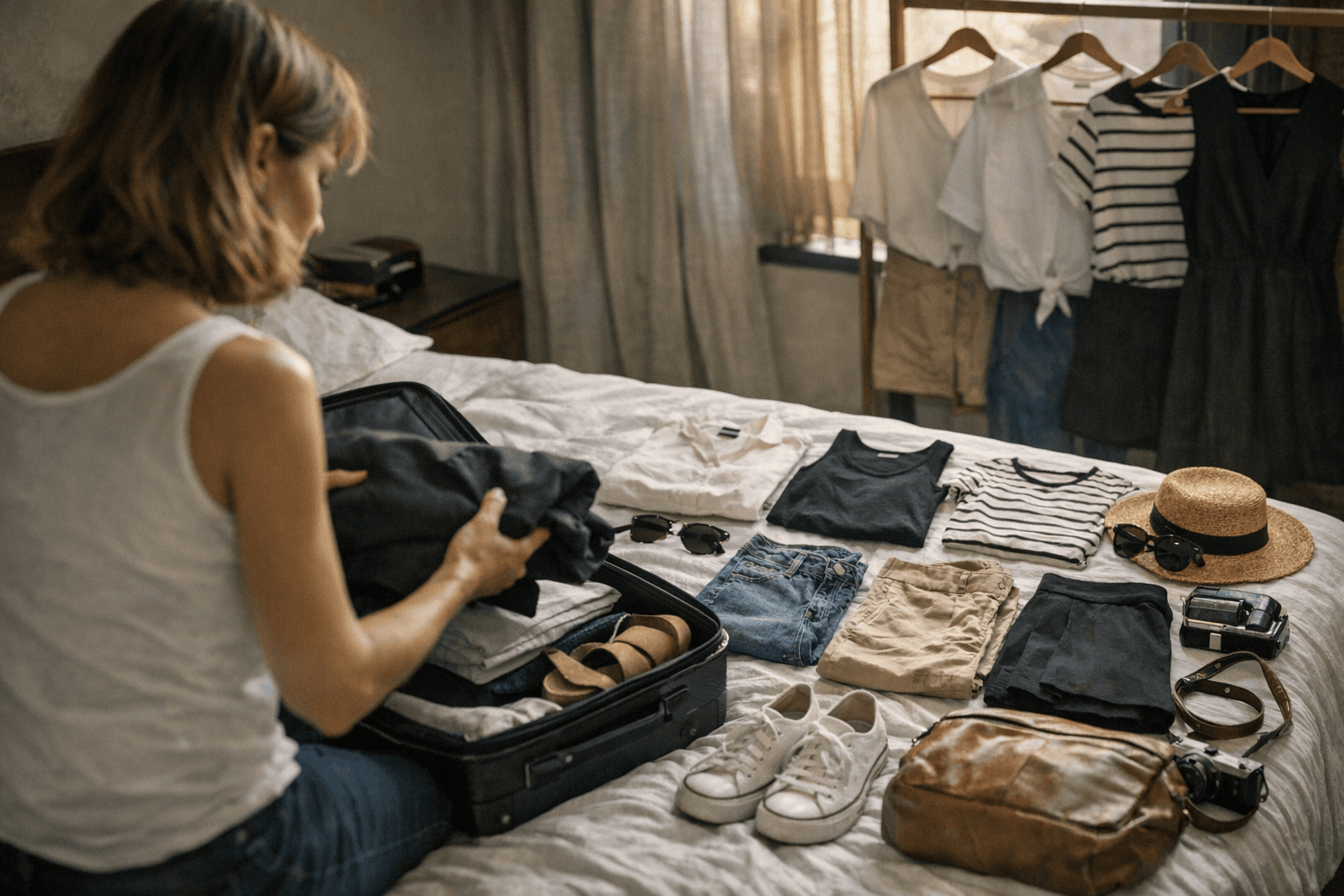
The method is best suited to what one evaluator described as the "carry-on only" purist: someone comfortable repeating silhouettes across a trip and skilled enough with accessories to make the same silk blouse read as polished brunch, art-world cool, or dinner-appropriate, depending on what's layered over it and what shoes are on their feet.
Where the system strains is predictable. "If your itinerary involves a drastic shift, such as a morning hike followed by a formal gallery opening, the 3×3 grid begins to strain," the evaluation notes. The fail cases are specific and worth sitting with before you commit: if you need a heavy coat for one day and a swimsuit for the next, the three-layer slot becomes impossible to manage without dismantling the core outfit logic entirely. A beach-and-ski hybrid trip, or a journey through genuinely unpredictable climates, pushes the grid past its design limits.
The Verdict
The most credible assessment comes from someone who went in as a skeptic and emerged as a cautious convert. "Ultimately, the Sudoku packing method is an effective tool for the disciplined traveler," the evaluation concludes. "I really like the concept. And I do recommend those who struggle with overpacking to give it a try. It's a high-reward system that solves the 'overpacking' problem by using math to prove you need less than you think."
That framing, "using math to prove you need less than you think," is the real insight here. Most overpacking is not a logistics problem; it's a psychological one. The Sudoku grid works as a forcing function: it requires you to make decisions before you leave the house rather than hedging by stuffing in one more dress, just in case. The physical act of laying nine items out on a bed and checking that every possible combination actually works is a tangible editorial process. It makes the abstract advice to "pack less" into a concrete checklist.
How to Build Your Grid
If you want to try the method yourself, the process is sequential and deliberate:
1. Choose three tops that span the tonal and textural range you'll need for your trip. Think about whether they read as day, evening, or both, and whether they can be worn tucked, untucked, and under layers.
2. Select three bottoms that work with all three tops. A slim trouser, a midi skirt, and a relaxed jean, for instance, cover considerable ground if the tops are chosen with that range in mind.
3. Pick three layering pieces that function across the full grid: a structured blazer, a lightweight knit, and a longer coat or trench will generally handle more climate variation than three versions of the same weight.
4. Physically lay the nine pieces out in a 3×3 grid with one top, one bottom, and one layer per row and per column.
5. Check every combination. If any item fails to work with even one other piece in the grid, replace it.
Accessories are not incidental to this system; they are load-bearing. The same white shirt under a camel blazer with tailored trousers is a completely different outfit proposition when the blazer comes off and a silk scarf and stacked earrings come in. Knowing how to use accessories to shift a mood is what extends 27 combinations into something that feels genuinely varied rather than repetitive.
For a step-by-step breakdown and a free downloadable Sudoku packing list template, PackBetter.net offers a structured guide to building your own grid from scratch.
The Sudoku method will not solve every packing dilemma. It was not designed to. But for the traveler who chronically overpacks, the traveler who hauls a checked bag to a four-day city trip out of habit rather than necessity, it offers something genuinely useful: a framework that makes the case, mathematically and visually, that nine well-chosen pieces are enough.
Know something we missed? Have a correction or additional information?
Submit a Tip