Tory Burch makes resort 2027 feel stranger, dressier and travel-ready
Tory Burch’s Resort 2027 sharpens her familiar polish into something stranger, dressier and ready to pack, with shirtdresses, twinsets and cargo trousers doing the heavy lifting.
The new Tory Burch mood
Tory Burch’s Resort 2027 lineup takes her off-kilter femininity and pushes it into grown-up territory without sanding off the eccentricity that makes it work. Previewed on May 19, 2026, at a design studio in Jersey City, New Jersey, the collection felt like a confident reset: a wardrobe of polished pieces made just odd enough to feel alive.
Burch called the idea a “strange familiarity” and said she wanted classics to feel “a little weirder.” That is exactly the right instinct for resort now, especially for a customer who wants clothes that can move between warmer, colder and in-between climates without losing their shape, their charm or their usefulness.
The opening look set the code
The first look said almost everything. A chintz floral straight shirtdress, cinched with a low-slung matching belt, was grounded by waterproof rubberized leather boots. It was pretty, but not precious; polished, but ready for bad weather and long travel days. That collision of sweetness and practicality gave the collection its charge.
From there, Burch kept leaning into silhouettes that feel familiar at a glance, then slightly askew on closer inspection. The effect was less about reinvention for its own sake and more about making resort clothes do a little more work. That is where the collection becomes interesting for real wardrobes, because it does not ask for a full style overhaul. It asks for better versions of things people already wear.
The clothes are dressier, but still grounded
The strongest pieces sat in that narrow space between dressed and relaxed. Double-layer V-neck sweaters and cardigan twinsets came with a deliberately pilled finish, which gave the knitwear a soft, lived-in texture instead of a polished, showroom gloss. That choice matters. It keeps the clothes from looking too pristine, too vacation-brochure, too obvious.
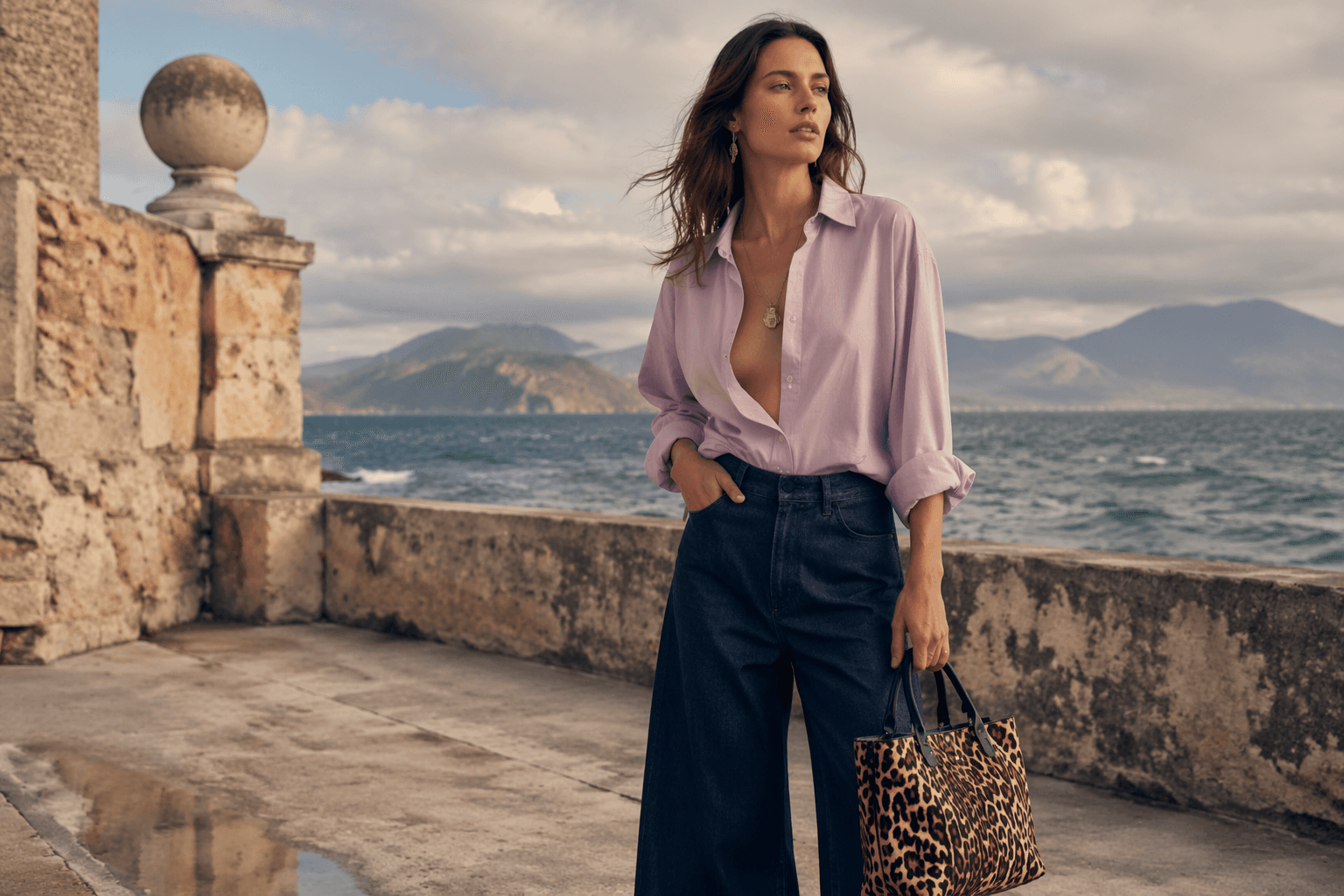
Burch also played with surfaces that had a domestic, almost 1950s mood. Glazed wallpaper jacquard coats arrived in reversible kitchen-spice hues, while hand-twisted rosettes, pleated skirts with front and back zippers, monogrammed shirting, burnished leather skirts, brushed suede jackets, crushed patent finishes and techy-cotton layers all added to the sense that this wardrobe was designed for motion, not display. It is the sort of collection that looks best in transit, with sleeves pushed up and a tote sliding off one shoulder.
The cargo trousers deserve special attention. Lightweight cotton cargo trousers are exactly the kind of item that can pull a resort wardrobe out of category fatigue. They add utility without slipping into cargo cliché, especially when paired with Burch’s monogrammed shirting or a softer knit. In a season crowded with gauzy beachwear, they make the case for clothes that can travel, fold, and keep pace with a real schedule.
Why the textures feel so current
What makes the collection feel more modern than nostalgic is the way Burch handles texture. The pilled twinsets, the rubberized boots, the glazed jacquards and the crushed patent all create a tactile mix that is more interesting than a clean, minimal resort edit. The pieces do not scream luxury through shine alone. They whisper it through finish, handfeel and the sense that someone thought carefully about how each surface would behave in daylight.
That approach also shifts the brand slightly toward dressier American luxury, but in a pragmatic register. The clothes still have ease, but they now carry more occasion energy. A customer could wear the shirtdress to lunch, the sweater and skirt to dinner, or the suede jacket on a red-eye, and nothing would feel overworked. That is where Burch is strongest: when she makes polish look effortless rather than programmed.
Accessories keep the story human
The accessories sharpened the collection’s personality without pushing it into costume. Colorful resin flower jewelry gave the looks a playful, almost hand-made brightness. Embellished kitten mules kept the silhouette delicate, not showy, which is exactly the right balance for a collection that already had plenty of texture.
The handbags carried the emotional weight. Handwoven raffia and leather fringed totes, made through the women’s artisan collective Marasam, underscored Burch’s long interest in artisan-made work and the idea that craft can be both beautiful and meaningful. She has described her artisan-made totes as helping to empower women and preserve traditions of craftsmanship, and that ethos fit neatly here. The Buddy Bags, inspired by Burch’s father and styled like vintage dopp kits, added a more personal note, reminding the collection that sentiment and utility do not have to be opposites.
A more mature chapter for the brand
WWD’s Emily Mercer captured the collection’s packed, slightly mischievous energy when she reviewed it on June 3 under the headline “Everything but the Kitchen Sink.” That feels apt, but not in a pejorative way. The range of references was broad, yet the result was cohesive because Burch kept returning to one clear idea: make the familiar feel useful again by making it slightly strange.
The timing matters too. The presentation followed the April 2026 buyout that returned full ownership of Tory Burch to Burch and her family, making Resort 2027 the brand’s first major creative statement in this new chapter. The company has navigated ownership shifts before, and Burch’s earlier use of debt to buy out Tresalia Capital in 2018 showed she knows how to concentrate control when the moment calls for it.
What she seems to be doing now is even more interesting. Resort 2027 suggests a brand leaning into dressier, more capable clothes without abandoning the ease that built its audience in the first place. That is a strong place for Tory Burch to stand: not overly casual, not overdesigned, but just strange enough to feel memorable and just practical enough to earn a place in the suitcase.
This article was produced by Prism’s automated news system from verified source data, official records, and press releases, then run through automated quality and moderation checks before publishing. The system is built and supervised by the people who set the standards it runs under. Read our full AI policy.
Did this article answer your question?