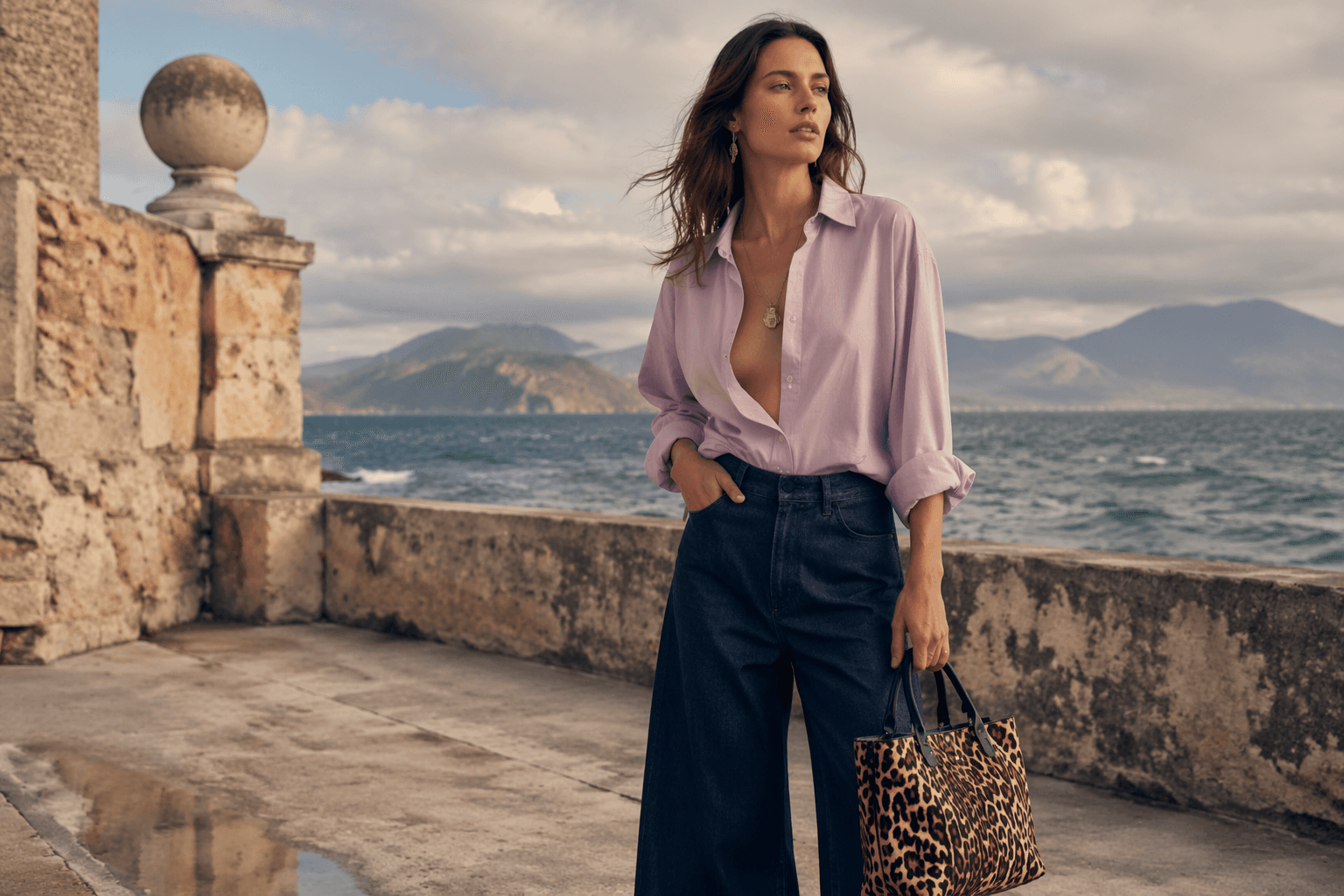
Vintage Fringe, Polka Dots, and Scarf Details Make Dressing Effortlessly Chic
Silk fringe, scarf accents, and bold polka dots are the season's most wearable vintage details, adding character to minimalist outfits with zero extra effort.
Something shifted on the runways this season, and it traces back, improbably, to a Yorkshire moor. Following the release of the new *Wuthering Heights* film and the Victorian-inspired press tour that followed, with Margot Robbie in a parade of period-romantic looks, designers stopped reaching for the usual spring candy colors and reached instead toward history. The result is a dress landscape steeped in the roaring '20s, the Regency era, and the visual vocabulary of Y2K, filtered through a lens that makes every vintage impulse feel genuinely wearable for now.
The four details carrying this mood into closets are silk fringe, scarf accents, drop-waist silhouettes, and polka dots. None of them are new. All of them are having a moment calibrated, crucially, for real life.
The Case for Fringe
At the 2026 Oscars after-parties, fringe took a leading role: actress Odessa A'zion arrived in silky black fringe, while Dua Lipa wore a fringed, sequined fabric accented with a plunging cowl neck. The celebrity moment confirmed what had been building through fashion month. Houses like Bottega Veneta, Chanel, and The Row sent fringe down the runway as swinging skirt hems, scarf-like trims, and full head-to-toe statements. On the runway, it reads as theatrical. Off it, the calibration changes entirely.
Reworked for real life, expect fringe dresses with subtle fluttering hems, open-knit cover-ups finished with stringy skirts, and slip styles featuring spaced-out strands to be everywhere this spring. The keyword is *subtle*. The lightweight fringe iterations circulating at street level skim hems and cuffs rather than engulfing them, with elongated, intentional silk-thread tendrils tracing the hem of bias-cut skirts, and glossy strands suspended from satin scarves like punctuation marks. The effect is far less festival-coded than the fringe of seasons past; it reads, instead, as deliberate Old World glamour applied with a light touch.
Caroline Maguire, Shopbop's Senior Fashion Director, frames the entire vintage-detail moment with precision: the goal is to "add that soft, romantic feel, with a bit of that Wuthering Heights mood. When it's done well, it's actually incredibly wearable and easy to incorporate into your everyday wardrobe."
Polka Dots, Scaled Up
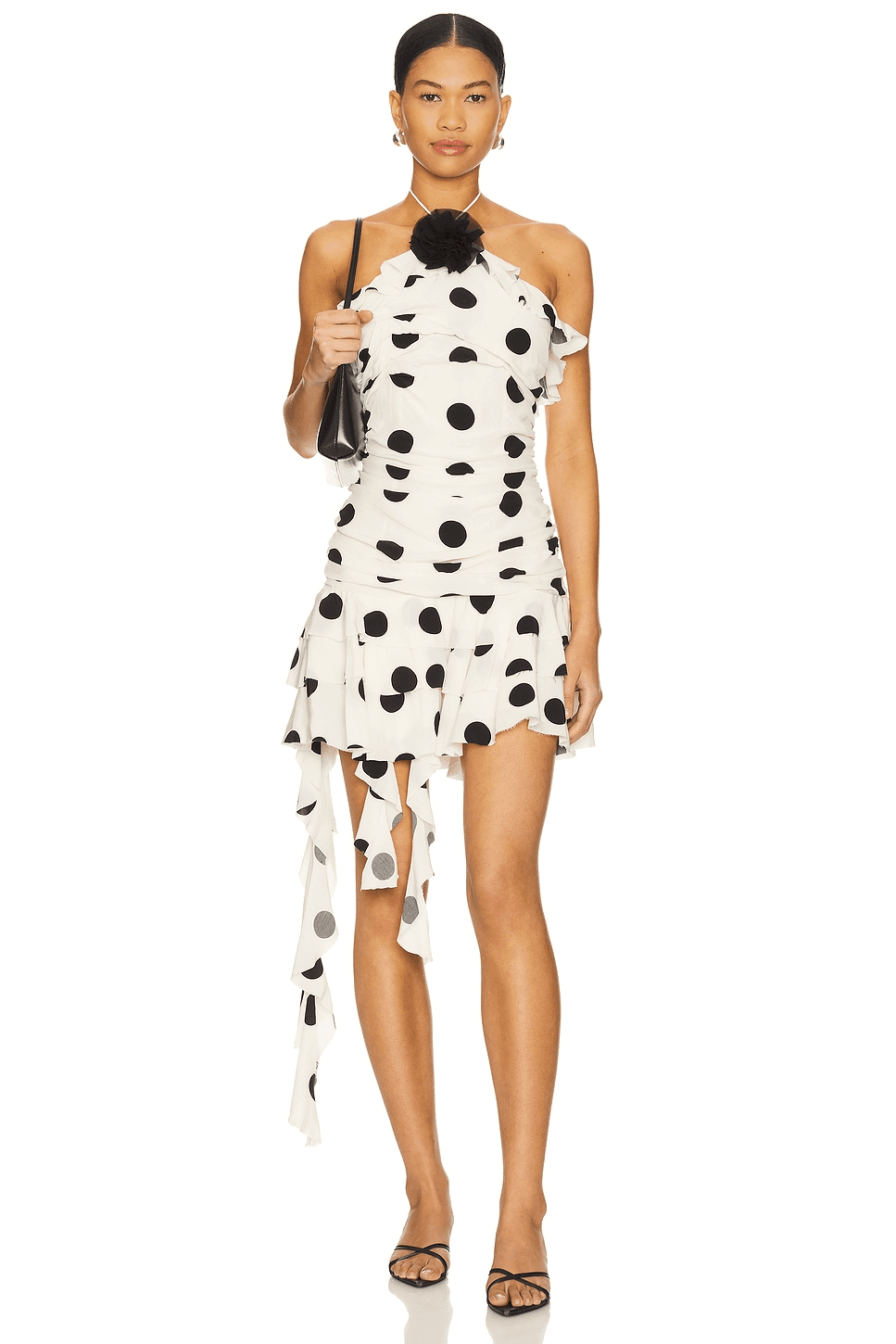
The polka dot is one of fashion's most reliable returnees, but its 2026 incarnation is worth distinguishing from the micro-spot dresses of recent springs. "We're seeing more polka dots in larger, more exaggerated scales, which gives them a slightly bolder, more fashion-forward feel," says Maguire. "Brands are also pairing dots with other patterns, like florals or stripes, which makes it feel more unexpected."
The pattern is appearing in both modern silhouettes and versatile wardrobe staples, with both luxury designers and more affordable retailers reimagining polka dots through refined shapes, neutral tones, and everyday staples that balance nostalgia with a more understated approach. The practical read: a navy-and-white large-dot midi dress is doing far more visual work than a ditsy-print version, but it pairs just as easily with a flat sandal or a white sneaker. The scale creates the interest; the styling complexity stays low.
For those wary of committing to a full spotted look, the pattern works equally well as a single-piece anchor. A polka dot blouse tucked into wide-leg trousers in a solid neutral lets the print breathe without competing. The season's version of the dot is confident enough to stand alone.
Scarf Details: The Easiest Entry Point
Of the four trends defining this season's dress direction, the scarf detail is the one that requires the least investment and offers the most immediate styling payoff. The most-spotted iteration involves wrapping a fringe silk scarf around the waist for a subtle cinched effect, a move that turns even the plainest dress into something considered. Ivory-colored scarves have dominated the trend's early sightings, with a sold-out Toteme option and a cummerbund-scarf hybrid from Atelier Jéa among the most referenced versions. For more sculptural options, Dries Van Noten and Valentino are producing scarf-detail pieces worth tracking.
The scarf accent belongs to a broader category of detail that functions as a complete styling decision. Knot one at the waist of a linen shirt dress, and the outfit is done. Drape one over a shoulder above a structured slip, and it answers every question the look might otherwise raise. The appeal, particularly at a moment when most people are actively reducing decision fatigue in their wardrobes, is that the scarf does the heavy lifting without asking much in return.
The Drop Waist, Reintroduced
The drop-waist silhouette arrives from the same historical wellspring as the fringe, drawing directly on 1920s references. Unlike its predecessors in the 2025 bubble-hem wave, the drop waist is quieter in its nostalgia. It lengthens the torso visually and creates a gentle, unconstructed ease through the hips that suits the season's general movement toward softness.
The silhouette works particularly well in fluid fabrics: silk charmeuse, lightweight crepe, or washed linen all carry the dropped seam with the natural movement the shape requires. It photographs beautifully precisely because nothing is strained or structured. The 1920s reference is intentional, and it earns its place in 2026 because the silhouette is genuinely forgiving and flattering across body types.
Building a Wardrobe Around These Details
The through-line connecting fringe, polka dots, scarf details, and drop waists is the same quality: each one adds character to an otherwise minimalist outfit without multiplying the number of styling decisions you need to make. A white slip dress with a silk-fringe hem is still, fundamentally, a white slip dress. A dropped-waist navy-dot midi still packs into a weekend bag. A scarf tied at the waist of a linen column still reads as clean dressing from a distance.
- Fringe works best on hems and cuffs where movement is visible; avoid heavy fringe on structured tailoring, where it creates visual conflict.
- Polka dots at a larger scale call for solid-color pairings; mixed-pattern styling with dots works best when the secondary pattern shares a color from the dot palette.
- Scarf accents tied at the waist read more editorial than bandanas tied at the neck; the waist placement also offers the practical benefit of defining the silhouette.
- Drop-waist silhouettes benefit from slightly elevated footwear, a block-heeled mule or a low kitten heel, to preserve the leg line the silhouette otherwise softens.
The season's real achievement is that these trends arrived without demanding a wardrobe overhaul. Each detail functions as a single, considered addition to what's already there. That, more than any single runway look, is what makes them worth paying attention to.
This article was produced by Prism’s automated news system from verified source data, official records, and press releases, then run through automated quality and moderation checks before publishing. The system is built and supervised by the people who set the standards it runs under. Read our full AI policy.
Did this article answer your question?