Wardrobe Specialist Angela Howenstein's Capsule Dressing Reset for Women Over 40
Angela Howenstein's four-step closet audit turns a closet full of "nothing to wear" into a body-flattering capsule uniform built for women over 40.
Most women over 40 own a closet full of clothes and still face the same crisis every morning: nothing to wear. It is not a shopping problem. It is a clarity problem, and wardrobe specialist Angela Howenstein has built her entire practice around fixing it. Howenstein is a fashion stylist and content creator known for helping women over 40 rediscover their personal style with everyday, affordable chic. On a recent episode of The Body Pod, Season 5, Episode 119, she delivered one of the most practical midlife wardrobe conversations in recent memory: a step-by-step blueprint covering closet editing, capsule building, body-shape dressing, color intelligence, high-low mixing, and the trap of trend chasing. Here is everything that matters.
The Four-Step Closet Audit
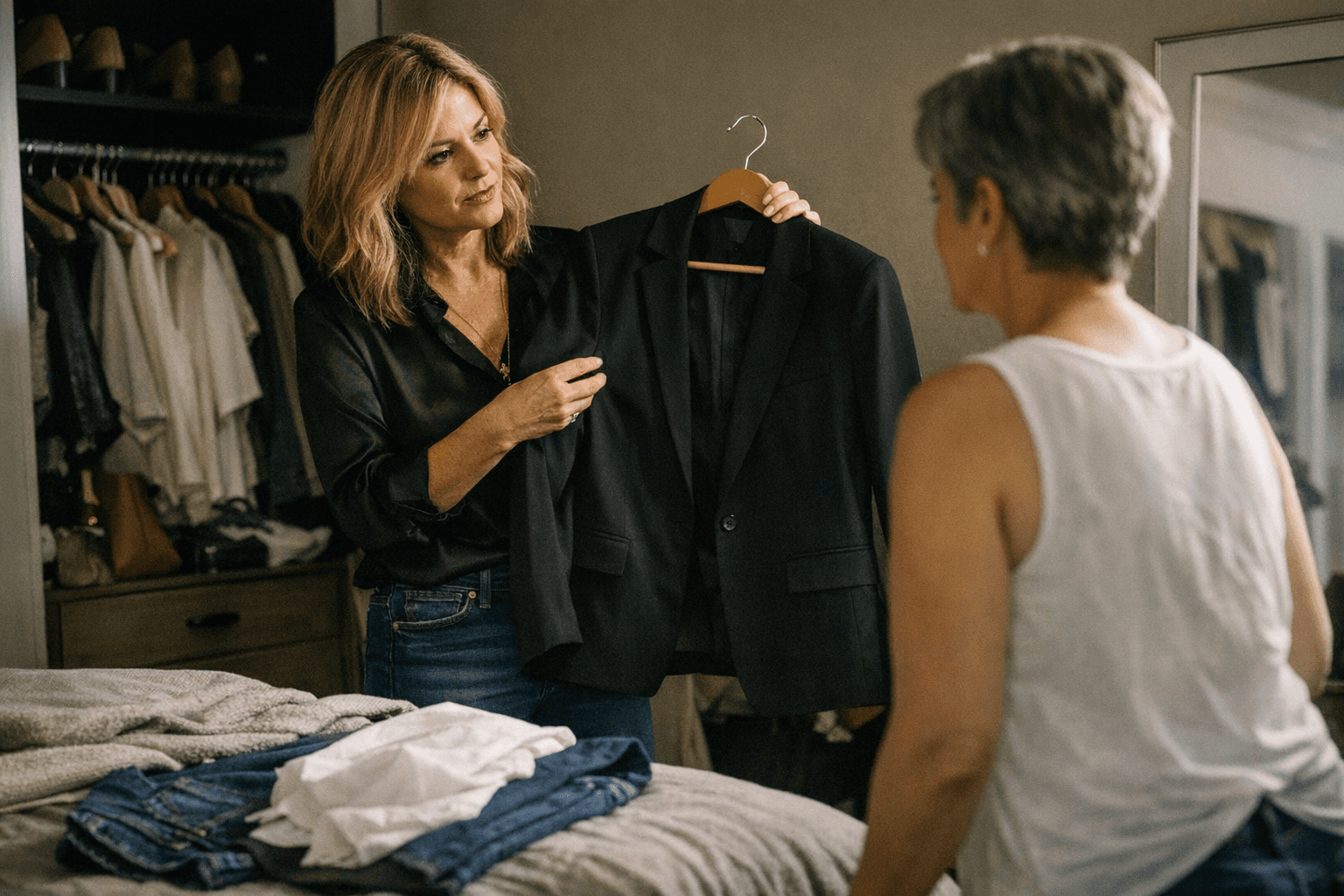
Before a single new piece enters the picture, Howenstein insists on working with what you already own. Her approach starts with shopping your closet first: taking photos of different outfit combinations using what you already own, an exercise that reveals hidden possibilities and prevents impulse purchases. The audit process she outlined on The Body Pod follows a clean, four-stage sequence: audit your current wardrobe honestly, build a gap list of what is actually missing, make strategic buys to fill only those gaps, and then develop outfit recipes that make the whole system work without daily deliberation.
The audit stage is where most women stall, largely because editing feels irreversible. Howenstein's filter for this stage is characteristically blunt. She calls it the "Where Are You Going In That?" test: if an item does not have a clear, real destination in your actual life, it does not deserve the shelf space. Many wardrobe staples can work across all seasons, forming the core of a year-round capsule wardrobe. Before rotating items in or out, she recommends conducting a seasonal audit using a four-pile method, placing anything uncertain in a "Maybe" box; if it remains untouched by the end of the season, it is probably time to let it go.
Capsule Basics Built for a Changing Body
Once the closet is edited, the rebuild begins, and this is where Howenstein diverges from generic style advice. Bodies change in the 40s and beyond, and a capsule that ignores that reality will fail. Her wardrobe essentials start with a pointed question: do you know your body shape, and do you know what dresses and what jeans actually suit it? For women who have not revisited these questions in years, that answer is often no, and the closet reflects it.
A capsule wardrobe for women over 40 typically consists of 6 to 20 versatile tops, tailored to individual preferences and daily needs, with priority given to quality staples such as classic white tees, button-up shirts, and elegant blouses. Howenstein anchors her own recommended capsule around seven foundational pieces: a white button-up, well-fitted jeans, a quality tee, a cardigan, a blazer, a wrap dress, and loafers. Key wardrobe essentials she returns to consistently include high-rise jeans, tailored trousers, versatile blazers, and classic dresses. Every item on that list earns its place by working across multiple outfit recipes, not by being exciting on its own.
For comfort and wearability, she gravitates toward natural fabrics like cotton, linen, and silk, and relaxed fits like wide-leg pants or knit dresses, adding structure back in with blazers, high-waisted pants, or midi dresses. The goal is not to sacrifice ease for polish; it is to find the pieces that deliver both simultaneously.
Color Work: The Shortcut Nobody Uses
Color is the fastest way to make a capsule feel cohesive or chaotic, and Howenstein treats it as a non-negotiable foundation. You cannot create a closet of essentials if you are wearing the wrong colors, which means knowing what tones actually work against your skin, hair, and eyes before you shop.
Sticking to monochrome neutrals or harmonious color families creates a polished, expensive-looking aesthetic, and combining silk with denim or cashmere with cotton adds depth to an outfit through texture rather than pattern. This is the logic behind a capsule that travels far on a small number of pieces: when your colors are aligned, everything connects without effort, and outfit recipes build themselves. A camel blazer, white tee, and navy straight-leg trouser work because the colors belong to the same family. Add a conflicting hue and the equation collapses.
Building a Wearable Uniform
The phrase "wearable uniform" sounds limiting, but Howenstein frames it as the opposite: a small number of proven combinations that remove decision fatigue and let you dress with confidence every single day. Outfit recipes are the engine of this system. Once you have identified the pieces that fit well, suit your coloring, and match your actual lifestyle, you map out specific combinations, morning to evening, casual to dressed up, and you stop reinventing the wheel.
Her approach to personal style begins with understanding what suits your body, lifestyle, and preferences: identifying your body shape, choosing clothes that highlight your best features, and then assessing how your wardrobe fits your actual daily routine. A wardrobe built around a lawyer's schedule looks completely different from one built around a freelance creative's, and buying toward a fantasy life rather than a real one is one of the primary reasons so many closets fail.
Mixing High and Low Intelligently
One of the sharpest parts of the Body Pod conversation was Howenstein's take on investment versus budget pieces, a topic that matters enormously to women who want to look polished without constant spending. Her philosophy is direct: "High-low = uniquely you, not a head-to-toe catalog ad."
The mixing strategy is not random. It is architectural. A strong investment piece, a well-cut blazer or a quality leather loafer, does the structural work, while budget basics fill in around it. A simple $20 tailoring adjustment can transform a clearance blazer into a custom-fit piece, and as Howenstein puts it, "fit > logo, every time." The return on a skilled tailor is higher than almost any single purchase.
Avoiding the Trend-Chasing Trap
The episode closed with one of its most useful threads: how to engage with trends without letting them destabilize a carefully built capsule. Trend pieces have a place, but Howenstein is precise about where. They work as additions on top of a stable foundation, never as the foundation itself. The mistake most women make is buying trend-forward pieces before their basics are solid, which means the trendy pieces have nothing to anchor to and quickly look dated or out of place.
Lifestyle alignment is essential here. If someone is trying to sell you an expensive black blazer with matching pants when what you actually need is a pair of jeans, a cashmere sweater, and a sneaker, that blazer will sit unworn regardless of how chic it looks on the rack. Do not let trends define your needs; let your real life do that.
Body Shape, Jewelry, and the Finishing Details
The Body Pod episode also covered the smaller decisions that determine whether an outfit reads as intentional or thrown together. Body-shape dressing gets most of the attention in this conversation, but jewelry and belt finishes are equally important in creating a cohesive look. Metal tone, in particular, is a detail Howenstein treats seriously: mixing warm gold hardware with cool silver buckles creates visual noise that undermines an otherwise clean outfit. Committing to a finish, either warm or cool, throughout an outfit creates a pulled-together effect that looks effortless precisely because it is consistent.
Howenstein believes getting dressed should feel fun, expressive, and confidence-boosting, not confusing or overwhelming. That is the actual goal of capsule dressing: not minimalism for its own sake, but a wardrobe that removes friction and leaves room for the person wearing it to feel like herself. The women who get it right are the ones who do the audit first, shop their gaps with intention, and stop treating their closet as a holding space for who they used to be.
This article was produced by Prism’s automated news system from verified source data, official records, and press releases, then run through automated quality and moderation checks before publishing. The system is built and supervised by the people who set the standards it runs under. Read our full AI policy.
Did this article answer your question?