40 Affordable Slow-Fashion Brands Certified for Sustainability in 2026
Forty certified slow-fashion brands prove sustainability doesn't require a luxury budget — and several cost less than a fast-fashion haul.
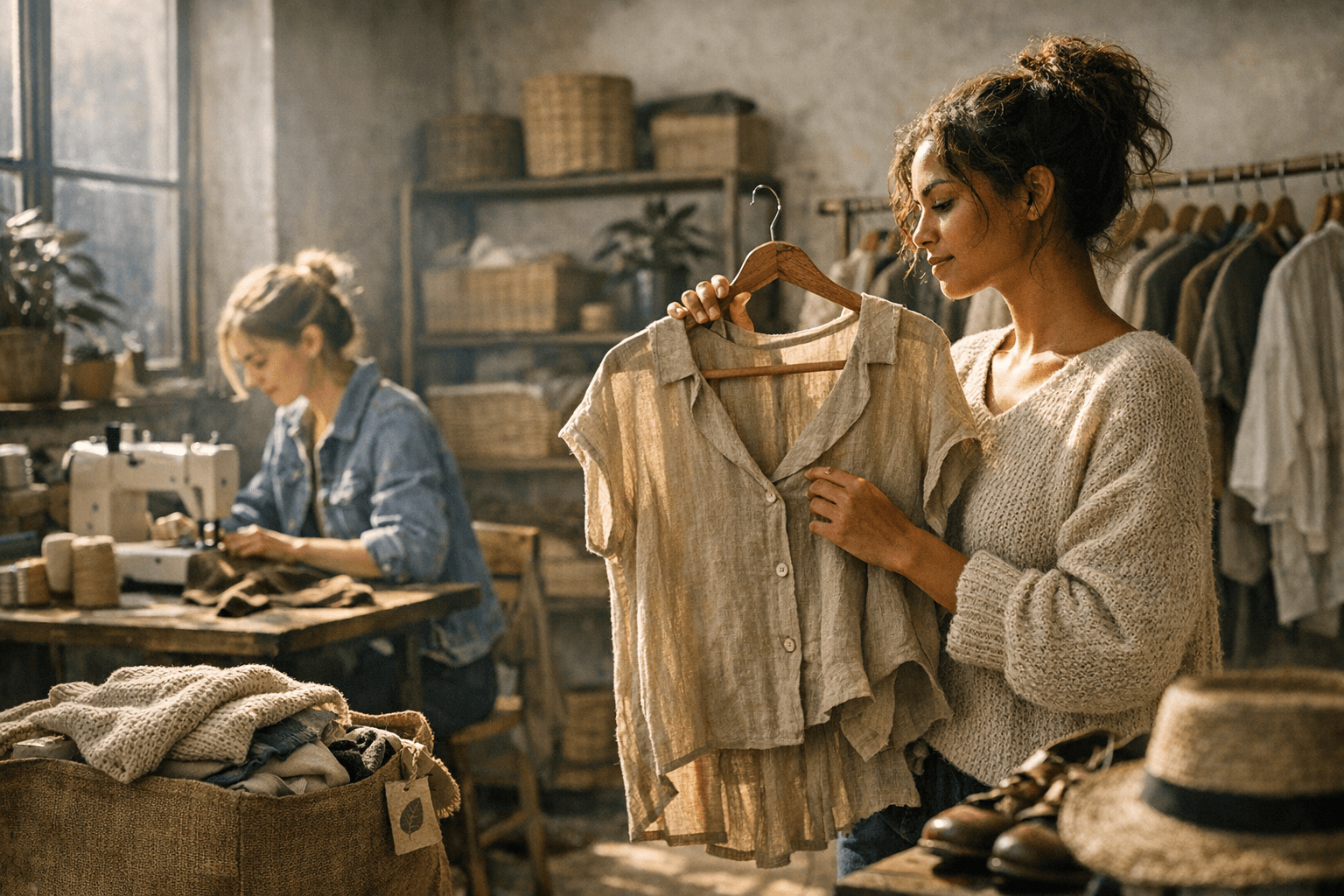
The conversation around sustainable fashion has shifted decisively away from aspirational luxury and toward structural change at accessible price points. Certifications like GOTS (Global Organic Textile Standard), Fair Trade, the Global Recycled Standard (GRS), and OEKO-TEX STANDARD 100 now serve as non-negotiable filters for shoppers who want verified credentials, not marketing copy. What follows is a brand-by-brand guide to 40 labels doing the hard work of certified slow fashion without requiring you to spend a season's salary to participate.
Everyday Essentials and Organic Basics
1. Pact — Pact's entire line runs on GOTS-certified organic cotton paired with Fair Trade certified factory partnerships, covering everything from underwear to loungewear.
Their price points hover well below premium organic competitors, making this the go-to starting point for anyone rebuilding a conscious wardrobe from the ground up.
2. Kotn — This Canadian brand works directly with Egyptian cotton farming families, cutting out middlemen to keep prices honest while maintaining GOTS certification across core collections.
Their minimalist basics, particularly the fitted tees and relaxed trousers, are built for longevity rather than seasonal turnover.
3. MATE the Label — Made in Los Angeles from GOTS-certified organic cotton, MATE operates on a clean-ingredients philosophy that treats fabric standards the way clean beauty treats skincare formulations.
Their supply chain is domestic, short, and transparent.
4. Harvest & Mill — Every piece is grown, spun, cut, and sewn in the United States, making it one of the rare brands with a fully traceable, GOTS-certified domestic supply chain.
Their organic cotton tees and fleece are workhorses built for daily wear.
5. Groceries Apparel — California-made and GOTS certified, Groceries Apparel uses organic cotton and recycled fibers to produce basics that are designed to outlast trend cycles entirely.
Their sizing is inclusive and their factory is a short drive from their design studio.
6. Boody — Boody's bamboo basics carry OEKO-TEX STANDARD 100 certification, confirming they're free from the 3,000-plus toxic chemicals that standard textile finishing processes routinely use.
The brand specializes in underwear, socks, and layering pieces with a distinctly soft hand.
7. Subset — Subset works exclusively with Fair Trade certified factories and holds both OEKO-TEX and GOTS certifications on its underwear line, which is primarily made from GOTS-certified organic cotton.
It is also climate-neutral certified and a member of 1% for the Planet.
8. Knickey — Specializing in GOTS-certified organic cotton intimates, Knickey also runs a take-back program that recycles worn-out underwear rather than sending it to landfill.
The brand addresses the category most often overlooked in sustainable wardrobe conversations.
9. Brook There — GOTS-certified organic cotton lingerie and basics, designed, cut, and sewn in the USA.
Some pieces incorporate silk trims, and all orders ship in plastic-free packaging.
Denim Done Differently
10. Nudie Jeans — The Swedish denim brand pioneered circular fashion in its category: every pair is made from GOTS-certified organic cotton, and the brand operates free repair shops globally so customers can extend the life of their jeans indefinitely.
A take-back and recycling program handles denim at end of life.
11. MUD Jeans — MUD Jeans introduced a lease-a-jean model that is still one of the boldest circular offerings in fashion.
Their denim is GOTS certified and made from a blend of organic and GRS-certified recycled cotton, so the recycled input has third-party verification, not just a brand claim.
12. Re/Done — Re/Done sources vintage Levi's denim and reworks it into contemporary silhouettes, which means its primary raw material has already lived one full life.
The use of deadstock and upcycled stock positions the brand as a model for pre-consumer and post-consumer circular design.
13. Boyish — Boyish produces sustainable denim using GOTS-certified cotton and low-impact dyeing processes.
The brand leans feminine in its cuts while keeping its manufacturing footprint measurably smaller than conventional denim production.
Womenswear with Verified Ethics
14. Reformation — Reformation holds B Corp certification and powers its factories with renewable energy, while publishing a quarterly sustainability report that details water usage and carbon footprint by product.
Their size range has expanded significantly, and each product page includes its own impact snapshot.
15. Eileen Fisher — For over three decades, Eileen Fisher has built a language of minimalist dressing grounded in organic and recycled fibers.
The Renew program takes back worn garments, cleans and repairs them, then resells them, a circular model that has diverted millions of pounds of clothing from landfills.
16. Mara Hoffman — Mara Hoffman uses GOTS-certified organic cotton and GRS-certified recycled cotton, and 100 percent of its swimwear line is produced from recycled nylon (Econyl) or recycled polyester (Repreve).
The brand's bold, sculptural prints make it one of the most visually arresting names in the certified sustainable space.
17. Amour Vert — Amour Vert plants one tree for every T-shirt sold and produces in GOTS-certified fabrics, with manufacturing largely based in San Francisco.
They are a Fair Wear Foundation member, which means their labor standards get audited independently.
18. SIR the Label — The Australian label SIR prioritizes natural, undyed, and low-impact fabrics in silhouettes designed to work across seasons, resisting the pull of trend-driven disposal.
Their commitment to longevity-by-design is embedded in how the collections are structured.
19. Christy Dawn — Christy Dawn's farm-to-closet model sources fabric directly from a regenerative cotton farm, shortening the supply chain dramatically.
Their deadstock and regenerative cotton pieces carry full transparency on fiber origin.
20. Whimsy + Row — Small-batch production in Los Angeles ensures that Whimsy + Row never overproduces, using sustainable and deadstock fabrics in romantic, feminine silhouettes.
Limited runs encourage considered buying rather than accumulation.
21. Kowtow — New Zealand-based Kowtow is 100 percent Fair Trade certified and works exclusively in certified organic cotton.
Their design language is clean and architectural, making pieces that function as wardrobe building blocks rather than seasonal novelties.
22. Mayamiko — Mayamiko produces in Malawi with artisan makers paid fair wages, using natural fabrics and joyful West African-influenced prints.
It is one of the few brands in this space that centers artisan livelihoods in a developing-world context.
Outdoor, Performance, and Purpose-Driven
23. Patagonia — Patagonia is a certified B Corp that uses recycled and Fair Trade certified materials across its line, and its Worn Wear program facilitates repairs, resale, and responsible end-of-life for every product.
Their model of environmental activism embedded in business structure remains the benchmark for the outdoor industry.
24. Outerknown — Co-founded by surfing champion Kelly Slater, Outerknown sources approximately 90 percent of its fibers from organic, recycled, or regenerated sources.
The brand holds Fair Trade certification and BlueSign approval, stacking credentials that address both labor and environmental impact.
25. Tentree — Tentree plants ten trees for every item sold and has surpassed 50 million trees planted since its founding.
Fabrics include TENCEL, recycled polyester, and organic cotton, with the brand anchoring its environmental impact to a measurable, verifiable reforestation metric.
26. Finisterre — British outdoor label Finisterre holds B Corp certification and builds performance wear for cold-water surfers and coastal adventurers from responsibly sourced wool, recycled materials, and bluesign-approved fabrics.
The brand treats durability as a core sustainability strategy.
Footwear
27. Veja — Veja produces sneakers from Fairtrade-certified organic cotton from Brazilian cooperatives and natural rubber sourced from the Amazon.
The brand allocates no budget to advertising, redirecting those funds into its ethical sourcing model, a structural choice that keeps retail prices grounded.
28. Allbirds — Allbirds builds footwear from merino wool, eucalyptus-derived TENCEL, and sugarcane-based SweetFoam soles, and labels each product with its full carbon footprint.
Their lifecycle approach to design covers material extraction through end-of-use.
29. Toms — Toms has evolved its giving model from one-for-one product donation to directing one-third of profits to grassroots organizations.
Their canvas and recycled-material styles remain among the most accessible entry points in purpose-driven footwear.
Activewear
30. Girlfriend Collective — Girlfriend Collective builds its activewear from post-consumer recycled water bottles and carries OEKO-TEX certification, confirming finished fabrics are free of harmful residues.
Their size range runs from XXS to 6XL, making inclusive sizing as much a part of the brand's ethics as its materials.
Natural Fiber Specialists
31. Thought Clothing — Formerly known as Braintree Clothing, Thought works with bamboo, hemp, organic cotton, and TENCEL in garments produced through GOTS-certified suppliers.
They hold Fair Wear Foundation membership, ensuring labor audits sit alongside their material certifications.
32. Bamboo Clothing — This UK-based brand focuses exclusively on OEKO-TEX certified bamboo fabric, which is naturally antibacterial, moisture-wicking, and far lower-impact than conventional cotton in water and pesticide terms.
Their range covers basics, loungewear, and active pieces.
33. Armed Angels — The German brand Armed Angels carries GOTS, OEKO-TEX, and Fair Wear Foundation certifications simultaneously, a triple stack that addresses fiber origin, chemical safety, and labor conditions in one supply chain.
Their contemporary Scandinavian aesthetic has broad wardrobe applicability.
Pioneer Labels
34. People Tree — People Tree is widely regarded as the original certified fair-trade fashion brand, having built its model on GOTS and Fairtrade standards before sustainability became a mainstream marketing category.
Their supply chain links UK consumers directly to artisan producers in Bangladesh, Nepal, and India.
35. Eileen Fisher's Renew Program — Already listed under womenswear, but worth noting separately: Eileen Fisher's resale arm functions as a standalone circular brand, with prices on renewed garments often 40 to 60 percent below the original retail, making her design language available at a genuinely different price tier.
Accessible and Budget-Conscious
36. Everlane — Everlane's radical transparency model publishes the true cost of production alongside the retail price on every product page.
Their ReNew collection is made from recycled plastic bottles, and their organic cotton basics are priced for everyday wardrobe rotation rather than occasional investment.
37. Quince — Quince operates on a no-middlemen model that allows certified organic cotton, linen, and recycled fiber pieces to hit price points that undercut most sustainable competitors significantly.
Their cashmere, linen shirts, and organic-cotton basics have attracted a loyal following among budget-conscious intentional shoppers.
38. Frank and Oak — Certified B Corp Frank and Oak produces GOTS-certified and recycled-material clothing with a design sensibility rooted in versatile, everyday dressing.
Their price tier sits deliberately between fast fashion and premium slow fashion.
39. Happy Earth — Happy Earth is a B Corp brand that directs a portion of every purchase toward customer-chosen environmental initiatives, from reforestation to ocean cleanup.
Their GOTS-certified organic cotton basics make it straightforward to align purchasing with a specific environmental cause.
40. Mango Committed — Mango's dedicated sustainable line, Committed, brings certified sustainable fabrics into a high-street format accessible to shoppers not yet ready to shift entirely to independent slow-fashion brands.
For a major retailer, the collection's use of organic cotton, recycled fibers, and responsible linen represents meaningful progress in mainstreaming certified sustainability.
What binds all 40 of these labels is the rejection of the idea that sustainability is a premium add-on. GOTS certification guarantees that at least 70 percent of a garment's fibers are organic and that environmental and social standards govern the entire processing chain. OEKO-TEX STANDARD 100 confirms finished products are free from more than 3,000 harmful substances. Fair Trade certification protects the workers who make the clothes. GRS validates that recycled content is genuinely recycled. Together, these four standards give shoppers a credible framework for cutting through greenwashing and building a wardrobe that holds up, on ethical grounds and in the wash, for years.
This article was produced by Prism’s automated news system from verified source data, official records, and press releases, then run through automated quality and moderation checks before publishing. The system is built and supervised by the people who set the standards it runs under. Read our full AI policy.
Did this article answer your question?


