Babydoll Dresses Return as a Romantic, Youthful Summer Staple
The babydoll dress is back because ease looks chic again. Its airy shape brings Sixties romance to summer dressing without clinging.
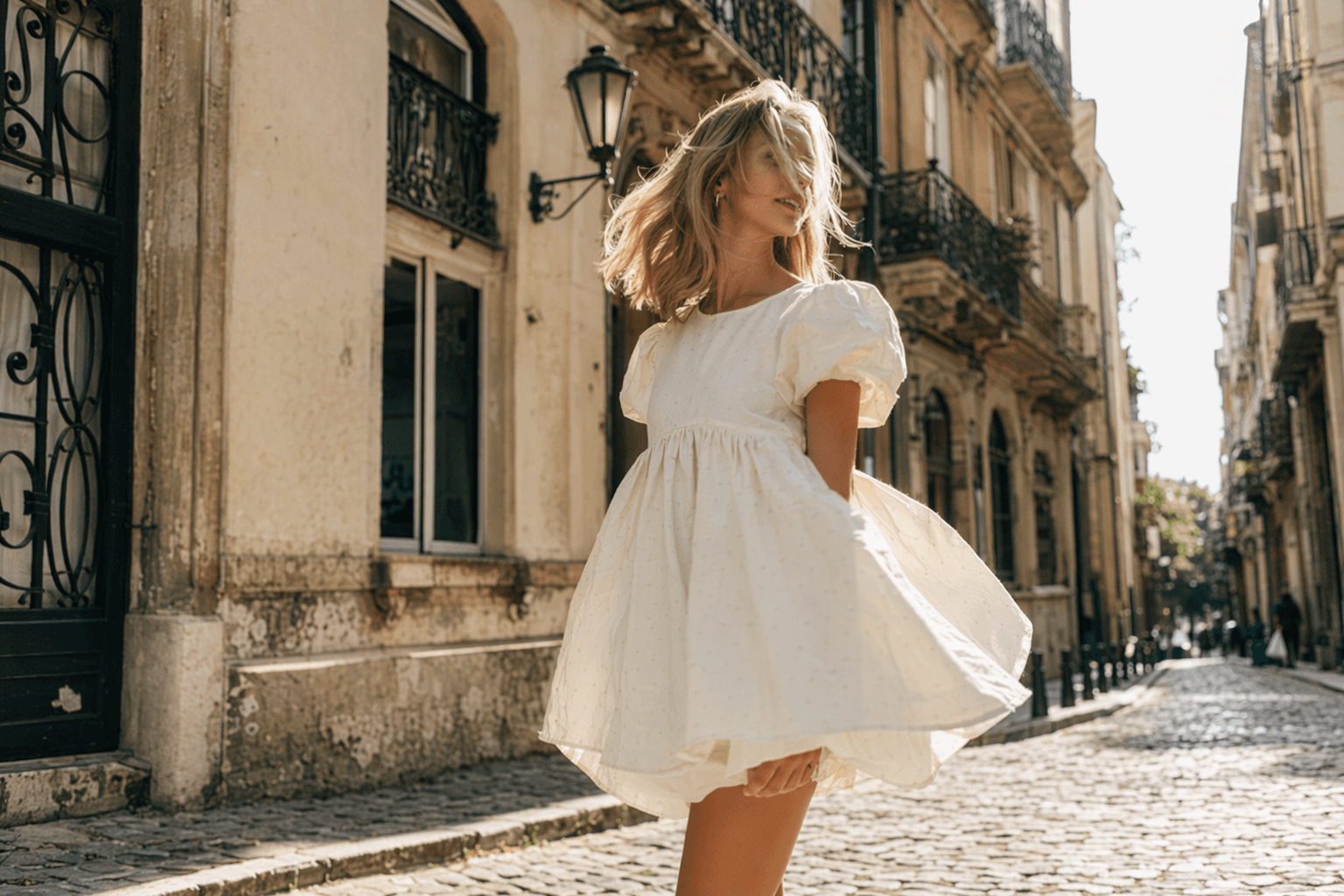
A softer kind of summer dressing
The babydoll dress is returning for a simple reason: it makes romance feel wearable. Loose, breathable, and just short enough to feel fresh, the silhouette answers the season’s appetite for comfort-first femininity without sliding into anything precious or fussy.
That is why it reads as more than a throwback. In a summer marked by body-conscious dressing fatigue, the babydoll offers a softer line through the torso, a little air around the body, and a sense of movement that feels current rather than nostalgic.
Why the silhouette still feels modern
The babydoll dress has real fashion authority behind it. Cristóbal Balenciaga produced flounced lace dresses known as “Baby Doll” dresses in 1957 and 1958, and the Fashion Institute of Technology says one lace version was first presented in 1957. FIT describes the look as a body-skimming slip under a loose lace outer dress, sometimes cinched with a ribbon, which is exactly why it still feels so easy to wear.
The Metropolitan Museum of Art places the shape within a larger shift in women’s dress, saying Balenciaga’s baby-doll silhouette became a popular 1960s volume. The museum also notes that he extrapolated from the fit of flamenco to the swaying cone of the silhouette, which gives the dress its particular balance of softness and structure. It is sweet, but not static; the line floats away from the body and still feels deliberate.
The Sixties reference point matters
The babydoll dress is inseparable from the Sixties because the decade changed how women wanted to dress. The Victoria and Albert Museum describes the 1960s as a period of sweeping social change and the birth of the modern age, and it places baby doll dresses among Balenciaga’s revolutionary shapes from the 1950s and 60s that remain style staples today.
That broader youth movement matters here. The Met notes that Mary Quant opened Bazaar in 1955 in London’s Chelsea, and her boutique drew consumers who were uninterested in the formality of 1950s fashion and haute couture. Shorter hemlines, graphic color, and a less rigid attitude toward dress helped set the stage for the babydoll’s appeal, which is why the silhouette still reads as youthful rather than childish.
Why shoppers are buying into it now
HELLO! has been positioning babydoll silhouettes as one of the warm-weather styles that never quite left the fashion imagination, and this season the look is moving from moodboard to shopping list. The appeal is practical as much as aesthetic: the shape gives you room to breathe, it skims rather than grips, and it creates an easy alternative to clingy summer dresses.
That is the real shift. The babydoll is not asking for complicated styling or perfect tailoring. It delivers ease first, then romance, which makes it especially appealing when temperatures rise and the urge to wear anything tight or fussy disappears.

Runway approval has made the revival feel official
The style’s return is not happening in a vacuum. Marie Claire UK reported that prominent designers reimagined the babydoll for Spring/Summer 2025, while Marie Claire’s summer 2025 dress-trends roundup placed babydoll dresses among the season’s biggest buys. FashionUnited went further, listing “boudoirs and baby dolls” among 14 women’s spring/summer 2025 trends decoded from the season’s shows.
That runway context matters because it shifts the babydoll from cute reference to directional dressing. The new version is less costume and more code: lingerie-influenced, softly flared, and attuned to the broader fashion move toward romance with edge.
How to wear it without losing the point
The best babydoll dresses keep the shape light. Look for a silhouette that falls away from the waist, with enough structure at the top to keep the volume intentional. FIT’s description of a loose lace outer layer over a slip, sometimes secured with a ribbon, is a useful blueprint: the interest comes from contrast, not tightness.
A few styling notes make the difference:
- Keep the proportion short or just above the knee so the dress feels airy rather than swampy.
- Choose fabrics that hold a soft shape, especially lace or other semi-sheer textures that echo the original 1957 version.
- Let the silhouette do the talking. The point is movement and looseness, not over-layering.
- If you want to modernize it, keep accessories clean and avoid anything that pushes the look into costume territory.
What to skip is just as important. Heavy belts, overly aggressive platform shoes, and anything that fights the dress’s floaty line can flatten the charm. The babydoll works best when it is allowed to look effortless, not overworked.
The dress that turned sweetness into strategy
What makes the babydoll dress worth attention now is that it solves a real wardrobe problem. It gives the ease people want in summer, the romanticism fashion keeps circling back to, and the historical credibility that keeps a trend from feeling flimsy. From Balenciaga’s 1957 and 1958 lace versions to the youthquake energy of Mary Quant’s London, the silhouette has always been about freedom dressed as charm.
That is why its return feels less like a replay than a reset. The babydoll dress is back because it understands the moment: women want softness, movement, and clothes that feel easy without looking careless.
This article was produced by Prism’s automated news system from verified source data, official records, and press releases, then run through automated quality and moderation checks before publishing. The system is built and supervised by the people who set the standards it runs under. Read our full AI policy.
Did this article answer your question?


