Beauty Brands Trim SKUs, Focus on Hero Products as Growth Cools
Beauty is cutting the clutter. Brands are shrinking assortments, backing hero products, and trading launch fever for sharper inventory, less waste, and fewer markdowns.
The new beauty flex is restraint
The smartest thing happening in beauty right now is not another launch, it is subtraction. Brands are trimming the long tail, backing the products that actually reorder, and quietly admitting that endless SKU sprawl has become a drag on cash, shelf space, and consumer attention. In a market that once fed on constant novelty, the shift feels almost rebellious: fewer choices, more conviction.
That matters because beauty still has real scale behind it. McKinsey puts the global beauty industry at about $450 billion, with 7 percent annual growth from 2022 to 2024. In the U.S. prestige channel, Circana says dollar sales rose 7 percent year over year to $33.9 billion in 2024, and fragrance just passed into second place among prestige categories for the first time. This is not a shrinking category so much as a maturing one, where brands are being forced to prove that every new SKU earns its spot.
Why fewer SKUs now feels like a business strategy, not a restraint
For years, beauty growth was built on the dopamine hit of constant newness. More shade ranges, more limited drops, more extensions, more minis, more collabs, more everything. That playbook worked when consumers were chasing discovery and retailers were happy to keep adding doors and display space. Now the mood is different. Consumers are more skeptical, more value conscious, and a lot less interested in being sold five versions of the same serum with a fresh color story.
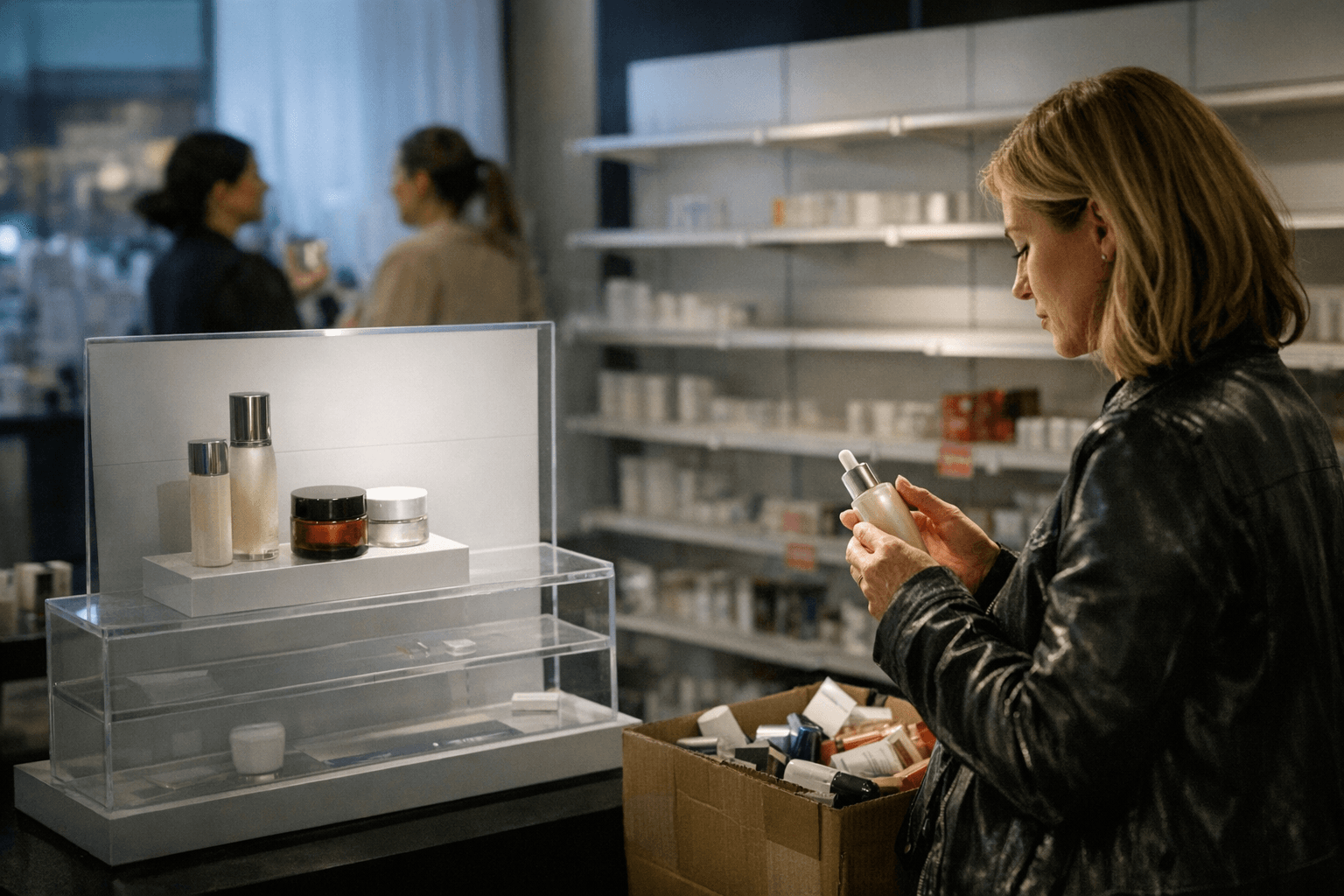
That is why tighter assortments matter in practice. They reduce choice overload at the shelf and online, where too many near-identical products can make a brand feel bloated instead of desirable. They also let companies put real money behind hero products, the ones that can carry the business, build repeat purchase, and make a cleaner impression in store. The quieter sustainability story here is not a glossy campaign about being greener. It is simply producing less and wasting less.
The retail math is changing fast
The category is still growing, but the way brands grow is becoming more disciplined. NielsenIQ’s 2025 beauty retail overview points to a more complex omnichannel market, while its 2026 guidance says consumers are spending more but scrutinizing value harder, with AI increasingly woven into retail operations and social commerce turning trends into transactions. That combination changes everything. When discovery is happening on social and conversion is happening everywhere, brands cannot rely on shelf clutter to create momentum.
Retailers are leaning into that reality too. Ulta Beauty has said it wants to reach 50 million loyalty members by 2028, and it plans to deepen product newness through a differentiated portfolio rather than simply piling on more assortment. It is still expanding in wellness, which tells you this is not about retreat. It is about choosing where growth actually looks productive, not just big on paper.
That distinction is the whole story. A wall of product can look impressive, but if half of it sits stale, creates markdown pressure, or confuses shoppers, it is dead weight. The brands winning now are treating assortment like architecture: fewer load-bearing pieces, more intentional spacing, less wobble.
The cautionary tales are already in motion
Bath & Body Works has become one of the clearest examples of where this trend is headed. On its November 20, 2025 earnings call, the company said it would begin adjusting its assortment and exit select product categories starting in the first quarter of 2026. CEO Daniel Heaf was blunt about the customer reaction, saying shoppers found the store “too overwhelming and confusing.” That is the sort of line that lands because it translates a corporate problem into a lived one: too many candles, too many scent families, too much visual noise.
Revolution Beauty offers another version of the same reset. The company said a planned simplification of its product portfolio helped drive a 20 percent decline in first-half FY2025 sales to £72 million, but that drop came alongside signs the core business was tightening up. Its core range grew 6 percent in the first half and 16 percent in the second quarter versus the prior year. That is the trade-off in real time. You can take a short-term hit while cleaning house, but if the hero line gets stronger, the brand can come out healthier and more credible.
What hero products actually do for a brand
Hero products are not just bestselling items with prettier marketing. They are the items that can reorder, define the brand, and carry the margins without needing a fresh gimmick every season. In beauty, that usually means a mascara that people repurchase without thinking, a fragrance that sticks, a cleanser or lip product that becomes part of the routine, or a complexion product that wins because it does one job really well.
That focus matters because beauty shoppers are exhausted by choice, but they are not exhausted by excellence. They still want the texture that melts in, the fragrance that lingers without turning sharp, the tube that looks good on the vanity and behaves well in a makeup bag. A tighter assortment makes those details easier to feel. When a brand stops throwing 40 near-duplicates at the wall, the products that remain have to earn their place on formula, packaging, and repeatability.
The business upside is just as obvious. Fewer SKUs means less complexity in forecasting, warehousing, and replenishment. It can also reduce markdown risk, because there are fewer weak performers to clear out when the season turns. In a market where retail space is expensive and shoppers are less forgiving, that kind of discipline looks less like caution and more like survival.
This is not anti-growth, it is smarter growth
The interesting part is that nobody serious is calling this a retreat. The brands and retailers pushing assortment discipline are still chasing newness, just in a more selective way. Ulta still wants more loyalty members and more differentiated product. Bath & Body Works is not abandoning the category, it is trying to make the store feel navigable again. Revolution Beauty is trimming the fat while trying to strengthen the core. That is the pattern: fewer launches, more purpose.
The bigger cultural shift is almost more striking than the spreadsheets. Beauty used to reward whoever could shout the loudest about being new. Now the winners are the ones who know when to stop talking and make the product do the work. In a crowded market, restraint has become the sharpest signal of confidence.
Know something we missed? Have a correction or additional information?
Submit a Tip.jpg&w=1920&q=75)