California Selects Landbell USA to Lead Historic Textile Recycling Program
California named Landbell USA the sole operator of the nation's first statewide textile recycling law, giving apparel producers until July 1, 2026 to register or face consequences.
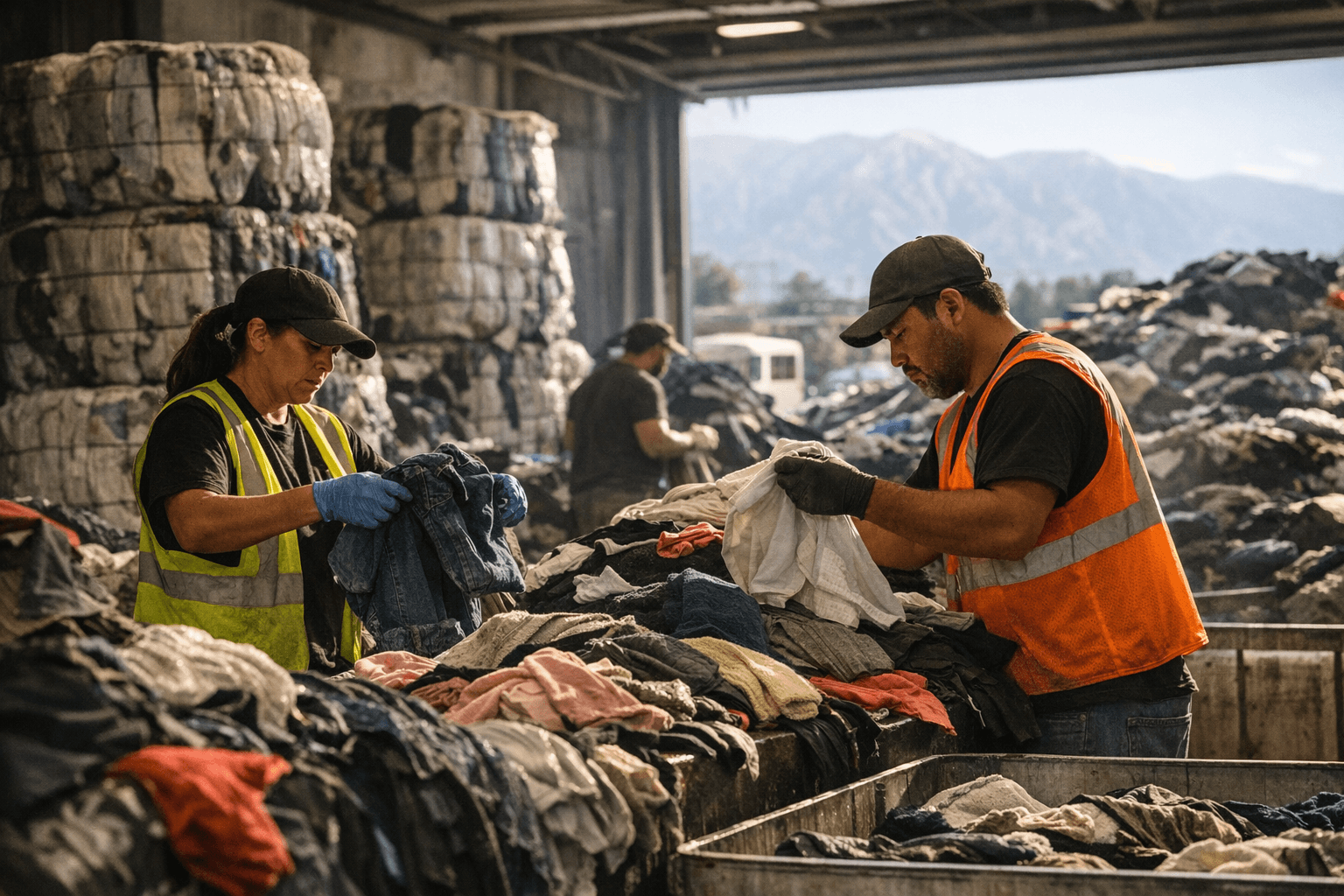
Every second, a refuse truck's worth of clothing is landfilled or burned. California's answer to that statistic is now operational: CalRecycle designated Landbell USA as the sole Producer Responsibility Organization for the Responsible Textile Recovery Act, known as SB 707, triggering a hard deadline that puts every apparel and textile producer selling into the state on notice.
CalRecycle announced the selection on February 27, 2026, choosing Landbell USA over two Sacramento-based applicants, the Circular Textile Alliance and the Textile Renewal Alliance. Landbell USA is the New York-based subsidiary of the Landbell Group, which already operates one of the first textile PRO entities in the world through its European Recycling Platform in the Netherlands. That European track record appears to have been decisive in a competitive field where none of the three applicants had a comparable operational history at scale.
Governor Gavin Newsom signed SB 707 into law in September 2024, making California the first state to pass extended producer responsibility legislation specifically for textiles and apparel. The law was enacted, in its own statutory language, to "establish a statewide EPR program for apparel and textiles that emphasizes repair and reuse, and minimizes generation of hazardous waste, generation of greenhouse gases, environmental impacts, environmental justice impacts, and public health impacts."
The compliance runway for producers is short. Covered apparel and textile producers must join Landbell USA's PRO by July 1, 2026. Landbell has already launched a pre-registration page on its website to begin onboarding. After that initial enrollment deadline, the program follows a structured timeline: Landbell USA must submit a statewide needs assessment to CalRecycle by March 1, 2027, detailing the steps and investments required to build out collection, sorting, and processing infrastructure across the state. CalRecycle must then adopt implementing regulations, effective no earlier than July 1, 2028. Landbell's official EPR Plan is due July 1, 2029, and full statewide implementation is scheduled to begin January 1, 2030.
The PRO's operational mandate is substantial. Landbell USA will be responsible for establishing a statewide textile collection network, building sorting and processing infrastructure, running public education campaigns on proper textile disposal, and developing new recycling technologies. CalRecycle, led on this program by environmental program manager Allyson Williams, who addressed the 2026 Textile Recovery Summit on the necessity of EPR legislation, will serve as the oversight and enforcement arm, reviewing stewardship plans, conducting audits, and acting against non-compliant entities.
Producers should not assume fee obligations will wait until 2030. Because SB 707 imposes costs and funding responsibilities on the PRO, textile brands should anticipate that fee assessments could begin well before the program reaches full statewide rollout. Brands operating across product categories face an added layer of complexity: companies subject to both textile and packaging EPR in California must join and pay fees to two separate PROs. The Circular Action Alliance, which was approved as the packaging PRO in Washington on March 4, 2026, holds that role for packaging in California.
The National Stewardship Action Council called the selection "a critical milestone in moving landmark policy into operational practice" in a statement released the same day as CalRecycle's announcement. NSAC's Executive Director and CEO, Heidi Sanborn, will serve on Landbell's Advisory Committee, which brings together expertise spanning policy and legislation, municipal outreach, eco-design and digital product passports, footwear deconstruction, academic curriculum reform, spinner innovation, and community creative hubs. NSAC also announced it is forming national working groups to engage public, private, and nonprofit stakeholders on implementation strategy.
With July 1 now less than four months away, the question for brands is no longer whether to engage with California's textile EPR program, but how fast they can complete registration before the window closes.
This article was produced by Prism’s automated news system from verified source data, official records, and press releases, then run through automated quality and moderation checks before publishing. The system is built and supervised by the people who set the standards it runs under. Read our full AI policy.
Did this article answer your question?


