Cuff bracelets are summer’s standout jewelry trend for 2026
Cuff bracelets are the cleanest summer statement: one sculptural piece that sharpens basics, looks polished with fine chains, and carries serious runway pedigree.
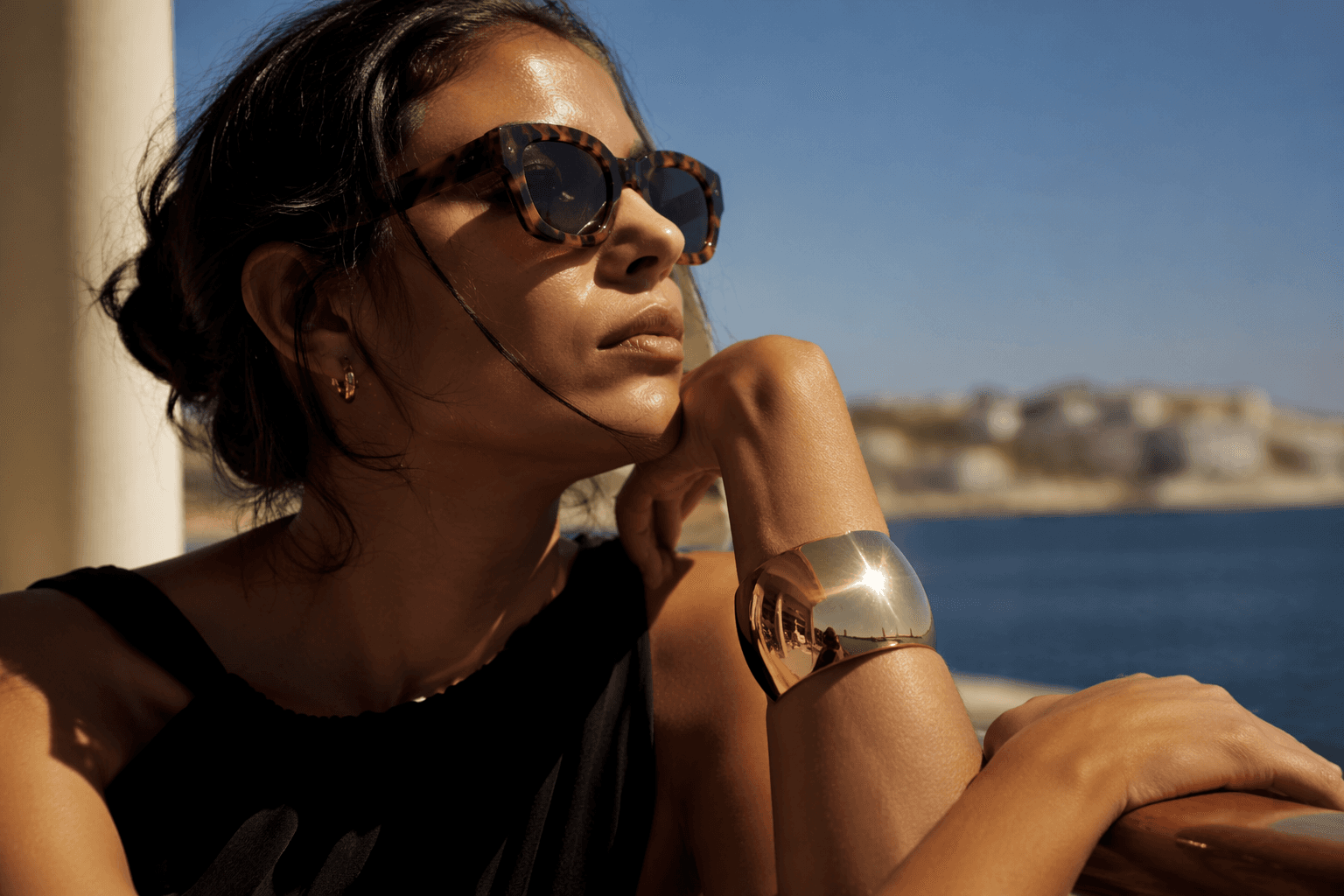
Cuff bracelets have become the easiest way to make summer dressing feel deliberate again. As wardrobes pare back to tank tops, slip dresses and linen, one sculptural cuff can do the work of a whole jewelry stack, especially when it sits higher on the arm or is paired with something fragile and chain-drawn. The result is eye-catching without feeling overworked, which is exactly why retailers are leaning into it as the quickest refresh for clothes you already own.
From runway return to street-level momentum
Harper’s Bazaar has placed cuff bracelets at the center of summer’s jewelry conversation, tracing the surge back to the spring and summer 2025 collections at Alaïa, Alexander McQueen and Saint Laurent. That runway backing matters because it gives the look a sharper fashion logic than a generic “statement jewelry” revival: the cuff did not appear out of nowhere, it re-entered the season through some of the most exacting names in modern dressing.
PORTER pushes the same point from a celebrity angle, calling arm cuffs one of 2026’s defining jewelry moves and crediting the A-list for the revival. Emma Stone, Zoë Kravitz and Alexa Chung have all worn single arm cuffs as standalone statements, which tells you everything about the direction of the trend. The most current version is not piled on or overly precious. It is one decisive piece, worn like punctuation.
That red-carpet energy has already spilled into summer party dressing. On June 23, 2026, Rosie Huntington-Whiteley wore a gold open cuff to the Serpentine Summer Party in London, giving the piece a sleek, almost liquid finish. Zoë Kravitz took a different route at Jessica McCormack’s Summer Solstice Party, wearing a silver cuff high on her upper arm, a placement that makes the jewelry feel more architectural and less like a conventional bracelet.
Why the modern cuff works now
The cuff reads as current because it solves a familiar styling problem: how to make simple clothes look finished without resorting to clutter. Xenia Lally, Mejuri’s fashion director, frames the appeal as something intentional that does not require overthinking, and that is the right lens for how women are actually wearing it now. A structured cuff has enough presence to stand on its own, but it also plays well with fine gold chains, which keeps the look from tipping into costume.
That balance is what separates the modern cuff from the versions that feel tired. Open shapes, polished metal and a clean line against bare skin look fresh; too much ornament can flatten the impact. The strongest styling reads like this:
- one sculptural cuff on an otherwise minimal arm
- a cuff worn higher up, closer to the upper arm, for more visual tension
- a cuff set against fine chains or tiny bracelets, so the metal looks intentional rather than heavy
The placement matters as much as the object. Worn high, a cuff turns the arm into a focal point and makes even the simplest dress feel styled. Worn low and alone, it can feel more classic, but the upper-arm placement is what gives the trend its sharpest summer edge.
The history that keeps the trend from feeling new in a shallow way
Part of the reason cuff bracelets land so well is that they have real design history behind them. Tiffany says Elsa Peretti’s Bone Cuff was designed in 1970, and the house still describes it as a revolutionary vision of femininity. Harper’s Bazaar notes that the piece has been worn by Catherine Deneuve and Margot Robbie, which neatly bridges old-world glamour and modern red carpet dressing.
The archive goes back even further. Harper’s Bazaar points to Elizabeth Taylor’s gold serpent arm cuffs in Cleopatra from 1963 as an early cuff moment, a look that turned jewelry into near-costume drama on screen. A few years later, Cartier’s Love bracelet, first created in 1969, helped normalize the idea that jewelry could be a permanent-looking signature rather than a dainty afterthought. Taken together, these references explain why cuffs keep resurfacing: they are not a novelty, they are a recurring language in fashion.
What feels modern, and what feels dated
The most convincing cuffs now are streamlined and precise. Think open-ended forms, smooth finishes and a single point of focus, the kind of piece that can lift a white shirt sleeve or offset the softness of a slip dress. Gold reads warm and summer-ready, silver feels cooler and more graphic, and both work best when the rest of the styling is deliberately restrained.
What feels dated is the over-styled, boho-heavy version of the look. Harper’s Bazaar’s reference to Sienna Miller’s stacked wooden bracelets, forever linked with her early-2000s boho period, is useful precisely because it marks the difference between then and now. The new cuff is less about layering every arm and wrist at once, and more about one hard-edged piece that makes the outfit feel resolved.
That is why the trend has stuck so quickly across runway, celebrity and retail. It solves for simplicity, but it does not look plain. In a season where pared-back dressing can easily slip into blandness, a cuff bracelet is the rare accessory that adds shape, shine and authority in a single gesture.
This article was produced by Prism’s automated news system from verified source data, official records, and press releases, then run through automated quality and moderation checks before publishing. The system is built and supervised by the people who set the standards it runs under. Read our full AI policy.
Did this article answer your question?