David Yurman Sues TJX, Alleges T.J. Maxx Sold Copycat Cable-Motif Jewelry
David Yurman filed suit on February 18, 2026, accusing The TJX Companies of marketing and selling jewelry at T.J. Maxx and Marshalls that is "virtually indistinguishable" from its federally registered cable-motif design.

David Yurman Enterprises filed a copyright infringement complaint on February 18, 2026 against The TJX Companies, alleging that the retailer marketed and sold jewelry at T.J. Maxx and Marshalls that is "virtually indistinguishable" from Yurman’s federally registered cable-motif design. The filing pins one of the luxury jeweler’s signature visual elements at the center of a legal fight with the parent company of two of America’s biggest off-price chains.
The complaint identifies The TJX Companies as the defendant and T.J. Maxx and Marshalls as the retail outlets where the allegedly infringing items were marketed and sold. David Yurman Enterprises asserts federal registration of the cable-motif design, framing the dispute as straight-up copyright infringement rather than a trademark tussle or a passing knockoff row. The specific phrase "virtually indistinguishable" appears in the filing to describe Yurman's view of the alleged similarities.
For shoppers who have snagged bling at T.J. Maxx or Marshalls, the suit raises an immediate retail question: which pieces on discount racks might be the subject of litigation? The complaint singles out the cable-motif as the protected design element and targets TJX’s marketing and sale of items that mirror that motif. The case therefore ties a specific design registration to real inventory decisions at national off-price stores.
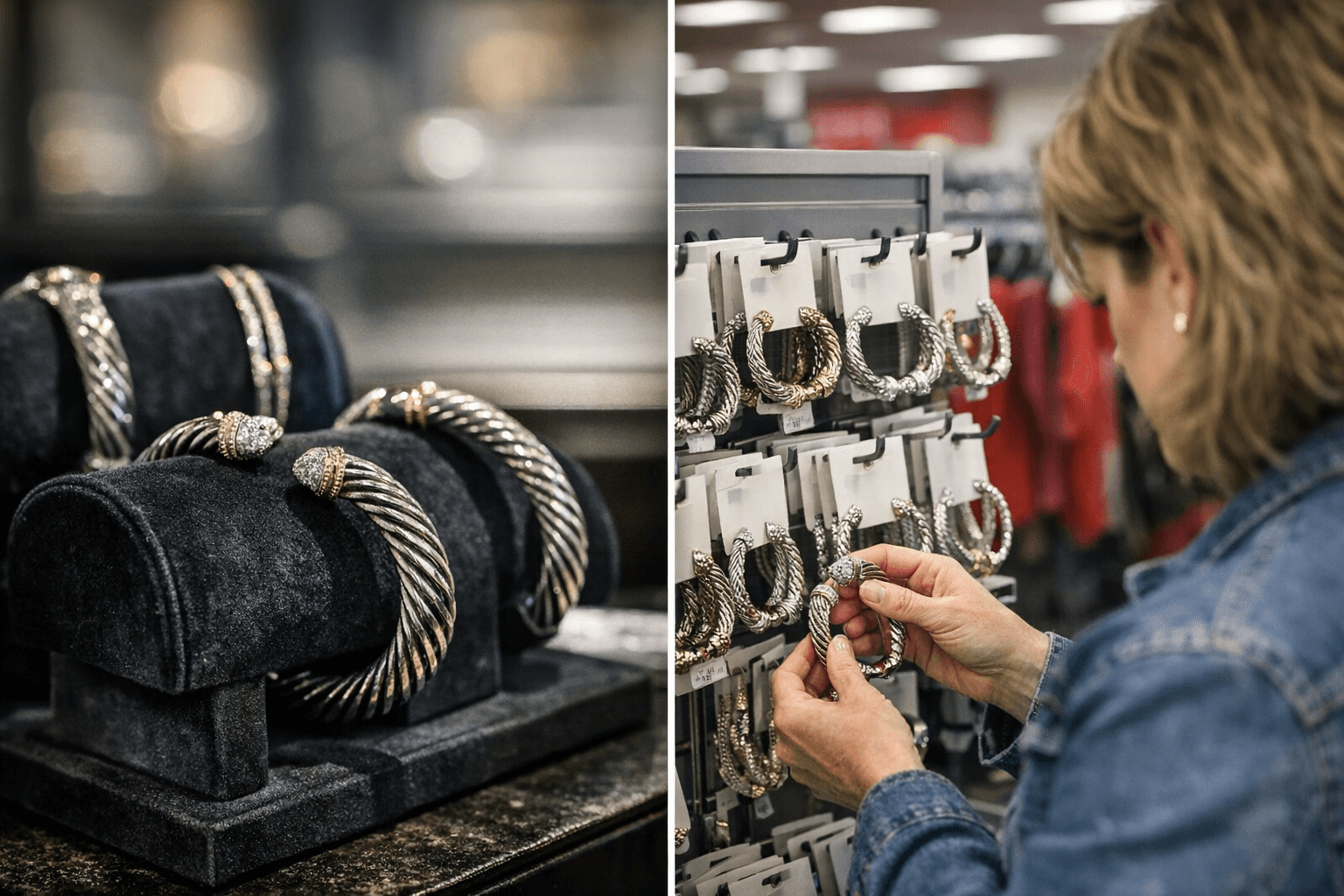
This is not a sideshow between artisans; it is David Yurman Enterprises pressing formal copyright claims against a corporate giant. The TJX Companies owns both T.J. Maxx and Marshalls, and the filing puts those distribution channels squarely in the courthouse frame. By invoking federal registration, Yurman is aiming for the kind of legal leverage that can lead to takedowns, injunctions, or damages tied to the allegedly infringing goods, though the complaint itself outlines the factual and legal basis rather than listing remedies in headline form.
The lawsuit, filed February 18, 2026, now demands a judicial determination over whether Yurman’s registered cable-motif design bars TJX from marketing and selling visually similar jewelry at scale. For designers, retailers, and shoppers who follow jewelry drops and discount racks alike, this is a case that will test how far a registered design can travel from boutique showcases to bargain bins.
Know something we missed? Have a correction or additional information?
Submit a Tip
