Denovia Hits 98.3% Purity Milestone Recycling Contaminated Textiles Into Virgin Monomers
Denovia's chemical recycling process hit 98.3% purity for recovered terephthalic acid from contaminated post-consumer textiles, independently verified at commercial scale.
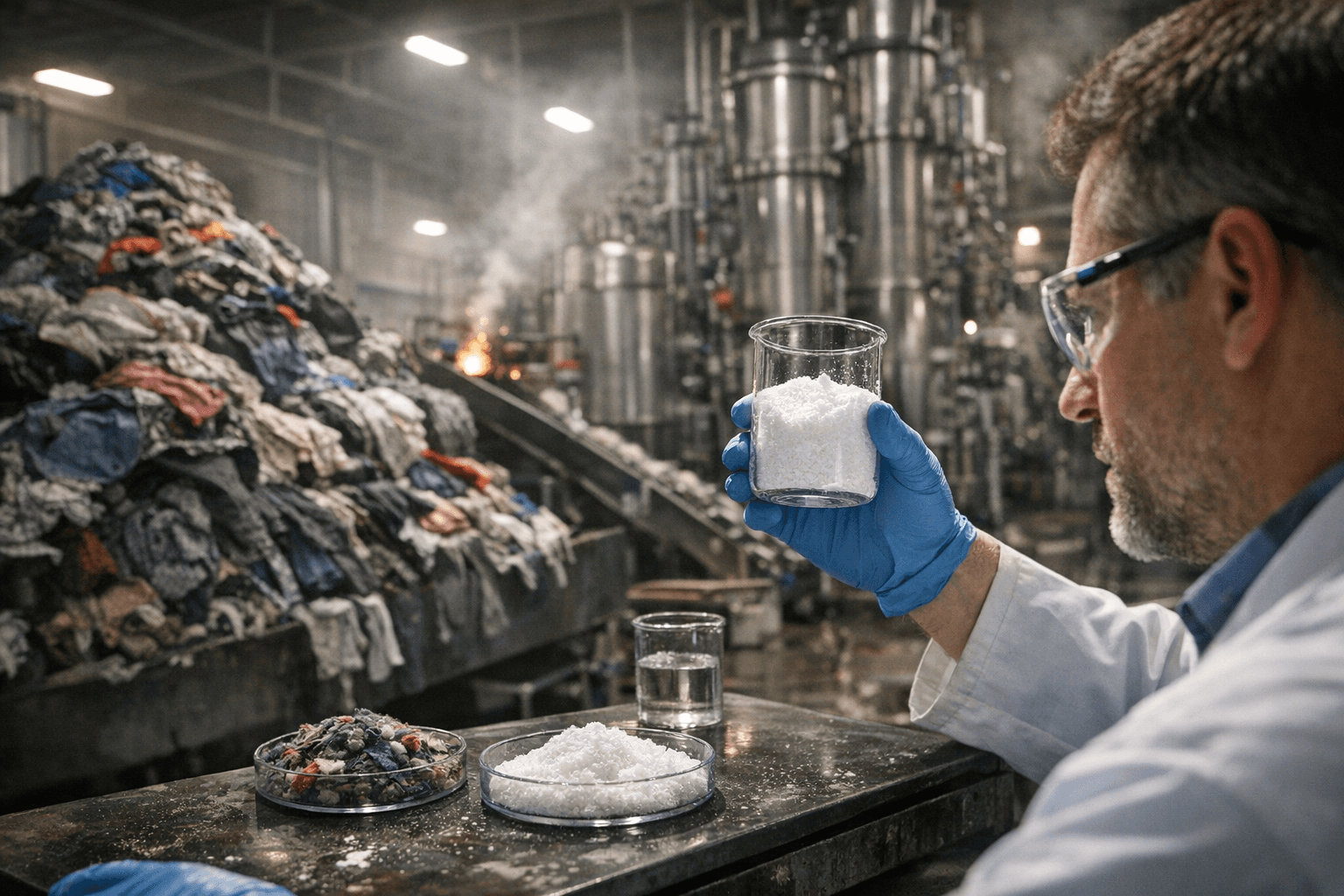
The fashion industry's recycling problem has never been about goodwill, it's been about chemistry. Over 85% of textile waste in the U.S. ends up in landfills, primarily because most textiles are difficult to recycle in an economically feasible manner, especially when they consist of blends of natural and synthetic fibers. Denovia, the London, Ontario-based materials company, moved to change that calculus on March 16, announcing independently verified results from a commercial demonstration that converted contaminated post-consumer textiles into virgin-grade monomers at 98.3% purity for recovered terephthalic acid, known in the industry as PTA.
That number matters. According to ASTM D7976, the terephthalic acid purity requirement for PET polymerization demands a 4-CBA content of no more than 25 ppm, and any excess of that aldehyde impurity limits the polyester chain's molecular weight, degrading the final material. Hitting 98.3% purity from feedstock that would otherwise be incinerated or landfilled is not a laboratory result but a commercial one, independently verified, which is exactly the threshold that separates a promising technology from one that can actually supply manufacturers.
Denovia's process produces virgin-quality polyester monomers from both pure and impure waste content, including colored, clear, and composite materials, enabling what the company describes as an infinitely recyclable, circular system. The catalyzed, low-heat, low-pressure process translates into lower greenhouse gas emissions and higher yields without requiring specialty or expensive hardware, which is what makes it viable for wide-scale implementation.
The contaminated textile problem is particularly stubborn for the fashion supply chain. PET fibers used in clothing are commonly blended with non-PET components, including cotton, dyes, and additives, and those components generate impurities during depolymerization that make extracting high-purity terephthalic acid from textiles exceptionally difficult. Conventional mechanical recycling degrades the fiber with every pass; Denovia's approach, by contrast, breaks plastics down into monomers chemically identical to what petroleum companies produce, meaning manufacturers can buy the material directly and feed it into existing infrastructure without changing their process at all. As co-founder Istok Nahtigal describes it, the output is "literally a drop-in replacement."
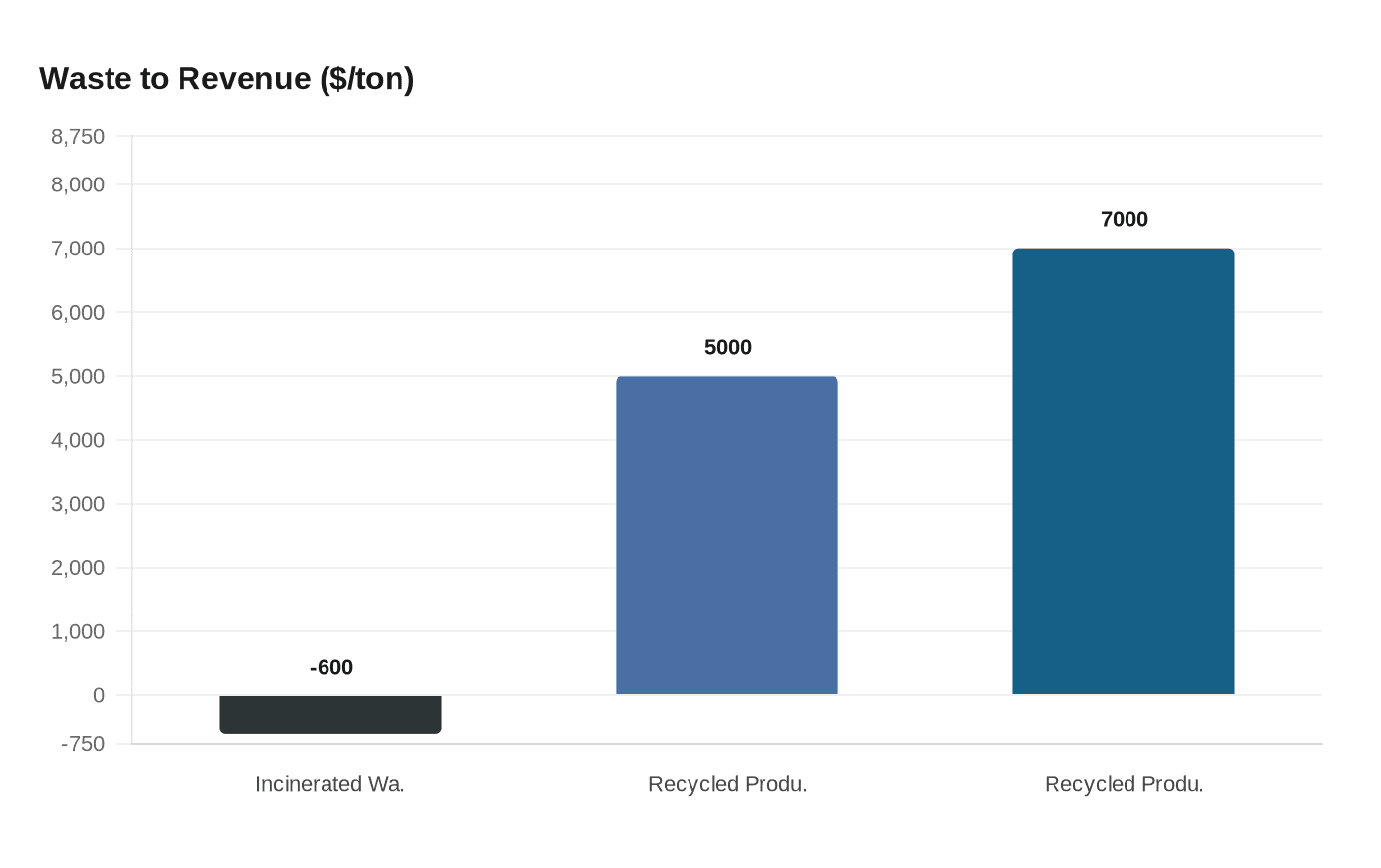
CEO Nick Spina frames the business case in stark economic terms: "We're turning a $600 loss per ton of incinerated waste into $5,000 to $7,000 in product revenue. That's not incremental. That's transformational." Partnerships with organizations including Goodwill and Tymac bring in contaminated waste that other processors cannot handle; Denovia then sells the purified output back into the supply chain as PET pellets or high-grade TPA at market rates.
For brands building credible circularity claims, the distinction between mechanical and chemical recycling has never been more consequential. Advances in chemical recycling technologies present the opportunity to produce high-purity recycled TPA that is genuinely comparable to virgin material, and Denovia's 98.3% purity milestone at commercial scale is the clearest evidence yet that the gap between those two things is closing faster than the fashion industry expected.
This article was produced by Prism’s automated news system from verified source data, official records, and press releases, then run through automated quality and moderation checks before publishing. The system is built and supervised by the people who set the standards it runs under. Read our full AI policy.
Did this article answer your question?


