Dior Data Breach Settlement Highlights Growing Cyber Threats Facing Luxury Brands
Dior's class action settlement over a January 2025 breach that hit 78,000 U.S. customers lands as South Korea fines LVMH brands $25M for parallel cybersecurity failures.
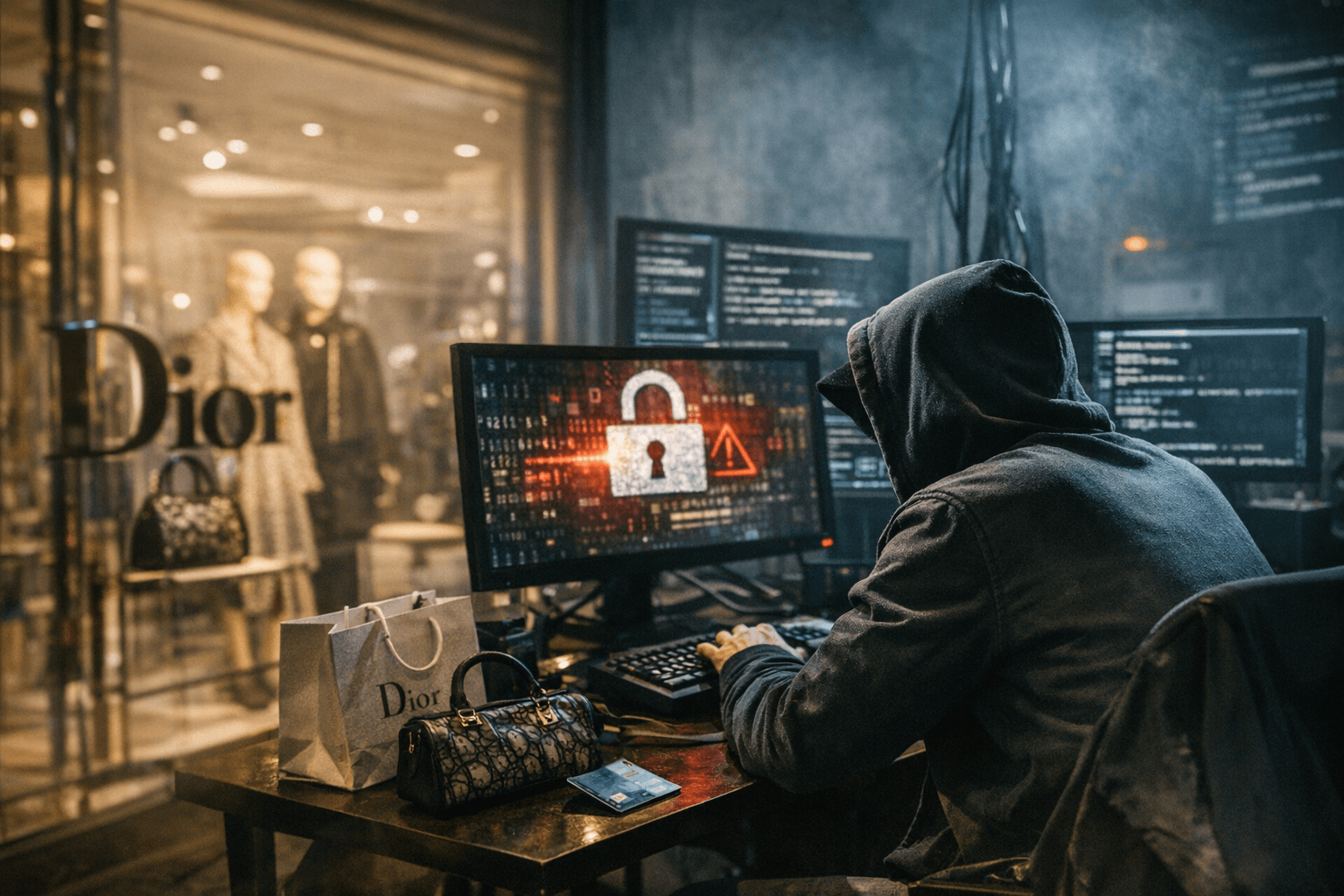
Luxury fashion's cybersecurity problem has a price tag now, and it runs to eight figures. Christian Dior has agreed to a settlement to resolve a class action lawsuit alleging the luxury retailer failed to safeguard the personally identifiable information of its customers from a January 2025 data breach. The settlement arrived almost simultaneously with a separate regulatory broadside from South Korea: South Korea's Personal Information Protection Commission (PIPC) announced hefty sanctions against the local units of Louis Vuitton, Christian Dior, and Tiffany for violations of the nation's Personal Information Protection Act, totaling $25 million in fines on the three brands, all owned by the Paris-based luxury conglomerate LVMH.
Dior identified the U.S. breach on May 7, 2025, which had occurred on January 26, 2025, allowing unauthorized access to client data. The gap between intrusion and discovery, more than three months, was itself a feature of the failure: Dior's notification letter stated that "The House of Dior recently discovered that an unauthorized external party accessed some of the data we hold for our Dior Fashion and Accessories customers. We immediately took steps to contain this incident." Settlement documents state that Dior sent written notice of the data incident to approximately 78,000 individuals. Information that may have been compromised includes first and last name, contact information, addresses, date of birth, and other information customers may have provided to Dior, such as government identification numbers and, in a small number of cases, Social Security numbers.
The Dior class action settlement received preliminary court approval on February 19, 2026. Under the terms of the settlement, class members can receive up to $1,500 for documented losses resulting from the data breach, including identity theft, fraud and fees for credit reports. Class members whose Social Security numbers were compromised can receive an additional one-time payment of $100, and all class members can receive two years of free credit monitoring through the settlement. Dior has not admitted any wrongdoing but agreed to pay an undisclosed sum to resolve the lawsuit.
The South Korean fines illuminate precisely why these breaches keep happening. At Dior, the South Korean breach occurred via a phishing attack on a customer service employee, who was tricked into granting the hacker access to the SaaS system, exposing data for 1.95 million customers; Dior had been using the system since 2020 but didn't implement allow-lists, didn't place bulk data download restrictions, and failed to inspect access logs, delaying the discovery of the breach for over three months. Louis Vuitton Korea received the largest penalty of $14.8 million, after a malware infection on an employee's device allowed threat actors to exfiltrate the company's Salesforce account credentials, leading to the exposure of personal data belonging to approximately 3.6 million customers over a series of three breaches between June 9 and June 13, 2025. Tiffany was breached in a similar way, with attackers using voice phishing to trick a customer service employee into giving them access to the SaaS system, with 4,600 clients exposed.
The South Korean fines follow months of investigation into the overlapping incidents, all of which were part of a broader data theft campaign targeting Salesforce customers, a campaign previously attributed to the hacking group ShinyHunters.
What makes the Dior U.S. breach particularly alarming is what the exposed data enables downstream. Luxury brands do not merely store payment credentials; they maintain rich behavioral profiles, purchase histories, and personal identifiers on their most valuable clientele. When that data is leaked, the harm extends well beyond a compromised credit card number: contact numbers, home addresses, and government IDs in the wrong hands become tools for targeted phishing, fraud, and social engineering. Affected customers should be especially wary of unsolicited postal mail that impersonates Dior or other known brands, using urgent themes such as missed deliveries or account suspensions to extract further personal information.
As Jack Horgan of Koley Jessen PC observed, "third-party vendor and supply chain compromises rank among the most common and most costly attack vectors, making clear that cybersecurity risk is increasingly a function of vendor governance, not just internal safeguards." The PIPC stated plainly that "adopting a Software-as-a-Service solution does not exempt or transfer a company's obligation to safeguard personal information." Privacy regulators in Europe, California, and now South Korea are increasingly holding companies accountable not just for breaches themselves but for the security posture that allowed them.
The deadline for exclusion and objection in the Dior U.S. settlement is May 25, 2026, with the final approval hearing scheduled for June 22, 2026. For an industry built on the promise of discretion, the cost of that promise is now being calculated in court.
Know something we missed? Have a correction or additional information?
Submit a Tip