Erdem channels Barbette’s surreal performance style for Resort 2027
Erdem’s Resort 2027 turns Barbette’s gender-defying glamour into clothes that move. The sharpest pieces pair 1930s drama with event-ready polish.
Barbette, remade for the red carpet
Erdem Moralioglu has found a way to make history feel immediate: not by dressing like a museum, but by turning Barbette’s surreal performance life into clothes with real exit potential. His Resort 2027 collection takes the Texas-born trapeze artist, born Vander Clyde Broadway, and transforms that Paris legend into a wardrobe of movement, shimmer and carefully controlled drama.
What makes the collection feel fresh is not the reference itself, but the way Erdem uses it. Instead of leaning on costume, he keeps one foot in the real world with tailored jackets, structured shoulders and wearable separates, then lets the fantasy bloom through transparency, embroidery and motion. The result is a collection that reads as occasion dressing first, concept second.
Why Barbette still matters
Barbette’s story has always carried a charge. Born in Texas and later celebrated in Paris in the 1920s and 1930s, he became famous for aerial performances that blurred gender presentation and theatrical illusion. In Paris, he was embraced by Jean Cocteau and became part of a glittering interwar imagination that also drew in Man Ray.
That is exactly why he works as an Erdem muse. Barbette was never simply decorative. He stood for performance as transformation, for glamour that depended on nerve, precision and a little danger. That sensibility gives the collection its tension: this is not nostalgia for the 1930s, but a modern translation of the era’s romance, sharpened for a client who wants a story attached to the dress.
How Erdem turns performance into clothes
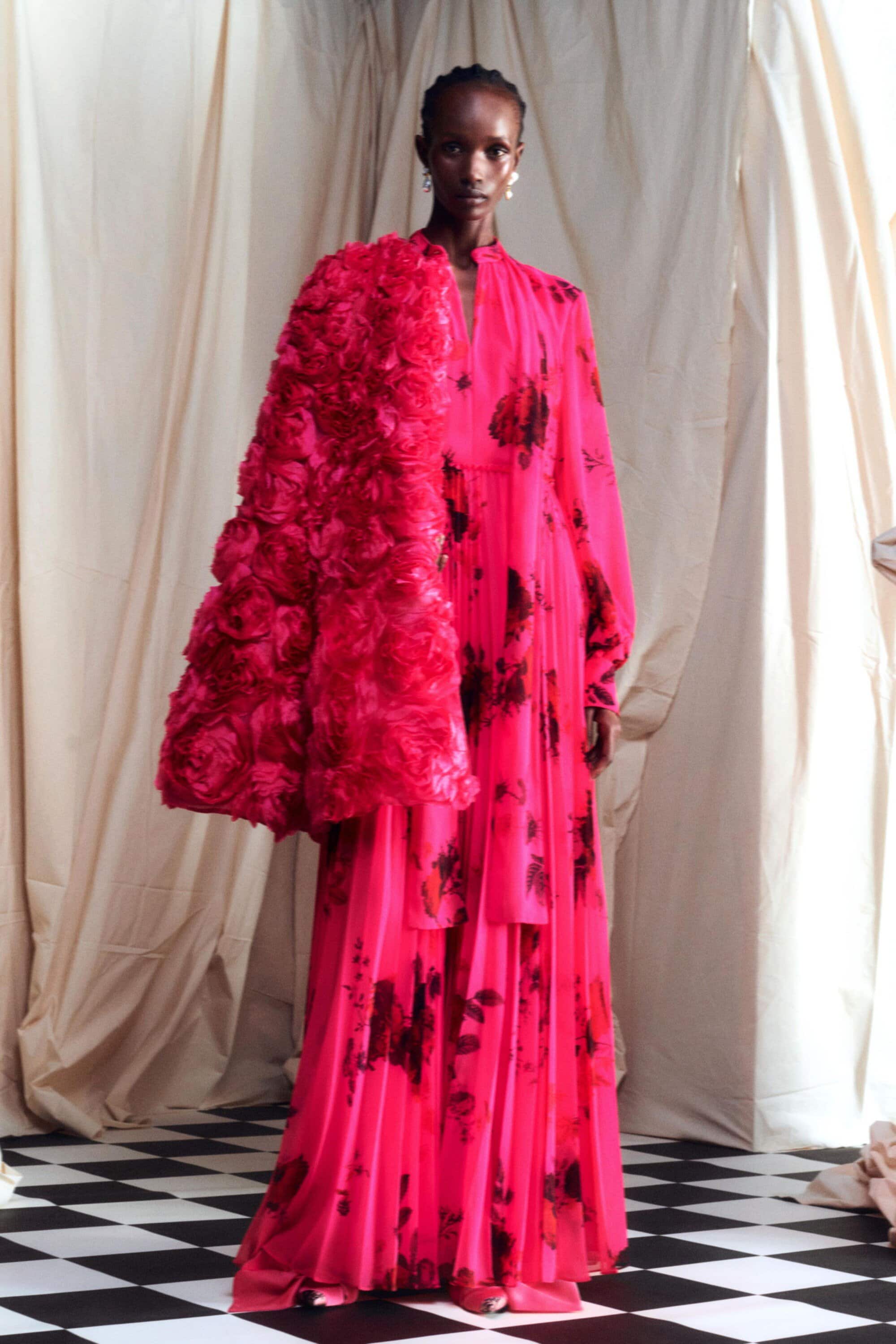
The collection, which reportedly spans 39 distinct outfits, moves between rigor and softness in a way that feels highly usable for events. Structured menswear-inspired tailoring appears alongside sheer organza, hand-embroidered tulle and metallized satin, a combination that keeps the clothes from settling into one mood. A tailored piece grounds the look; a transparent one releases it.
Color and silhouette do a lot of the work here. There are 1930s shapes, fluid gowns and embroidery that catch the light, but also sharper lines and even a double-denim look that interrupts the polish with something earthier. That contrast is important: it keeps the collection from becoming precious. Erdem is selling romance, but he is also selling movement, and movement is what makes a gown feel alive on the body rather than merely pretty on a hanger.
The strongest event-dressing pieces
The most compelling looks are the ones that understand proportion. Cage constructions, marabou, crystals and feathers create a sense of disorientation without tipping into costume, which is the line every theatrical collection has to walk. When those details frame a long gown or a sheer embroidered layer, they give the clothes a kind of kinetic glamour that photographs beautifully and would be especially potent on a red carpet.
A stone-colored double-denim look brings Barbette’s Texas roots into the mix without losing the collection’s sophistication. It is one of the smartest moves in the show because it prevents the historical reference from floating away into abstraction. The denim-backed utility pieces do something similar, grounding the collection in texture and practicality so the more ornate evening pieces feel even more luxurious by contrast.
If you are looking for the looks with the most event-dressing potential, the sweet spot is clear:
- sheer, hand-embroidered tulle pieces that reveal shape without showing too much
- fluid gowns with 1930s lines, especially when cut in metallized satin
- sharply tailored jackets and menswear-influenced looks that can be styled with a more dramatic skirt or jewel-toned accessory
- the feathered, crystal-fringed pieces that catch movement under flash photography
- the double-denim and utility-inflected looks if you want the collection’s wit, not just its grandeur
The least convincing pieces, by comparison, are anything that feels too literal about the muse. Barbette works best here when his spirit is translated into silhouette and motion, not when the reference becomes overly obvious. Erdem is at his best when he lets the clothes do the speaking.
Why this kind of glamour feels right now
There is a reason this mix of historical reference and modern polish feels timely. Fashion is in a moment where obvious minimalism no longer feels like the only sophisticated answer, yet full-blown costume still risks looking dated. Erdem lands in the sweet spot between those poles. He offers emotional clothes, but they are cut with enough discipline to feel saleable, not theatrical for theatricality’s sake.
The collection also understands how contemporary women actually dress for occasions. They want impact, but they want it with control. They want a dress that moves when they enter a room, that catches light at dinner, that feels a little enchanted in motion and still credible once the music stops. Erdem’s Barbette reference supplies exactly that tension between elegance and performance.
What to wear, what to skip
If you are taking cues from Resort 2027, the pieces to watch are the ones that balance structure with transparency. A sharply tailored jacket over sheer embroidery gives you the collection’s drama without requiring a full costume commitment. A gown with cage construction or feathered detailing delivers the full fantasy for black-tie moments, while the denim touches offer a more unexpected way to wear the narrative in daylight.
What to skip is anything that flattens the idea into pure theme dressing. Barbette’s appeal lies in ambiguity, in the flicker between masculine and feminine, real and imagined, grounded and airborne. Erdem gets closest to that feeling when he keeps the clothes in motion, with surfaces that shift as you move and tailoring that anchors the fantasy.
That is what makes this collection worth paying attention to now. It does not just revive a historical muse. It turns that muse into a practical language for modern glamour, one that can move from runway fantasy to the red carpet without losing its edge.
This article was produced by Prism’s automated news system from verified source data, official records, and press releases, then run through automated quality and moderation checks before publishing. The system is built and supervised by the people who set the standards it runs under. Read our full AI policy.
Know something we missed? Have a correction or additional information?
Submit a Tip