Fashion Accelerates AI Adoption Across Value Chains, From Forecasting to Prototyping
Zalando cut image-production costs by 90% with generative AI, FashionINSTA says pattern drafting fell from 8 hours to 10 minutes, and an industry analysis traces AI across forecasting, design and prototyping.
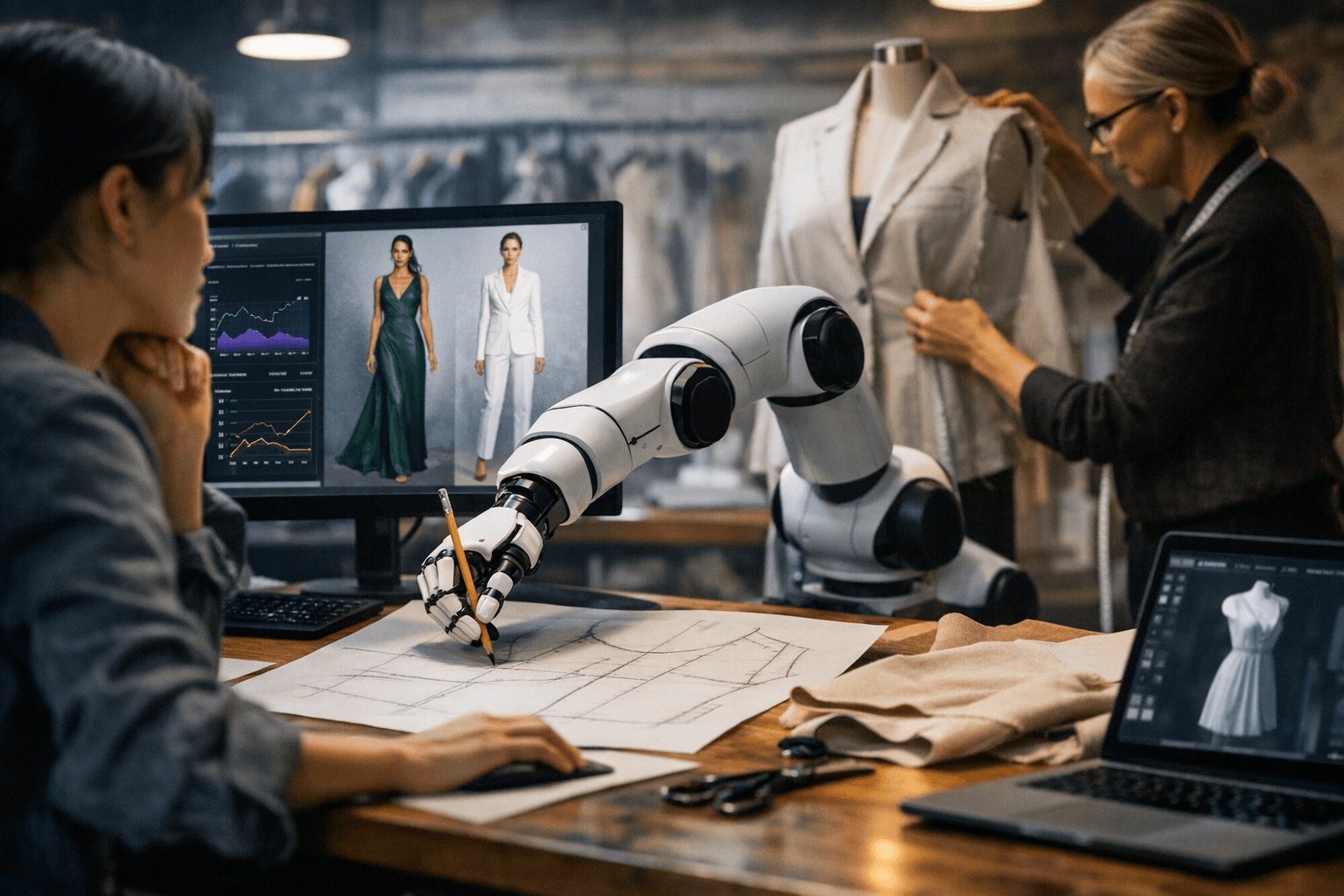
AI is moving from experiment to core utility across fashion value chains: a February 12, 2026 industry analysis traces accelerating adoption as brands deploy AI for forecasting demand, inventory optimization, creative and moodboard generation for design teams and virtual prototyping. That momentum is visible in boardroom intentions and runway workflows alike, even as many projects remain early-stage pilots.
Adoption statistics vary by metric, but the direction is clear. Business of Fashion reports, "More than 35 percent of executives report already using it in areas such as online customer service, image creation, copywriting, consumer search or product discovery." The same analysis warns that "While 92 percent of companies say they will increase their investments in generative AI, only 1 percent say their deployment of AI has reached maturity." Vendor reporting paints a broader footprint: a FashionINSTA blog post on February 16, 2026 claims "About 80% of fashion businesses already have AI projects deployed or in progress," and states "AI adoption in the apparel segment rose from 20% to 44% by mid-2026."
The business case is already tangible in production and creative operations. Business of Fashion cites Zalando as an example where "generative AI has reduced image production costs by 90 percent." FashionINSTA claims dramatic design-time savings, writing that "Pattern intelligence platforms reduce creation time from 8 hours to 10 minutes while maintaining brand consistency." FashionINSTA also places the pattern drafting software market at $2.5 billion in 2026 and projects growth to $4.2 billion by 2033, while estimating the global AI in fashion market at USD 1.99 billion in 2024 and USD 2.78 billion in 2026.
Supply-chain and sourcing teams are testing AI to tighten lead times and traceability. SupplyChainDive reports more apparel brands "may begin using AI tools to optimize inventory levels and logistics, evaluate new suppliers and streamline overall operational efficiency, joining companies such as Mango and Asos." SupplyChainDive quotes industry voices: "AI may also play a more crucial role in supporting efforts around supply chain mapping, traceability, and sustainability data collection," Lu said, and "Predictive supply chain mapping technologies can also streamline the customs process by making shipments more easily traceable to avoid fraud, especially as tariff enforcement increases," Santos said. At the same time, Business of Fashion notes the rise of autonomous systems: "Agentic AI is accelerating this further, offering the potential for autonomous decision making and execution."
Industry advisers are blunt about what separates pilots from scaled results. Jesta highlights "Why unified enterprise data is essential for AI success," the "importance of defining clear AI use cases and ROI" and "How cloud platforms enable AI at scale," while urging a "human-led, AI-assisted retail" model. The barriers are practical: high implementation costs, fragmented legacy systems and limited in-house expertise, plus complex governance questions.
Those governance questions are not academic. Fashiondiffusion Ai warns, "Relying too heavily on AI for content production or decision-making risks a homogenized aesthetic. It can lead to misaligned product assortments and, critically, damage the unique identity that defines the brand." The platform adds that "Brands must select AI platforms that offer clear copyright policies and provide auditable generation steps to protect their assets" and that "In 2026, responsible AI adoption in fashion means establishing clear guardrails, actively auditing models, and ensuring AI enhances human expertise rather than silently replacing skilled teams." If the industry can marry those guardrails with the cost gains already reported, 2026 may be the year AI moves from a toolbox to a backbone of design, sourcing and retail. Fashiondiffusion Ai concludes bluntly: "The year 2026 marks the definitive moment when AI evolves from an optional feature to a fundamental power engine of the fashion industry.
Know something we missed? Have a correction or additional information?
Submit a Tip
