Gabriela Hearst, Rachel Scott and Veronica Leoni on fashion’s future leadership
Fashion’s leadership reset is being written by women who know craft needs power to survive. At Parsons, Hearst, Scott and Leoni mapped the business realities behind the beauty.
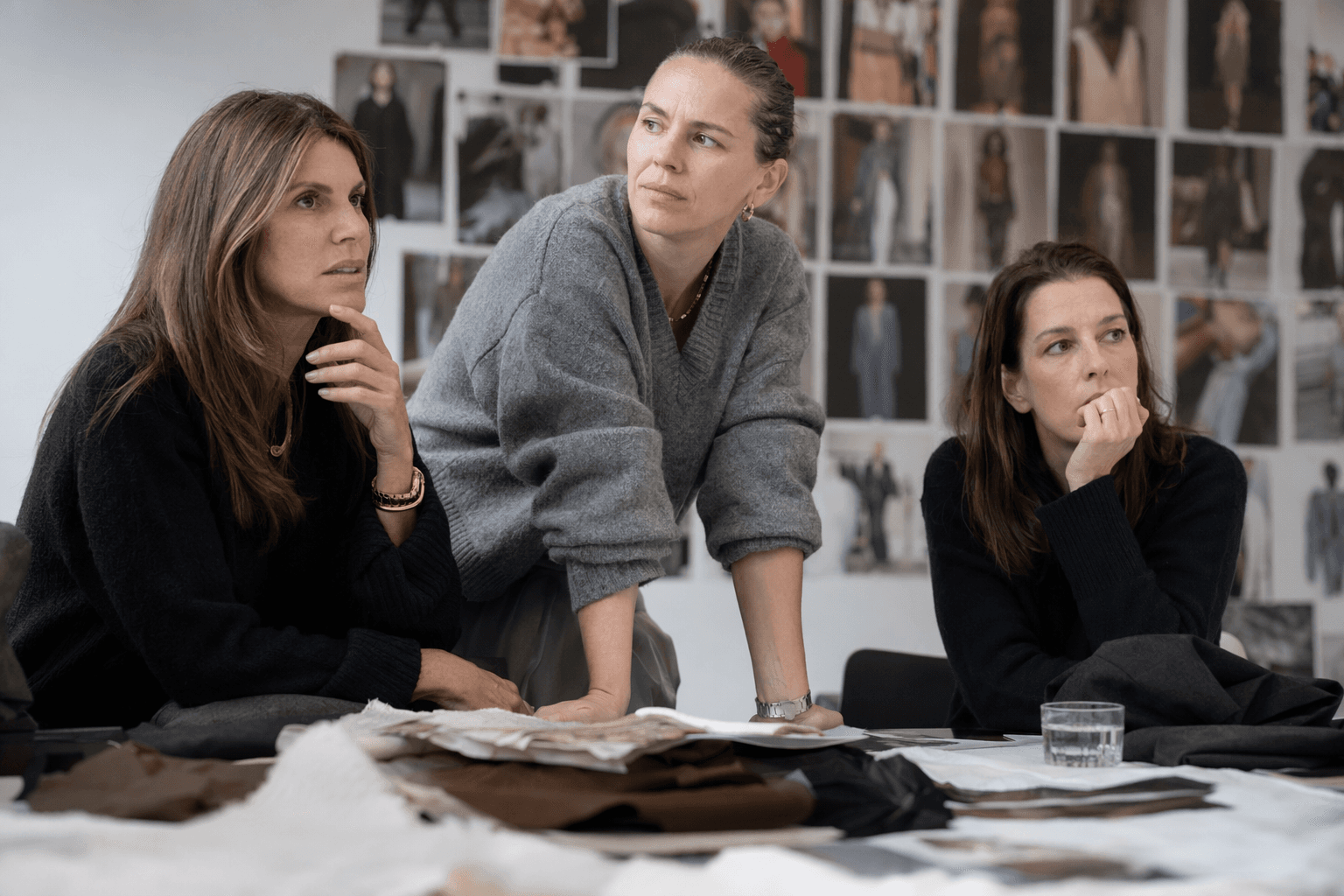
Fashion’s next leadership class is being asked to do more than design clothes. It has to guard craft, absorb commercial pressure and still hold a point of view that feels unmistakably its own.
At Parsons, the discussion was really about power
On Wednesday, May 6, 2026, Parsons School of Design and the Gromek Institute for Fashion Business brought Gabriela Hearst, Rachel Scott and Veronica Leoni to Tishman Auditorium at 63 Fifth Avenue in Manhattan for “Women Leaders Crafting a New Fashion Future.” Organized and moderated by Julie Gilhart, the conversation had the feel of a strategy session disguised as a panel, intimate in scale but large in implication. WWD described it as a fireside chat centered on leadership, challenges and women in a male-dominated industry, which is exactly why it resonated beyond the room.
Parsons framed the event with a statistic that cuts through the glamour: women make up 75% of fashion graduates, yet power at the top of the industry tells a different story. That gap is the real subject here. The future of fashion leadership is not a theoretical debate about representation, but a practical question about who gets to decide what gets made, who gets hired and how much room remains for conviction once a brand grows up.
Why these three women matter now
The conversation gained force because the three designers represent different kinds of authority. Gabriela Hearst built her namesake label around craftsmanship and sustainability, then brought that same discipline to Chloé as creative director. Her perspective matters because she knows the tension between luxury codes and accountability, a balance the market keeps demanding but rarely makes easy.
Rachel Scott brings a different kind of gravity. She is the founder and creative director of Diotima, and Parsons described her as the first Black woman to lead a major fashion house in the U.S. through her role at Proenza Schouler. That distinction is not just symbolic. It points to the structural work leadership requires now: building teams, setting standards and making sure access is not treated as an afterthought. Diotima’s own framing of Scott, including her Jamaican background and her route into fashion through language and theory, adds another layer to her authority. Her leadership reads as intellectual as well as aesthetic, which feels exactly right for this moment.
Veronica Leoni’s appointment at Calvin Klein Collection carries its own weight. Parsons described her as the first woman in the history of Calvin Klein Collection to serve as creative director. That makes her role more than a headline. It places her inside one of American fashion’s most closely watched brand vocabularies, where every decision has to hold shape, clarity and commercial precision at once.
What leadership now practically requires
The strongest takeaway from the discussion is that leadership in fashion has become operational. Vision still matters, but vision alone is not enough. The women onstage pointed, by their presence as much as by the frame of the event, toward a more demanding model of creative authority: one that has to protect a signature, manage scale and keep the work legible to a business that often prefers speed to nuance.
That means creative control is no longer just about having final say on a hemline or a silhouette. It is about keeping the identity of a house intact when the market pushes for simplification. Hearst’s world, with its emphasis on craftsmanship and sustainability, is a reminder that materials, sourcing and finish are not decorative concerns. They are the language of the brand. If that language gets flattened, the point of view goes with it.
It also means commercial pressure can’t be treated as the enemy of creativity, but it has to be managed with discipline. Heritage houses and founder-led labels alike are under constant pressure to expand, accelerate and perform. The women at Parsons made clear, in the seriousness of the conversation, that leadership now requires knowing when to grow and when to protect the edges that make a label distinct.
The next generation’s playbook
For emerging designers, the lesson is not simply to break through. It is to build in a way that can survive contact with scale.
- Keep the point of view sharp. The brand has to read instantly, whether it is crafted luxury, intellectual restraint or a renewed American classicism.
- Hire for translation, not just talent. A strong studio needs people who can turn design intent into production, merchandising and retail reality without diluting the idea.
- Treat craft as infrastructure. If the handwork, fabric selection or finish cannot scale, the brand has to plan for that before growth becomes a compromise.
- Understand access as part of leadership. Who gets the opportunity to lead, and who gets to stay in the room, shapes the future as much as any collection does.
That last point is what made the Parsons conversation feel especially timely. The event was not nostalgic, and it was not celebratory for its own sake. It was a reminder that fashion’s future will be built by women who understand how power actually works inside the industry, from the atelier to the boardroom. In a market that keeps rewarding noise, the leaders who matter most will be the ones who can keep craft visible, authority intact and the business aligned with the values that made the work matter in the first place.
This article was produced by Prism’s automated news system from verified source data, official records, and press releases, then run through automated quality and moderation checks before publishing. The system is built and supervised by the people who set the standards it runs under. Read our full AI policy.
Did this article answer your question?


