Graphic tees return as polished status symbols in fashion moments
Graphic tees are no longer throwaway merch. Styled with tweed, satin, and chainmail, they now signal taste, memory, and insider cool.
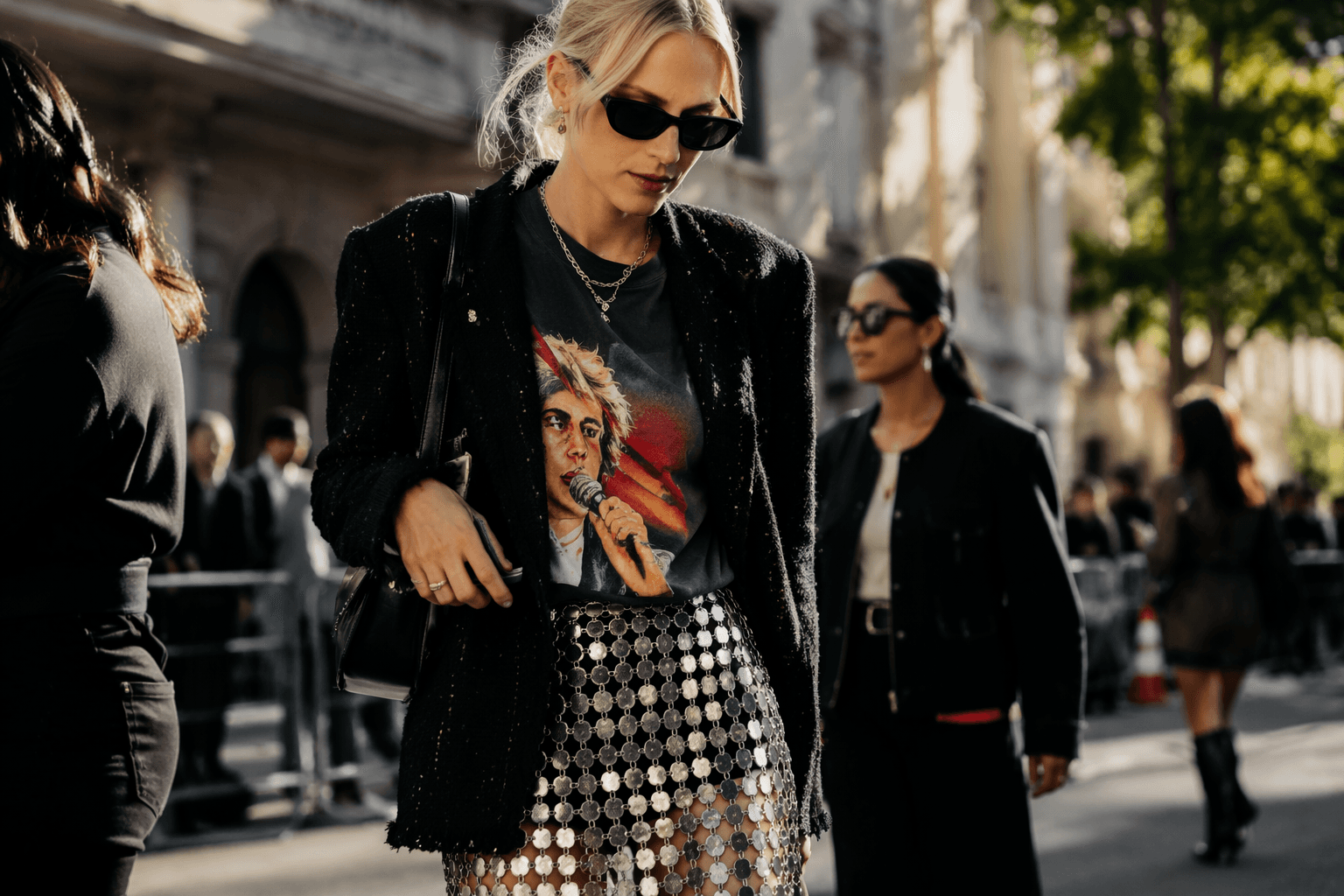
The new power move
The sharpest graphic tee moment right now is not slouchy or ironic. It is sequined, set against a tweed skirt suit, and staged inside an abandoned New York City subway station for Matthieu Blazy’s debut Chanel Métiers d’Art collection. That is the point of the revival: the tee has moved out of the category of casual filler and into the language of luxury, where personality matters as much as polish.
What makes this comeback feel especially current is the way it rewrites status. A graphic tee is no longer valuable because it looks expensive in the obvious sense. It matters because it says something specific about the person wearing it, whether that is memory, fandom, humor, or a sharper, more personal kind of taste.
The celebrity proof is the message
The clearest argument for the tee’s return is how confidently celebrities are wearing it. Teyana Taylor wore Chanel’s graphic tee look while hosting Saturday Night Live, which gave the shirt the energy of a headline, not a wardrobe afterthought. Jennifer Lawrence and Sabrina Carpenter both wore the same yellow Beatles “Strawberry Fields Forever” T-shirt from Junk Food Clothing, proving that a tee can circulate like a desirable object, not just a souvenir.
Kate Hudson pushed the formula further by pairing a Grateful Dead T-shirt with a red satin midi skirt and glove pumps. The mix is what makes it read as fashion, not fan gear: the tee brings the memory, while the satin and gloves deliver the finish. Miley Cyrus did something even more striking, bringing a Hannah Montana T-shirt onto the red carpet with a Rabanne chainmail gown, a collision of nostalgia and high shine that turns the shirt into the most personal part of the look.
Meghan Markle took the same idea in a different direction with a “Mama” T-shirt from Alliance of Moms. It is a reminder that the graphic tee’s return is not limited to irony or celebrity self-reference. It can also be intimate, charitable, and plainly direct.
Why the tee feels expensive again
The new appeal is not the old slogan-shirt attitude of the early 2000s. Melody Kole of Junk Food Clothing says the trend works because it lets people “express what they love, remember, grew up with, or want to be part of,” and that is exactly why it feels more intentional now. The shirt is doing emotional work, but it still has to be styled with discipline.
That is the difference between disposable merch and a status piece. The current version is chosen, not shrugged on. It lands best when it is anchored by something with texture or structure, like tweed, satin, chainmail, or a sharp pump, because those materials make the tee look considered instead of casual.
How to wear it now
The easiest way to make a graphic tee look polished is to treat it like the focal point of a tailored outfit. Chanel’s sequined “I Love NY” shirt with a tweed skirt suit is the clearest runway proof, but the idea translates in several directions:
- Pair a graphic tee with a skirt that has body or sheen, like satin or tweed, so the shirt does not feel too relaxed.
- Use accessories with intent, such as glove pumps, jewelry, or a sculptural bag, to keep the look from drifting into weekend wear.
- Choose a graphic with a real association, whether it is music, art, or a personal cause, because the strongest versions feel like a clue, not a joke.
- Skip the generic, overdesigned, too-clever tee that tries too hard to be witty. The current mood is about clarity and memory, not novelty for its own sake.
The best examples all rely on contrast. A nostalgic print becomes fashion when it is placed next to something formally elegant. That tension is what makes the tee feel modern again.
From merch to collectible
The graphic tee’s rise also makes sense in a broader luxury landscape that is increasingly comfortable selling personality. The Met Store is already doing this with art-inspired graphic tees tied to works from The Metropolitan Museum of Art’s collection, describing its apparel line as inspired by art across the museum and presenting even a logo tee as a stylish graphic statement linked to 5,000 years of worldwide culture. In other words, the shirt is being framed less as souvenir merch and more as a wearable object with cultural weight.
That shift matters because it gives the graphic tee a more elevated reason to exist. It is not just about buying into a brand’s logo or a concert memory. It is about wearing a reference that feels legible to people who know the code. The tee becomes a small, portable gallery wall, a place where culture, fashion, and identity overlap.
That also separates the new graphic tee from the logic of fast fashion. Britannica describes fast fashion as the rapid production of inexpensive clothing that copies popular styles and keeps trend turnover moving at full speed. The current tee revival moves in the opposite direction. It depends on specificity, not churn. It asks for pieces that feel memorable enough to keep and distinct enough to signal something real.
The old shirt, rethought
There is nothing accidental about the fact that this shirt keeps returning whenever fashion wants to look less stiff. Shirts with decoration have long carried meaning, and Britannica notes that as far back as the 16th century, embroidery, lace, and frills could signal social rank. The modern graphic tee does not mimic that look, but it does revive the same instinct: clothing as a readable marker of status.
That is why the tee feels so persuasive in 2026. Luxury is not abandoning refinement; it is loosening its posture just enough to let character in. The new graphic tee is polished, but not sterile. It is nostalgic, but not precious. Most of all, it shows that the smartest thing luxury can wear right now is something with a point of view.
This article was produced by Prism’s automated news system from verified source data, official records, and press releases, then run through automated quality and moderation checks before publishing. The system is built and supervised by the people who set the standards it runs under. Read our full AI policy.
Did this article answer your question?


