Halston pedal pushers return as spring's chic cropped pant
Halston’s pedal pushers are back, and the styling trick is simple: keep the leg line clean with flats, knits and sharp sandals, not costume nostalgia.

Halston’s instinct for the cropped leg
Halston understood something about spring dressing that still feels radical: the most memorable clothes often come from restraint, not excess. In his spring 1980 collection, he combined his love of florals with the pedal pusher, a cropped shape WWD called “One of the freshest additions to the great American pants revolution.” The look appeared in red and blue silk gazar with a vanilla-colored silk charmeuse bias-cut top, a pairing that balanced structure with fluidity in a way that still reads modern.
That is the real reason this return lands now. Halston was not just mining a novelty pant. He was treating a historically tricky shape as a polished wardrobe proposition, the sort of piece that could move from day to evening without losing its line. The Metropolitan Museum of Art has noted that his innovations continue to be seen in fashion today, and that they have been resurrected with the Halston brand in the twenty-first century, which explains why archive moments from his work still carry cultural weight. Born Roy Halston Frowick on April 23, 1932, and dead by March 26, 1990, he left behind a design language that still feels useful, not merely nostalgic.
Why pedal pushers suddenly feel fresh again
Pedal pushers are not just any cropped pant. Britannica defines them as women’s pants that fall a short distance below the knee, a hem placement that gives the leg a very specific visual cut. Historically, they were popular in the 1950s and early 1960s, and their original link to bicycle wear matters more than it sounds. The shape was born from utility, which means it has always carried a little practicality beneath the polish.
That history is exactly why the silhouette can look current in 2026. Fashion keeps circling back to archive pieces that feel familiar but not overworked, and pedal pushers sit in that sweet spot between novelty and ease. They are more deliberate than capris, which often read softer and more middle of the calf, and they are more obviously styled than full-length trousers, which can sometimes blur into the rest of an outfit. The pedal pusher interrupts the line just enough to make the shoe matter, and that is where the outfit gets interesting.
The shape also fits the industry’s long appetite for revival. By the 1970s, the line between high fashion and mass fashion had already blurred, and archive-driven dressing has remained a recurring way to refresh the wardrobe without inventing a new silhouette from scratch. Halston’s own late-era work continued into the early 1980s, including a last collection in 1984, so this is not a museum piece being dusted off for sentiment. It is a shape that has already proven its staying power.
How to wear it now without tipping into nostalgia
The easiest way to modernize pedal pushers is to treat them like a clean, architectural base. Keep the top close to the body, or at least visibly controlled: a fitted knit, a fine-gauge cardigan, a slim ribbed tank, or a sharp little jacket that ends near the waist. The cropped hem already brings attention to the lower leg, so the rest of the silhouette should stay lean and deliberate.
Shoes do the heavy lifting here. Sleek flats give the pant a crisp, urban feel, especially when the toe is refined and the vamp is low enough to lengthen the foot. Sharp sandals, especially the kind with a minimal strap and a precise heel, make the hem feel more evening-ready, while flat sandals can keep the look relaxed as long as the lines are spare. The mistake is choosing something overly ornate, too chunky, or too retro in a literal way, because then the pant starts to feel like a costume reference instead of a sharp update.
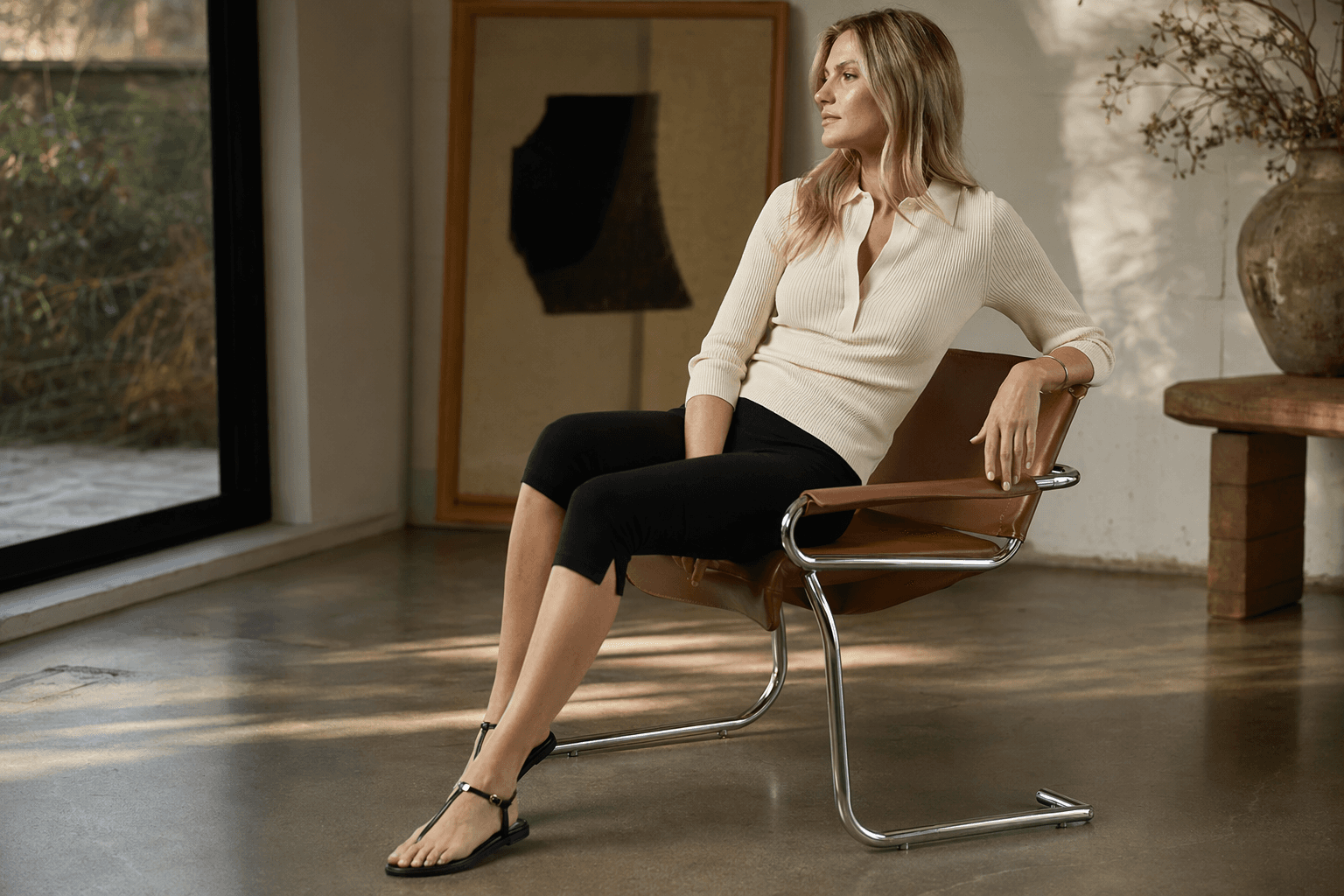
A few styling rules make the difference:
- Choose fitted knits over boxy tops. The cropped leg already creates a break in the silhouette, so a slimmer upper half keeps the whole look from collapsing visually.
- Let the hem hit cleanly below the knee. That is the point of the shape, and it is what separates pedal pushers from capris.
- Pair with minimal tailoring. A neat blazer or a sharply cut jacket gives the pant a more editorial finish than boho layers or exaggerated volume.
- Keep the shoe line intentional. Flats should look polished, not casual; sandals should feel precise, not beachy.
The original Halston pairing is still the lesson. Silk gazar gives the silhouette a certain crispness, while silk charmeuse introduces a liquid softness against the body. That tension, between tailored and sensual, is what keeps the shape from feeling severe. A pedal pusher works best when the fabric has enough presence to look expensive and enough ease to move, because then the cropped length feels designed rather than truncated.
The payoff of the cropped hem
Pedal pushers are at their best when they create a sense of focus. They show the ankle, reveal the shoe, and make the body look edited in a way full-length trousers often do not. That is why the silhouette feels so right for spring: it has air around it, but not slouch, and it suggests motion without relying on volume.
Halston knew that a strong cropped pant could carry more fashion intelligence than a louder statement piece. The spring 1980 look, and the 1981 continuation of the idea, turned a 1950s wardrobe staple into something elegant enough for a modern runway and practical enough for real life. Worn with discipline, pedal pushers are no longer a throwback at all. They are a precise answer to spring dressing’s oldest problem: how to look fresh when the weather warms and the wardrobe starts asking for air.
This article was produced by Prism’s automated news system from verified source data, official records, and press releases, then run through automated quality and moderation checks before publishing. The system is built and supervised by the people who set the standards it runs under. Read our full AI policy.
Did this article answer your question?


