Harris Tapper’s minimalist basics bridge fast fashion and luxury
Harris Tapper sells the promise many shoppers want now: fewer, better clothes that sit between Zara churn and full luxury pricing, without looking like compromise.
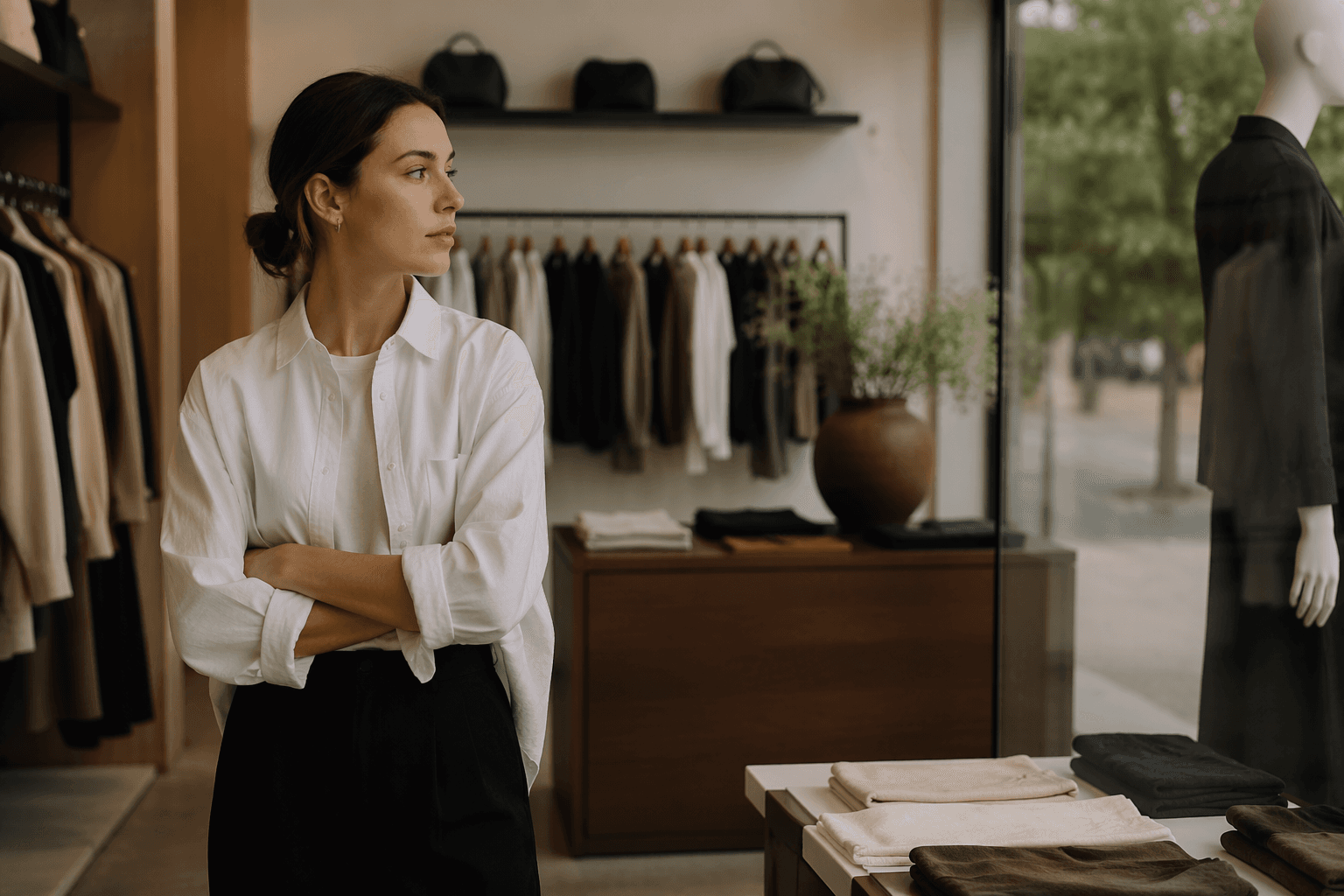
Harris Tapper lands in the exact wardrobe gap fashion keeps circling back to: the one between disposable fast fashion and the steeper psychology of luxury. Its clothes are pared-back, polished, and deliberately useful, yet the brand asks for more than a throwaway price tag, which makes it a sharp case study in what modern shoppers are really buying when they reach for “elevated basics.”
A label built from shirting, not spectacle
Sarah Harris Gould and Lauren Tapper founded Harris Tapper in 2017 after spotting a shortage of high-quality, directional women’s shirting at an accessible price point. The first offering was a capsule of 12 meticulously tailored shirts, a small start that already told you where the label’s instincts lay: in cut, proportion, and wearability rather than logo pressure or occasion drama. By 2019, the range had grown into a full 30-piece wardrobe, and that early precision set the template for everything that followed.
The brand’s expansion has been steady rather than noisy. In 2019 it released a Resort 20 collection of 40 pieces, widening the lens from sharp shirting into suiting, silk dresses, knitwear, and the kind of sculptural minimalism that reads as confident without shouting. That matters, because minimalism can drift into blandness very quickly; Harris Tapper’s version is built to feel considered, not empty.
Why the founders’ background shows in the clothes
The pair’s combined experience explains the restraint. Harris Gould comes from buying and brand management in New Zealand and London, while Tapper’s background is in design and PR. They met while working together for a global clothing brand in New Zealand, and that blend of commercial awareness and image-making shows up in the brand’s tone: pragmatic, polished, and tightly edited.
Harris Tapper describes itself as a women’s ready-to-wear brand offering sartorial choices for modern professional life. That positioning is more revealing than any mood board. These are clothes made for desks, dinners, travel, and the constant wardrobe math of looking pulled together without appearing overdone. The brand’s appeal lies in that tension, because the best pieces promise repeated use, not just a first impression.
The appeal of the elevated basic, and its limits
This is where the fast fashion versus luxury question gets interesting. Harris Tapper sits in the accessible-luxury zone, with jackets, trousers, dresses, and knits priced in the hundreds of dollars. For a shopper tired of flimsy trend pieces but unwilling to step into the four-figure territory of true luxury, that can feel like a sensible middle ground.
The consumer test is harsher than the aesthetic one. An elevated basic only earns its place if the cut holds up after repeated wear, the fabric resists collapse, and the silhouette still feels current after the novelty wears off. Harris Tapper’s tailored shirts and pared-back tailoring are designed for exactly that kind of longevity, which gives the brand a credible sustainability argument through reduced wardrobe turnover. But minimalist dressing can also be a premium wrapper around the same consumption habit, especially if the pieces merely look calm while still requiring constant newness to stay commercially alive.
What makes Harris Tapper persuasive is that it does not lean on trend noise to justify itself. It asks buyers to invest in a silhouette they can live in, and that is a more honest proposition than fast fashion’s seasonal bait. Still, the real test of lower-waste fashion is not whether it looks restrained on launch day. It is whether the pieces stay in rotation long enough to make fewer, better purchases feel practical rather than aspirational.
From local stockists to international visibility
The brand’s retail footprint gives that proposition some substance. In New Zealand, Harris Tapper is stocked at Scotties, Muse Boutique, and Sisters & Co, and it also sells online through True Store and Lynn Woods. In Melbourne, it has a dedicated stockist at The New Trend, a useful signal that the label’s appeal crosses the Tasman without needing a loud brand personality to carry it.
Its e-commerce setup is also clearly built for borderless shopping. Orders in New Zealand, Australia, and the United States are shipped DDP, meaning duties and taxes are covered, and prices are automatically displayed in NZD, AUD, or USD depending on location. That kind of frictionless checkout is not glamorous, but it matters. For a label positioning itself between mass and luxury, clarity around landed cost is part of the value proposition.

NZFW turned the brand into a runway proposition
The 2025 New Zealand Fashion Week debut sharpened the brand’s profile further. Harris Tapper’s inaugural runway show took place in an intimate off-site venue, which suited a label whose strongest language is not theatrics but line and fit. New Zealand Fashion Week describes itself as Aotearoa’s premier fashion platform for runway shows, installations, and experiences, so showing there places Harris Tapper within the country’s most visible fashion conversation.
That move from shirting specialist to runway-ready ready-to-wear matters because it changes how the brand is read. A shirt brand can live quietly on a rail; a runway debut asks to be judged as a full wardrobe proposition. Harris Tapper accepted that challenge at a moment when minimal dressing can no longer survive on good taste alone. It has to prove range, continuity, and enough design intelligence to justify the price jump from ordinary basics.
The New York showroom signaled bigger ambitions
Those ambitions were visible again in December 2025, when Sarah Harris Gould, Lauren Tapper, and wholesale manager Cilla Penny hosted wholesalers and friends of the brand from a private showroom at WSA in New York City. The visit was part of the brand’s effort to grow its international presence, and it made sense as a next step for a label that has already established its footing in New Zealand and Australia.
New York is a useful proving ground for this sort of label because shoppers there know the difference between a true wardrobe staple and a minimalist uniform that has been priced up for atmosphere. Harris Tapper’s challenge is not to be louder, but to remain specific: tailored shirts, clean lines, wearable suiting, and a point of view that feels disciplined rather than generic. In a market crowded with brands selling “investment pieces,” that discipline is the real luxury.
This article was produced by Prism’s automated news system from verified source data, official records, and press releases, then run through automated quality and moderation checks before publishing. The system is built and supervised by the people who set the standards it runs under. Read our full AI policy.
Did this article answer your question?


