How to Spot Greenwashing: A Checklist for Fashion Brand Sustainability Claims
Slapping "eco-friendly" on a hangtag isn't sustainability. Here's how to tell which brands are doing the work and which ones are just selling you a story.

It's no longer enough to print "made with recycled materials" on a swing tag and call it a mission. The fashion industry has become fluent in the language of sustainability, and that fluency has made it easier, not harder, to mislead shoppers who are paying attention. The brands doing the real work and the ones performing it have started to look identical from the outside. That's the problem this checklist is designed to solve.
What follows is a practical, brand-agnostic framework you can apply to any label, from a direct-to-consumer startup claiming carbon neutrality to a heritage house touting its new "conscious" line. The goal isn't cynicism; it's clarity. Ask these questions, and the answers will tell you almost everything.
Start with Governance: Who Is Actually Accountable?
Sustainability claims mean very little without a governance structure that makes someone responsible for delivering on them. The first thing to look for is whether a brand has appointed a dedicated sustainability officer or a board-level committee with explicit oversight of environmental and social commitments. A press release about sustainability goals costs nothing. A named executive whose role, compensation, and continued employment are tied to measurable outcomes is a different thing entirely.
Ask whether the brand publishes an annual sustainability report, and then ask whether that report has been independently verified. There is a significant difference between a company writing its own progress update and one that submits its data to third-party auditors. Look for references to the Global Reporting Initiative (GRI) standards or the Sustainability Accounting Standards Board (SASB) frameworks, both of which require specific, comparable disclosures rather than aspirational language.
Also check whether sustainability goals are time-bound and quantified. "We are committed to reducing our footprint" is a sentiment. "We will reduce Scope 3 emissions by 42 percent by 2030, measured against a 2022 baseline" is a commitment. The difference between those two sentences is the difference between a brand that is serious and one that is managing perception.
Supply Chain Transparency: Follow the Thread
The most credible sustainability claims are the ones that extend all the way down the supply chain, not just to a brand's direct suppliers, but to the farms, mills, and factories those suppliers use. Ask whether a brand publishes a supplier list. A growing number of genuinely committed labels make this information publicly available; those that don't often cite competitive sensitivity, which is worth noting.
Look for third-party certifications that cover specific supply chain claims:
- GOTS (Global Organic Textile Standard) for organic fiber claims
- Bluesign for chemical and water use in textile manufacturing
- Fair Trade Certified or SA8000 for labor conditions
- Responsible Wool Standard or Responsible Down Standard for animal-derived materials
- B Corp certification, which assesses the whole business, not just one product line
Certifications matter because they involve audits by parties with no financial stake in the outcome. But they are not infallible. Check when a certification was last renewed, and look for any lapsed or revoked status. A brand displaying a certification logo it no longer holds is not a hypothetical scenario.
Materials Claims: The Details That Reveal Everything
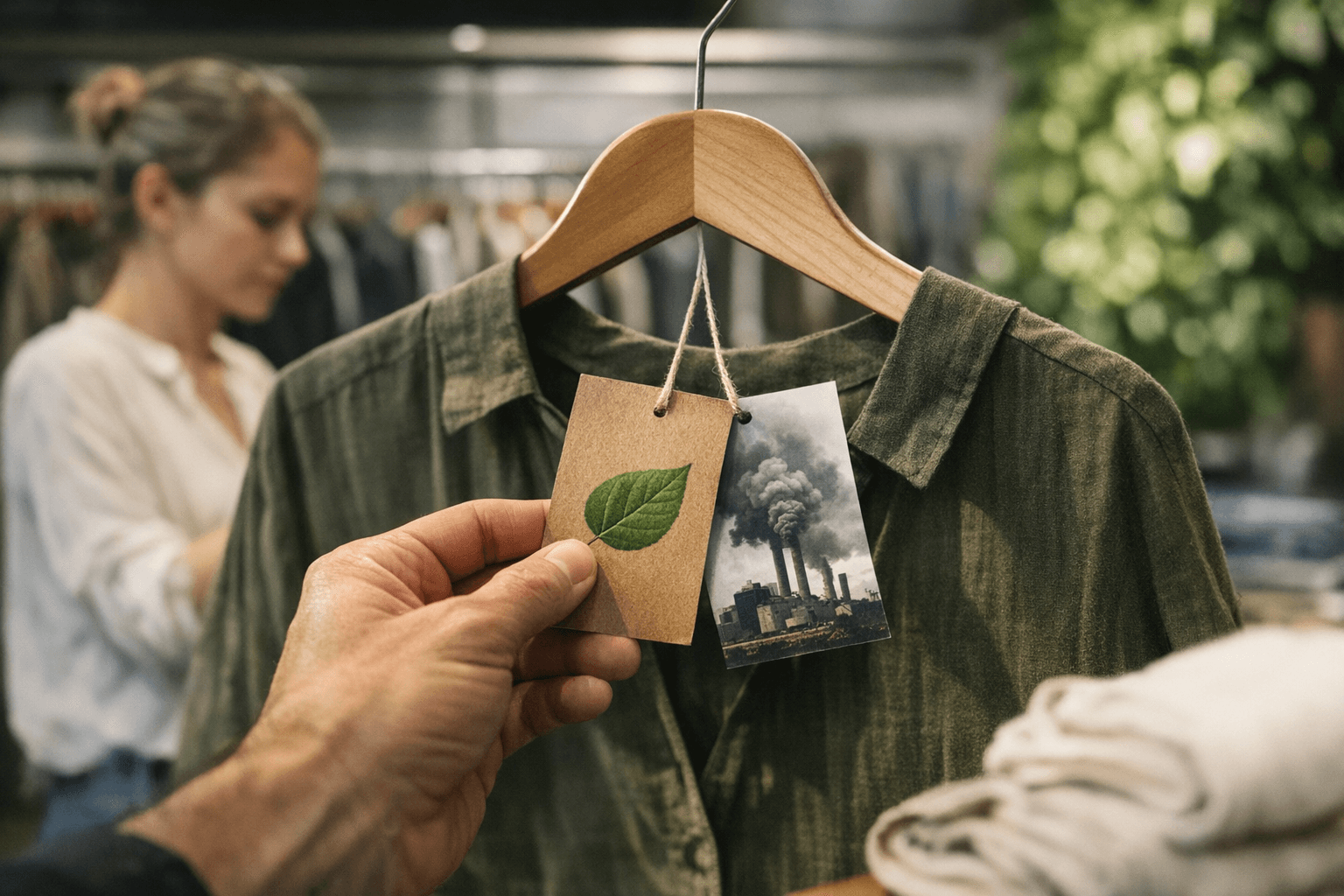
"Sustainable materials" is one of the most elastic phrases in fashion marketing. It can mean anything from certified organic cotton to a polyester blend that contains 5 percent recycled content. When a brand makes a materials claim, demand specifics.
If a brand says a product is made from recycled plastic bottles, ask what percentage of the garment is that recycled content, and ask what happens to the garment at end of life. A jacket that is 30 percent recycled polyester and 70 percent virgin nylon, with no take-back program, is a marginal improvement at best. Presenting it as a sustainability achievement is a framing choice.
Be especially alert to:
- Vague fiber descriptors ("eco fabric," "planet-friendly blend") with no certification backing
- Carbon offset claims that substitute for emissions reduction rather than supplement it
- "Biodegradable" claims on synthetic blends, which rarely degrade under real-world conditions
- Water-saving statistics cited without a baseline or methodology
The European Union's Green Claims Directive, which is moving toward requiring brands to substantiate environmental claims with scientific evidence before making them publicly, is worth tracking. It signals where the regulatory floor is heading and gives you a useful benchmark for what "substantiated" actually looks like.
Pricing and Volume: The Math Has to Work
One of the most reliable indicators of genuine sustainability commitment is pricing and production volume. Ethical labor, certified materials, and responsible manufacturing all cost more than their conventional equivalents. A brand claiming full supply chain accountability while pricing at fast-fashion levels should prompt immediate scrutiny. The math simply does not work.
Similarly, a brand that releases new collections every two to three weeks while positioning itself as sustainable is presenting a structural contradiction. Overproduction is one of the industry's central environmental problems. No amount of recycled packaging offsets the resource cost of churning out volume at that pace.
The Greenwashing Red Flags, Consolidated
If you need a quick filter before you dig deeper, these are the patterns most consistently associated with performative sustainability rather than substantive practice:
- A dedicated "sustainability" or "conscious" product line that exists alongside an unchanged main collection
- Environmental claims that appear only in marketing materials, not in corporate filings or audited reports
- Offsetting language that outpaces actual reduction commitments
- A brand that talks extensively about packaging while saying nothing about the garments themselves
- No disclosed emissions data, water use figures, or wage information for manufacturing workers
- Certifications displayed without links to the certifying body's verification database
What Genuine Accountability Looks Like
The brands worth trusting are the ones that make their shortcomings visible. A sustainability report that acknowledges where a company is falling short, names the specific challenges in its supply chain, and sets revised timelines accordingly is more credible than one that reads like a highlight reel. Transparency about failure is harder to fake than transparency about success.
Governance that ties executive accountability to sustainability outcomes, supply chain disclosures that go beyond tier-one suppliers, materials claims backed by current third-party certifications, pricing that reflects actual production costs: none of these individually guarantee a brand is doing everything right. Together, they create a picture that is very difficult to manufacture fraudulently.
The fashion industry's sustainability conversation has matured enough that the best greenwashers have learned to speak the language convincingly. The checklist above is designed to get past the language and into the evidence. That is where the real story is.
Know something we missed? Have a correction or additional information?
Submit a Tip