How to Spot Truly Sustainable Fabrics, From Cotton to Bamboo
Natural does not equal low-impact. The smartest fabric buys are the ones with transparent fibers, cleaner finishes, and less hidden chemistry.

The fabric test that matters
The easiest mistake in sustainable shopping is falling for the romance of a label. A fabric can feel artisanal, look crisp, and sound virtuous, yet still hide a messy supply chain. Textile Exchange says global fiber production reached 124 million tonnes in 2023, which is the real reason material choice matters so much: every blouse, trouser leg, and lining fabric adds up fast.
That is why the most useful sustainability question is not whether a fabric is natural. It is whether the fiber is responsibly sourced, the finish is cleaner, and the garment is built to last. In other words, you are not just buying cloth. You are buying the chemistry, the processing, and the afterlife.
The fibers that usually deserve a closer look
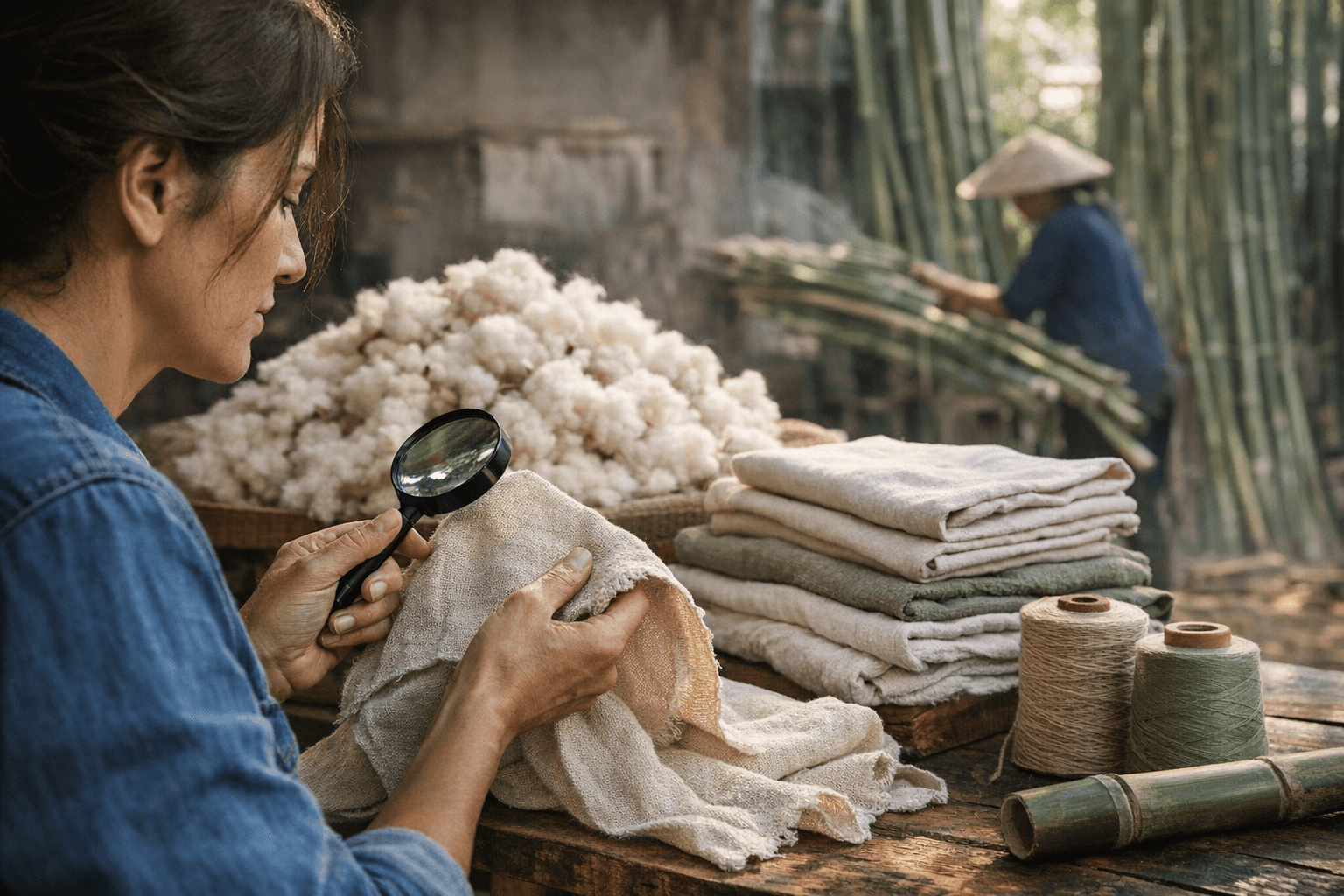
The fabrics that tend to fare best in a thoughtful wardrobe edit are the ones that combine renewability with lower chemical intensity. Organic cotton, linen, hemp, silk, wool, alpaca, and bamboo all show up in serious sustainability conversations, but they are not interchangeable. Organic cotton, linen, and hemp are especially compelling because they are renewable and often require fewer chemicals than conventional alternatives. They are the fabrics that feel more grounded in the hand, less slick, more honest about what they are.
Upcycled materials push that logic even further. Lottie Bertello of LOTI calls upcycled products “king” when it comes to resource use and waste reduction, and that is hard to argue with. If a garment is made from something already in circulation, it sidesteps part of the raw-material burden entirely. In a fashion system still hungry for more fiber, that kind of reuse is not just clever, it is structurally better.
Still, no natural fiber gets a free pass. A beautiful fabric can be grown responsibly and then undermined by aggressive dyeing, chemical finishing, or poor labor practices. The cleanest-looking linen dress in the shop is not automatically the wisest purchase if the brand hides the rest of the story.
Why bamboo can be misleading
Bamboo is the clearest example of how green language can outpace reality. It sounds fast-growing, plant-based, and gentle, which is exactly why it shows up so often in sustainability conversations. But NRDC warns that conventional bamboo fabric is usually made through the viscose process, which means the end result is not automatically a low-impact textile simply because the source plant sounds wholesome.
That distinction matters because shoppers often buy the word, not the process. A bamboo label can imply a kind of botanical purity that the finished fabric does not necessarily deserve. The smarter move is to ask how the bamboo was turned into cloth, what chemicals were used, and whether the brand gives any transparent process details beyond the buzzword itself.
If a label only offers “bamboo” and “eco,” treat that as a marketing cue, not a sustainability proof point. The better brands are the ones willing to explain how the fiber was made, not just where it began.
The hidden chemistry inside “easy-care” clothes
Some of fashion’s most important sustainability questions live in the finish, not the fiber. The EPA says PFAS are used in textiles and can persist in the human body and the environment. NRDC describes them as an estimated 9,000-chemical family used in apparel to make garments water and stain resistant. That means a rain jacket, coated trouser, or office shirt with an “easy-care” promise may carry chemical baggage that has nothing to do with whether the base fabric is organic or synthetic.
This is where the consequences become personal. PFAS are not an abstract policy problem when they are used to keep a blouse looking spotless or a coat shrugging off coffee. NRDC cites a 2022 California poll showing 78% support for banning PFAS in clothing and textiles, which tells you how quickly the public has caught on to the trade-off. The sheen of convenience is starting to look expensive.
When you shop, look for brands that clearly say PFAS-free, and be skeptical of any water- or stain-resistant claim that does not explain the chemistry behind it. A less-treated garment may ask for a little more care, but it often gives you a cleaner relationship with the clothes you wear against your skin.
Durability, microplastics, and the clothes you keep
Sustainability is not only about what a fabric is made from. It is also about how long it stays in your closet and how badly it breaks down along the way. If a garment sheds microplastics in the wash, or pills after a few wears, the low-impact story gets weaker fast. The most responsible material is often the one you will actually wear repeatedly, mend, and keep out of the waste stream.
That matters because the EPA says textiles are a major component of municipal solid waste, with discarded clothing as the main source. Waste is where the fantasy of “one more trend piece” collapses into the reality of landfill volume. A dress that falls apart after three outings is not a small failure. It is a material one.
This is where fabric knowledge becomes style discipline. A wool coat with proper structure, a linen shirt with a good hand, or a well-cut hemp trouser may not shout from the rack the way a slick synthetic does, but they often earn their place through wear. Sustainability, in practice, is as much about longevity as it is about fiber choice.
How to read the label like a skeptic
The most useful labels are specific. Vague language is where greenwashing thrives, while transparency usually looks a lot less poetic and a lot more useful. Textile Exchange’s Materials Benchmark, which it says is the largest peer-to-peer comparison initiative in the fashion, textile, and apparel industry, reflects that shift: sustainability is increasingly about measurable comparison, not mood lighting and marketing copy.
What to look for:
- Clear fiber content, not just a vague “eco” tag
- Organic cotton, linen, hemp, silk, wool, alpaca, or upcycled content when the brand can explain the sourcing
- PFAS-free claims, especially on outerwear or stain-resistant pieces
- Process details for bamboo, not just the word bamboo itself
- Signs that the garment was made with durability in mind, from sturdy construction to easy repair
The point is not to ban every synthetic or treat every natural fiber as virtuous. It is to ask better questions. What was added to the fabric? What was stripped away? How much chemistry did it take to get from raw material to finished garment? And will you still want to wear it next season?
That is the real shift in sustainable dressing: less faith in comforting adjectives, more respect for the material facts. In a fashion system that produced 124 million tonnes of fiber in 2023, the smartest wardrobe decisions are the ones that can survive scrutiny long after the label has been cut off.
This article was produced by Prism’s automated news system from verified source data, official records, and press releases, then run through automated quality and moderation checks before publishing. The system is built and supervised by the people who set the standards it runs under. Read our full AI policy.
Did this article answer your question?


