Key U.S. Legal Cases Reshaping Fashion, Apparel, and Beauty in 2026
Dupe lawsuits, MoCRA compliance, and AI brand integrity battles are the legal forces fashion and beauty brands can't afford to ignore this year.
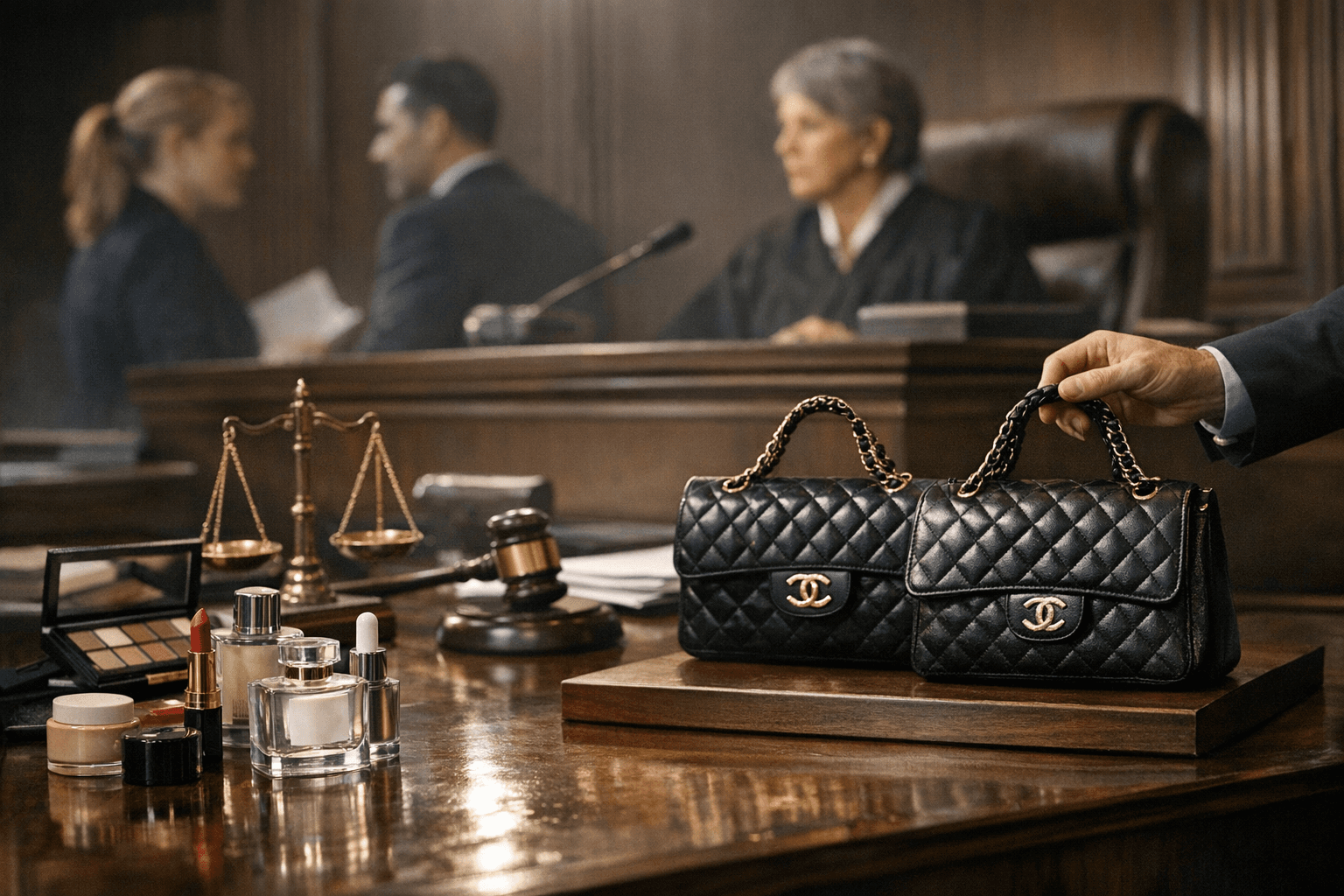
The courtroom has become fashion's most consequential runway. A legal roundup published March 20, 2026 by Foley & Lardner partners for The Global Legal Post identifies the cases and regulatory pressures most likely to reshape how U.S. fashion, apparel, and beauty brands operate this year. Read alongside Foley & Lardner's "Fashion, Apparel & Beauty 2026 Outlook," a multidisciplinary report examining everything from supply chain litigation to M&A strategy, the picture that emerges is one of an industry navigating a more complex operating environment defined by both opportunity and risk.
The industry arrives at this moment after years of disruption. Market normalization is underway, supply chains are rebounding, regulatory scrutiny is intensifying, and AI adoption is accelerating across design, marketing, and operations. None of these forces is operating in isolation; each is colliding with the others in ways that are creating friction points in contracts, courtrooms, and compliance departments simultaneously.
The Litigation Watchlist: Dupes, Minimalism, and Counterfeits
The most culturally loaded legal trend on the Foley & Lardner radar is the rise of "dupe" litigation. The dupe economy, in which consumers deliberately seek out lower-cost products that replicate the look, feel, or function of luxury and premium goods, has moved from a social media phenomenon to a legal battleground. The Outlook flags this as an emerging and accelerating area of dispute, with brands increasingly unwilling to treat lookalike products as a cost of doing business. What "dupe" litigation looks like in practice, which specific cases are moving through U.S. courts and on what legal theories, will require the full Outlook document to detail, but the directional signal is clear: IP enforcement is becoming more aggressive.
Closely related is a distinct and technically challenging area: disputes over IP protection for minimalist design. Minimalism has dominated fashion and beauty aesthetics for years, from pared-back skincare packaging to the clean architectural lines of contemporary ready-to-wear. The legal difficulty is that minimalism, by definition, involves the reduction of elements, which can make it harder to establish the distinctiveness required for trade dress or design patent protection. Cases in this space are pushing courts to clarify where genuine design innovation ends and generic category convention begins, with significant implications for how brands protect their most iconic, stripped-back aesthetics.
Counterfeit activity rounds out the core litigation cluster. The Outlook addresses counterfeiting alongside the IP and dupe trends, recognizing that, while these are legally distinct, they share enforcement infrastructure and strategic stakes. The growing strategic importance of trademark and design protection in beauty is called out specifically, reflecting how much more legally sophisticated the beauty sector has become as it contends with a flood of look-alike products.
Supply Chains, Brand-Manufacturer Disputes, and Commercial Friction
The rebound in global supply chains is welcome news for an industry that spent several years managing disruption, but the Outlook is clear-eyed about what rebounds also bring: disputes. Brand-manufacturer relationships are under legal strain as the contracts signed in one market environment are now being tested against a changed one. Price assumptions, delivery timelines, quality specifications, and force majeure clauses written during periods of acute disruption are now generating friction when parties attempt to return to normal terms. The Outlook examines these brand-manufacturer disputes as a direct consequence of the supply chain rebound, positioning them as one of the more commercially consequential legal areas of 2026.
M&A and Bankruptcy: The Business of Distress and Opportunity
The Outlook also takes stock of fashion's financial restructuring. Bankruptcy trends affecting fashion companies remain an active area of legal analysis, as brands that survived the disruption years on borrowed time, whether through lender forbearance, emergency financing, or deferred renegotiation, now face reckoning in a normalized market. At the same time, the evolving drivers of value in fashion and beauty M&A signal that acquirers and investors are reassessing what makes a brand worth buying. IP portfolios, data assets, supply chain relationships, and regulatory compliance posture are increasingly part of deal calculus in ways they were not a decade ago. The Outlook addresses both sides of this financial picture: the companies in distress and the strategic buyers defining what value looks like now.
The Regulatory Radar: FTC, CPSC, MoCRA, and Data Privacy
If the litigation trends are the immediate fires, the regulatory landscape represents the longer structural build. The Outlook outlines compliance challenges across several distinct frameworks, each with its own enforcement exposure.
The FTC's Care Labeling Rule governs how garments must disclose fiber content, country of origin, and care instructions. This is not a new rule, but it sits within an expanding enforcement environment, and compliance gaps that previously attracted little attention are now potential liabilities.
The Consumer Product Safety Commission's oversight of jewelry is flagged as a specific compliance area, pointing to material safety, lead content, and labeling requirements that affect a significant segment of the fashion accessories market. CPSC enforcement can carry substantial penalties and product recall obligations, making this a risk area that fashion brands with jewelry lines cannot treat as peripheral.
The most structurally significant regulatory development in beauty is the implementation of the Modernization of Cosmetics Regulation Act, known as MoCRA, and its impact on FDA oversight of cosmetics. MoCRA represents the most significant expansion of federal cosmetics regulation in decades, introducing mandatory facility registration, product listing, adverse event reporting, and substantiation requirements. For beauty brands accustomed to a relatively light regulatory footprint, the compliance demands are significant, and the Outlook correctly identifies MoCRA as one of the defining legal developments shaping the sector.
Data privacy risk cuts across all three verticals. As brands collect consumer data to fuel personalization engines, AI-driven marketing, and loyalty programs, they are accumulating exposure under an increasingly complex patchwork of state and federal privacy frameworks. The intersection of data privacy and AI adoption is where compliance risk is most concentrated and least well understood.
AI, Brand Integrity, and the "Self-Duping" Consumer
The tension between innovation and brand integrity as AI adoption accelerates across design, marketing, and operations is a thread running through the entire Outlook. Generative AI tools are now embedded in product development workflows, campaign production, and customer service infrastructure. The legal questions they generate, around IP ownership of AI-assisted designs, the authenticity of AI-generated marketing materials, and the data rights implicated by AI training pipelines, do not yet have settled answers in U.S. courts.
Consumer behavior is adding another layer of complexity. The Outlook identifies what it calls a "self-duping" culture, in which consumers knowingly purchase products that approximate rather than replicate their aspirational brands. This is distinct from counterfeiting, where the consumer is deceived; in self-duping, the consumer is a willing participant in the substitution. The phenomenon is testing traditional assumptions about brand loyalty and willingness to pay, with meaningful implications for how brands price, position, and protect their products. Heightened scrutiny of brand authenticity is the other side of this dynamic: the same consumers who engage in self-duping are also more alert to greenwashing, mislabeling, and brand identity inconsistency, creating a kind of bifurcated demand that legal and marketing strategy must accommodate simultaneously.
What Fashion and Beauty Brands Should Be Doing Now
The Foley & Lardner analysis frames 2026 as a year in which doing nothing constitutes a strategic choice with real legal consequences. The convergence of active litigation in IP and dupes, commercial disputes in supply chains, regulatory deadlines in cosmetics and labeling, and AI-related integrity questions means that legal exposure is distributed across nearly every operational function.
The practical priorities that emerge from the Outlook are straightforward even when the underlying law is not: audit trade dress and design patent portfolios for gaps that dupe litigation could exploit; review brand-manufacturer contracts for terms that no longer reflect market realities; confirm MoCRA compliance timelines with counsel; map data collection practices against current state privacy law requirements; and establish internal governance for AI-generated creative work before a dispute forces the issue externally.
The full Foley & Lardner "Fashion, Apparel & Beauty 2026 Outlook" contains the specific case names, dockets, and regulatory citations that make each of these priorities concrete. Brands and their counsel would do well to treat it as required reading for the year ahead.
Know something we missed? Have a correction or additional information?
Submit a Tip