Lafayette 148 blends Santa Fe ease with New York polish for Resort 2027
Desert softness gets a New York spine here, with elongated tailoring, wrap layers and rounded silhouettes built for real resort dressing.
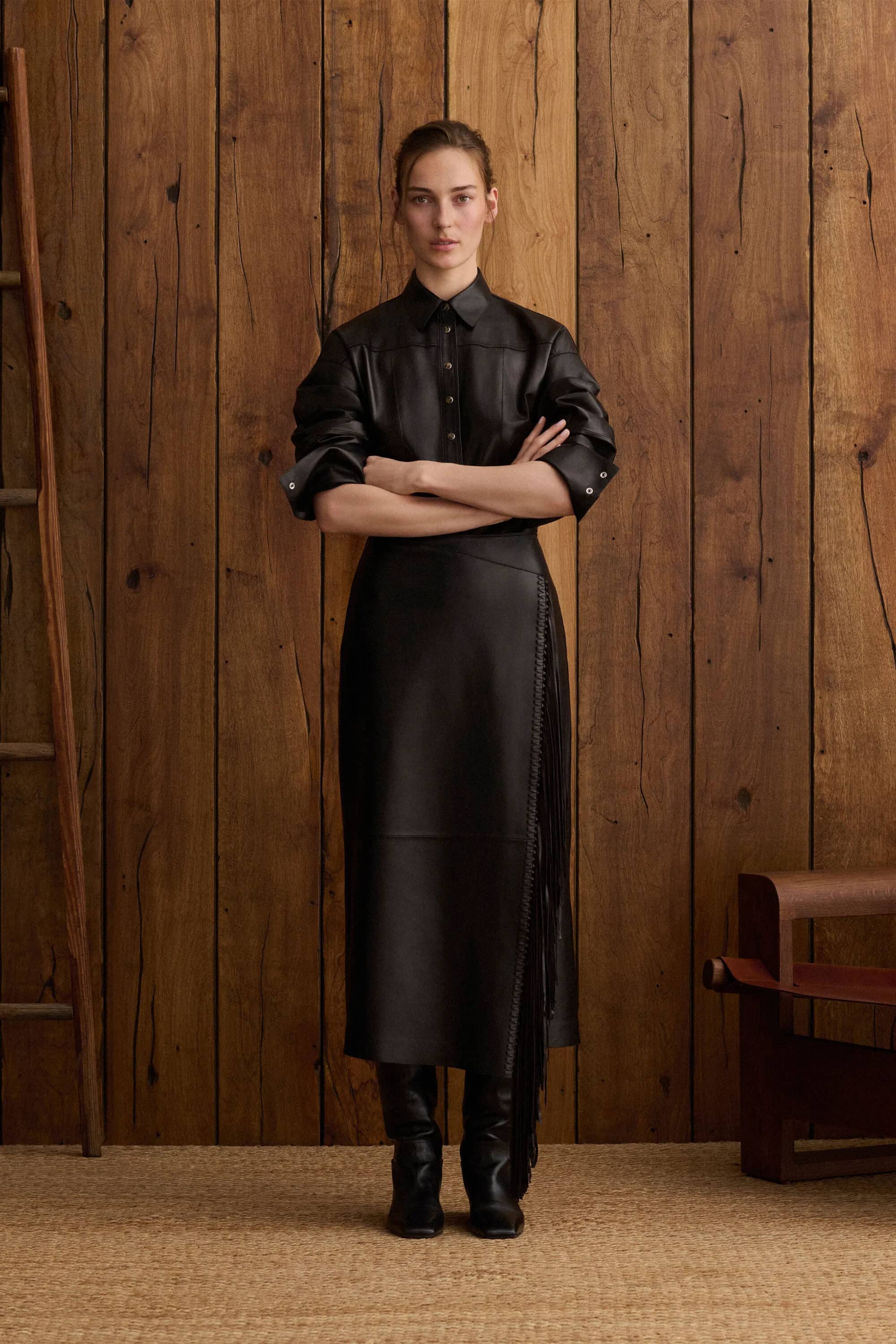
Santa Fe, with a city mind-set
Lafayette 148’s Resort 2027 offering works because it refuses to make desert dressing feel flimsy or decorative. Emily Smith turned the Santa Fe versus New York tension into something sharper: clothes that carry the ease of a road trip and the discipline of a downtown wardrobe. The collection leans into elongated tailoring, neutral tones, fluid layering, wrap details and soft, rounded silhouettes, which gives it a quiet confidence that reads luxurious without trying too hard.
That is the sweet spot for Lafayette 148. The brand has spent 30 years refining a New York lens on luxury craft, and this collection keeps that promise intact. Nothing here feels like fantasy resort fluff. It feels like clothing for a woman who needs to land, work, dine and move on without changing her whole identity every time the setting changes.
Why the Santa Fe story lands
Smith did not take the obvious route. The pull here is not a predictable Georgia O’Keeffe postcard read on the Southwest. The sharper idea is the women who left New York for Santa Fe to build quieter, art-driven lives. That shift matters because it changes the mood of the clothes: less souvenir, more lived-in intelligence. The result is a wardrobe that suggests air, light and space, but still has the clean lines and structure that make Lafayette 148 feel useful rather than precious.
That is exactly why the collection feels commercially strong. Resort can so easily collapse into one-note linen fantasy, all beach and no backbone. Smith keeps the softness, but gives it a frame. The tension between New York and Santa Fe becomes a styling formula: sharp enough for the city, relaxed enough for travel, polished enough for dinner.
The silhouettes that do the work
The most important thing about this collection is how wearable its language is. Elongated tailoring gives the line its polish, while fluid layering keeps it from feeling stiff. Wrap details bring movement and adjustability, which is a small but crucial luxury in real life. Soft, rounded silhouettes take the edge off the tailoring and keep the collection from looking overworked.
This is the kind of wardrobe that makes sense in a hotel lobby, at a working lunch, or at an evening event after a day of transit. A long tailored layer over a light inner piece, a wrapped shape that can be tightened or loosened, a neutral look built from pieces that speak to each other instead of shouting over one another: that is the formula. It is practical, but it never loses its sense of finish.
- Long, lean tailoring gives the collection its spine.
- Fluid layers make the clothes travel well.
- Wrap constructions add ease without sacrificing polish.
- Rounded shapes soften the structure and keep the look modern.
The real resort advantage: polish you can actually wear
What separates this from a generic resort story is usefulness. The clothes are not asking a woman to cosplay vacation. They are built for the actual overlap of modern life, where travel, work and occasion dressing all blur together. That is the market Lafayette 148 understands best: women who want one wardrobe that can move from a morning flight to a meeting to a dinner reservation without an outfit change that feels like a production.
The neutral palette matters here too. It keeps the collection flexible and gives the textures room to breathe. In a resort market crowded with prints, gimmicks and obvious vacation signaling, understatement can be a competitive edge. Lafayette 148 is betting on pieces that look expensive because they are disciplined, not because they are loud.
Smith’s hand and the brand’s longer arc
Emily Smith’s role gives the collection extra weight. She joined Lafayette 148 in 2002 as a design assistant, then rose to creative director, and she is also a CFDA member. That kind of long runway shows in the clothes. Her approach is architectural, which you can feel in the balance between structure and softness, and in the way the collection resists overstatement even when it is clearly trying to say something about place.
That also connects neatly to Lafayette 148’s own origin story. The brand was founded in 1996 at its namesake address in SoHo, and it has built its reputation on impeccable craft, exquisite fabrics and understated design. Resort 2027 does not break from that identity. It sharpens it. The collection feels like the natural next step for a house that has always treated refinement as an evolving language rather than a fixed pose.
Why the brand’s place-based storytelling keeps working
Resort 2027 also makes more sense when you place it next to Lafayette 148’s recent direction. The Fall 2026 collection marked three decades since the brand’s founding and looked back to the company’s humble beginnings on a garment-factory floor, centering the archetypes that define the house: tailoring, shirting, knitwear, leatherwear and the feminine uniform. That was a brand-history collection with real commercial purpose, because it doubled down on the pieces customers actually buy and wear.
Then came Resort 2026, which was inspired by Tromsø, Norway, and the Aurora Borealis. Put those together and a clear pattern emerges. Lafayette 148 is using place not as a mood board gimmick, but as a way to translate travel into actual wardrobe logic. Norway brought in atmosphere and light; Santa Fe brings in warmth and stillness. In both cases, the point is not costume. It is refinement filtered through geography.
That is why Resort 2027 feels especially relevant. It turns a specific American contrast into clothes that can handle the real rhythm of a polished life. The collection may be rooted in Santa Fe, but the finish is unmistakably New York: controlled, elegant, and built to work. In resort, that pragmatic polish is not the safe choice. It is the smart one.
This article was produced by Prism’s automated news system from verified source data, official records, and press releases, then run through automated quality and moderation checks before publishing. The system is built and supervised by the people who set the standards it runs under. Read our full AI policy.
Know something we missed? Have a correction or additional information?
Submit a Tip