Lectra maps summer 2026 as minimalism meets maximalism
Summer 2026 is splitting clean and loud at once: Lectra sees shoppers buying premium basics and denim while sequins, fringes, and statement accessories keep rising.

A crisp white tank and a sequin skirt are landing in the same summer 2026 shopping trip. Lectra sees the season split between minimalism and maximalism, with premium basics, embellishment, and sharper accessories all moving together. Its data shows consumers still willing to pay for polish, but far more deliberate about where that money goes.
Premium basics are the quiet anchor
The clean side of the story starts with essentials that look expensive without screaming for attention. Premium basics sit at the center of the season, the kind of product that lives on good fabric, sharp cut, and easy repeat wear rather than trend noise.
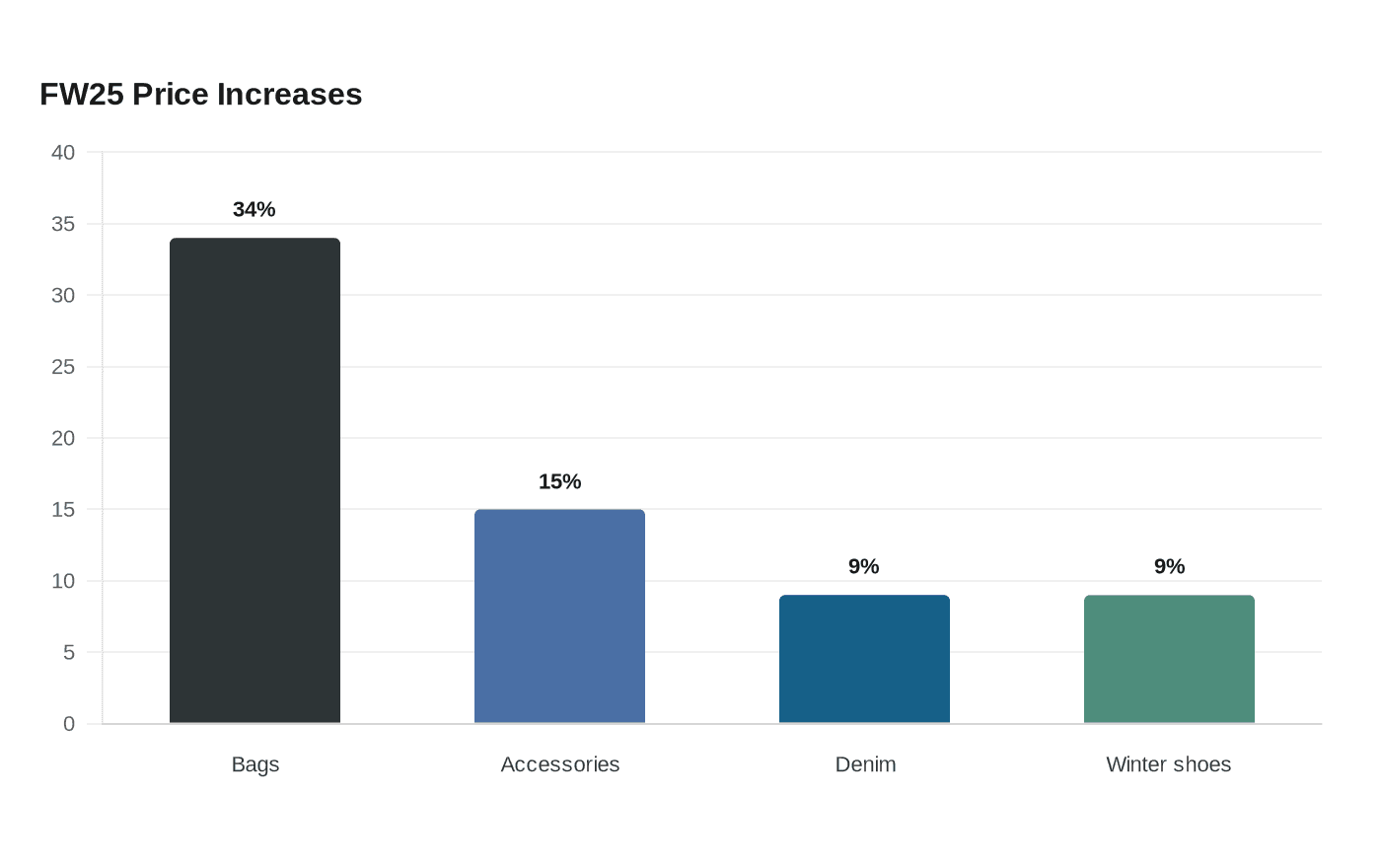
That restraint shows up in Lectra’s FW25 pricing study too. Mid-market prices in Europe rose by up to 50% versus 2024, but the category movement was uneven: denim and winter footwear were both up 9%, far below the jumps seen in the more fashion-forward accessories space.
Sequins and fringes are the loud counterpoint
On the opposite end of the rack, the season gets theatrical fast. Lectra describes summer 2026 as running "from premium basics to fringes and sequins": understated at the core, then suddenly all surface and flash at the edges.
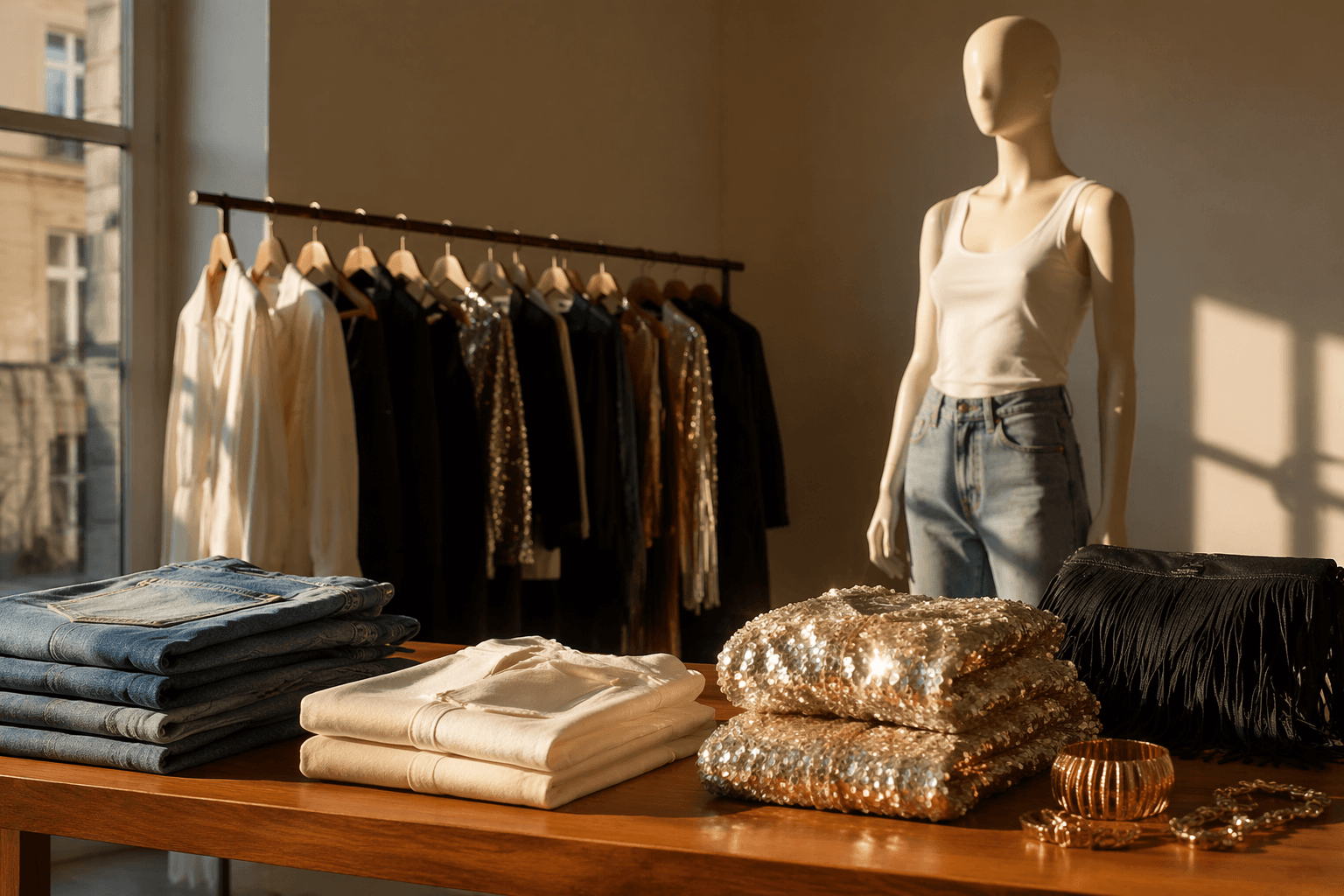
This is where statement dressing is doing the heavy lifting. Sequins are not just for night anymore, and fringes are not being saved for festival kits. They are showing up as the easy way to add movement, texture, and a little danger to otherwise controlled outfits. If the base is a plain knit or a clean denim silhouette, the finish is a sequin or fringe piece.
What the price jumps say about shopping behavior
Lectra’s FW25 pricing study makes the split even clearer. Bags were up 34% and accessories up 15%, while denim and winter footwear each rose 9%. The market is rewarding the category that can carry identity on its own, not just the category that supports the outfit in the background.
People are not chasing full looks the way they did in peak trend cycles. They are building around anchors and then spiking the outfit with one or two visible pieces. Spend is concentrating on a better bag, a more sculptural belt, a brighter earring, a coated heel, or a sequin top worn with flat, unfussy denim.
Where each category lands now
If you are reading the season through a shopping lens, the split is pretty clear:
- Premium basics belong in denim, winter footwear, and pared-back essentials with better fabric and cleaner construction.
- Statement dressing belongs in sequins, fringes, and other surface-driven pieces that do the talking fast.
- Accessories sit in the middle but are leaning louder, especially bags and add-ons that justify higher prices through visibility and repetition.
The supply chain is shifting under the styling story
Behind the clothes, the fashion industry is still resilient but cautious. Geopolitical tensions, new sustainability regulations, and disruptive AI are changing the rules, while trade and tariff uncertainty keep forcing brands to rethink where and how they make product.
The sourcing map is moving with that pressure. Lectra’s March 20, 2026 trend note puts China at 20% of U.S. apparel import share, while Vietnam and Bangladesh are emerging as strategic hubs. In Lectra’s broader 2026 commentary, manufacturing is rebalancing away from China toward Vietnam, India, and Bangladesh, tied to tariff changes and a more fragmented global sourcing map.
That pressure is feeding cleaner assortments, more curated collections, and tighter reads on what will sell.
Technology is now part of the fashion buyer’s toolkit
Lectra’s answer is Retviews, its AI-powered, fashion-specific market-intelligence and competitive-analysis platform for tracking pricing movements, assortment balance, and competitor product launches in real time.
On April 30, 2026, Lectra relaunched Retviews in a new version aimed at helping brands optimize sales performance and strengthen brand value. Antonella Capelli, Lectra’s president for EMEA, said product ranges are becoming more streamlined and collections more intentionally curated.
This article was produced by Prism’s automated news system from verified source data, official records, and press releases, then run through automated quality and moderation checks before publishing. The system is built and supervised by the people who set the standards it runs under. Read our full AI policy.
Know something we missed? Have a correction or additional information?
Submit a Tip