L’Oréal completes €4 billion Kering Beauté deal, expands luxury fragrance reach
L’Oréal’s €4 billion Kering Beauté buy locks in Creed, Bottega Veneta and Balenciaga fragrance rights while Fenty turns WhatsApp into a beauty desk.
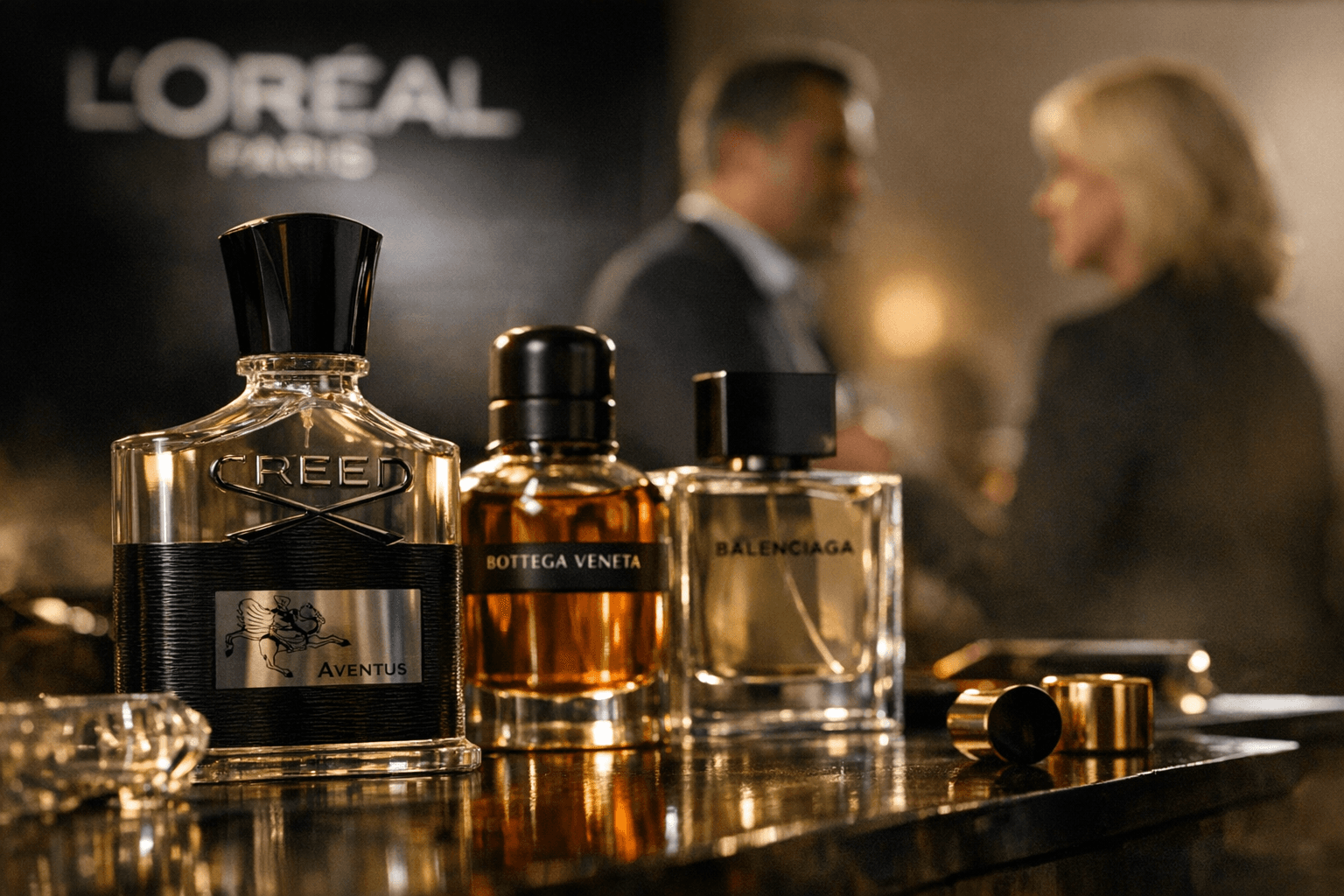
L’Oréal just made luxury beauty feel a lot less like a side hustle and a lot more like infrastructure. The €4 billion Kering Beauté acquisition closed on March 31, 2026, and with it came the House of Creed, plus 50-year exclusive licences for fragrance and beauty under Bottega Veneta and Balenciaga. Gucci sits on the next rung, with rights to a future 50-year licence only kicking in once Coty’s current deal expires. This is not a simple trophy buy. It is L’Oréal taking deeper control of the brands, the product pipeline and the long tail of luxury scent business.
For Kering, the move cuts straight into a harder financial reality. The group has been trying to reduce debt and sharpen its focus back on fashion, and the beauty sale fits that plan with almost brutal clarity. Reuters reported Kering’s net debt at €9.5 billion at the end of June, plus €6 billion in long-term lease liabilities, while Kering Beauté posted a €60 million operating loss in the first half of the year. Luca de Meo, who took over as chief executive in September 2025, described the alliance as a decisive step forward for the group. For L’Oréal, it is the biggest acquisition in its history, bigger than the 2023 Aesop deal, and a loud signal that luxury beauty still has room to consolidate upward.
What makes the deal feel especially of-the-moment is that it is happening at the same time beauty is getting more direct, more conversational and more data-hungry. Fenty Beauty launched Rose Amber on WhatsApp on April 1, 2026, its first formal partnership with the platform in the U.S. The AI-powered advisor lets shoppers ask about skin concerns, get product recommendations, watch tutorials, read reviews, take quizzes and browse across Fenty Beauty, Fenty Skin and Fenty Hair without leaving the chat thread. Nanette Wong said the brand had wanted to partner more deeply with Meta, and that WhatsApp made sense because of its global reach and accessibility.
That is the real through line between these two stories. One move is about owning more of the luxury fragrance shelf. The other is about owning more of the customer conversation. WhatsApp said people have more than 1 billion active threads with businesses across Meta messaging platforms, and nearly 80% of people globally message a business at least once a week. In Brazil, L’Oréal has already seen WhatsApp convert abandoned carts six times better than email, with more than 20% of its direct-to-consumer online sales coming through conversational commerce there. L’Oréal is also expanding its Beauty Genius tool to WhatsApp in early 2026. Beauty is no longer just about what sits on the vanity. It is about who controls the brand, and who gets the chat thread.
This article was produced by Prism’s automated news system from verified source data, official records, and press releases, then run through automated quality and moderation checks before publishing. The system is built and supervised by the people who set the standards it runs under. Read our full AI policy.
Did this article answer your question?


