Luxury boutiques bet on in-store experience as digital growth slows
Luxury’s next growth story may be the one without a checkout cart. From Brooklyn to Berlin, boutiques are winning by making the store the point again.
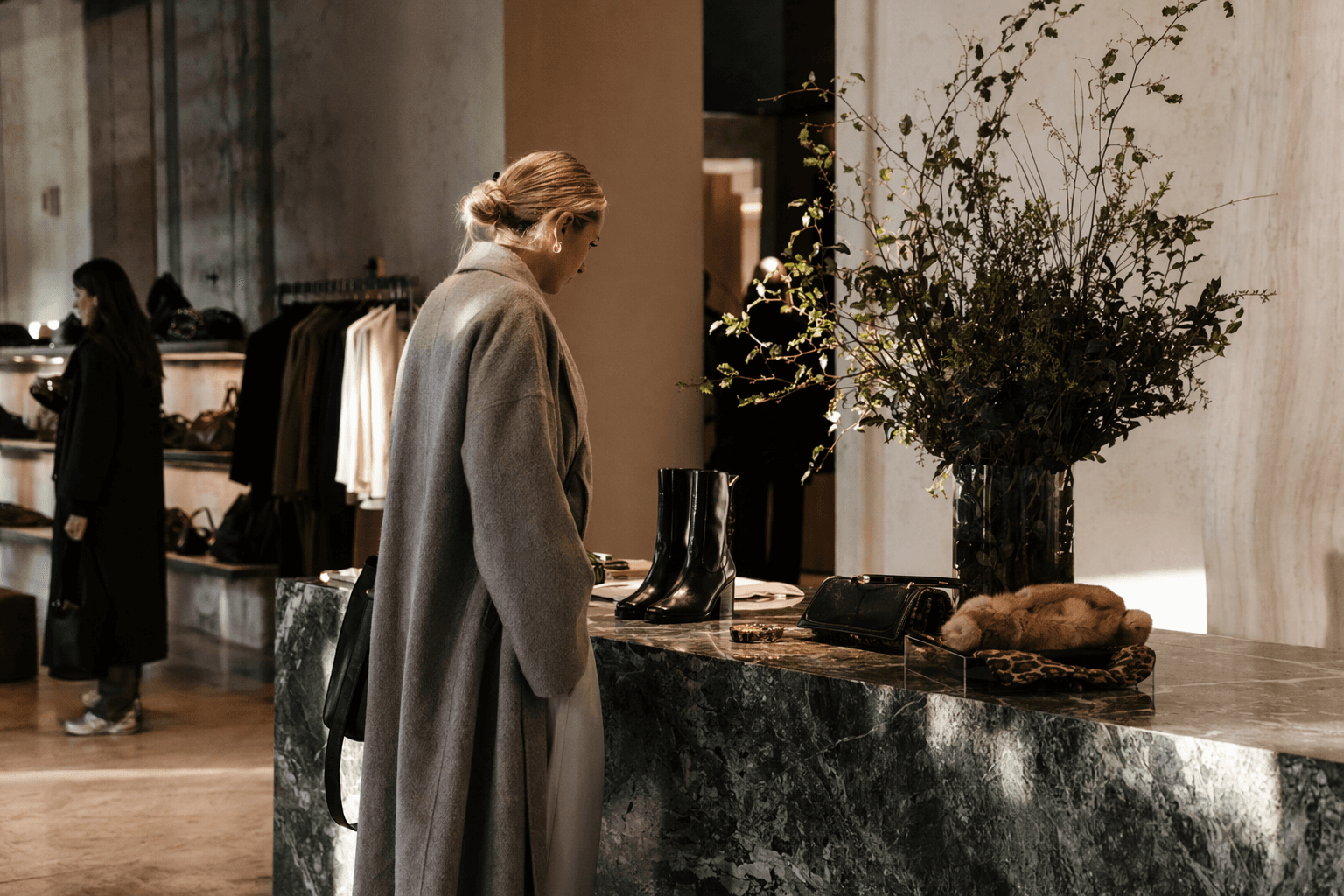
The store is back at the center of luxury
The most interesting luxury bet right now is also the least digital: a growing number of boutiques are choosing to stay offline on purpose. That is the surprise, and it lands hardest in places like Carroll Gardens in Brooklyn, where Ven Space opened in September 2024 as a one-store-only menswear shop with no web store, and in Berlin, where Andreas Murkudis operates more like a cultural landmark than a conventional retailer. In a market that once treated online scale as the default answer, these stores are proving that intimacy, curation, and atmosphere can still pull real demand.
This is not nostalgia dressed up as strategy. It is a response to a luxury market that has lost some of its easy momentum. McKinsey said that entering 2025, luxury was facing a significant slowdown and that, for the first time since 2016, excluding 2020, the industry was expected to create less value than the year before. Bain went further in June 2025, warning that the global luxury sector was confronting its most far-reaching disruptions and biggest potential setbacks in at least 15 years. When the backdrop looks like that, the storefront starts to look less old-fashioned and more resilient.
Why the internet is no longer the obvious answer
For years, the luxury playbook assumed that digital growth would eventually swallow everything else. Now, that assumption looks weaker. E-commerce still matters, but the easy gains have thinned out, customer acquisition costs keep rising, and the economics of shipping, returns, and endless discounting can turn a glossy website into an expensive liability. The result is a quieter but more consequential shift: some of the smartest independents are deciding that a small, highly edited physical space can do what a broad online assortment cannot.
That logic matters because luxury depends on desire, and desire is easier to build in a room than on a screen. A store can control scent, sound, pacing, lighting, and the feel of a sleeve or seam in a way no product page can mimic. It can turn shopping into a social ritual, and it can make a customer feel like they have stumbled into a world rather than clicked into inventory. In an era when U.S. e-commerce growth has matured and online sales no longer feel like an unlimited engine, that world-building is becoming a serious competitive advantage.
Ven Space: a Brooklyn store built around restraint
Ven Space is the clearest example of this offline-first conviction. Opened in Carroll Gardens in September 2024, the luxury menswear shop was launched by Chris Green as exactly one brick-and-mortar location, with no web store attached. Green came to the project with experience at Need Supply Co. and Totokaelo, names that made their own reputations through taste-driven retail rather than algorithmic volume.
That background matters. Ven Space is not rejecting digital because it is unserious about business. It is rejecting digital because its business model is built on editorship. A one-store shop can afford to be selective in a way a fulfillment-driven platform often cannot. It can sell the idea that the room itself, the way pieces sit together, and the conversation with staff are part of the product. For a customer in Brooklyn, that makes the trip feel considered. For a destination shopper, it makes the store feel worth the detour.
Berlin’s Andreas Murkudis turns retail into a destination
Andreas Murkudis pushes the idea even further. His Berlin store carries around 200 international brands, but the point is not simply breadth. The store functions more like a cultural institution than a clothes shop, with in-store events, exhibitions, and installations that draw a crowd beyond the usual fashion audience. That is the key distinction: online retail can show you product, but it cannot easily create a reason to linger, gather, and return for the atmosphere.
The Murkudis model shows why offline-only or offline-led retail can still work at a high level. The store is not just a point of sale. It is a stage for taste, a place where fashion overlaps with art and the city itself becomes part of the brand. That gives the retailer a form of value that is difficult to copy in e-commerce, where every brand page starts to look suspiciously like the next one.
The Broken Arm shows the long game
Paris offers the most persuasive precedent. The Broken Arm opened in February 2013 and has spent more than a decade proving that a highly curated physical space can build loyalty over time. Founded by Guillaume Steinmetz, Anaïs Lafarge, and Romain Joste, it blends fashion with art, literature, and music in a way that makes the store feel less like a boutique and more like a point of view.
That matters because the current wave is not a gimmick. The Broken Arm demonstrates that the payoff from an atmospheric store can compound over years. A shopper remembers the room, the mix of references, the objects beside the clothes, and the feeling that the store has its own editorial logic. That is the kind of memory online shopping rarely creates, no matter how sleek the interface.

What these boutiques are doing that online brands cannot
The winning offline stores are not just avoiding e-commerce. They are using the store to do jobs that digital struggles to do at the same time.
- They curate tightly, so every rack and shelf feels intentional rather than algorithmic.
- They use service as theater, letting staff shape the experience instead of just processing transactions.
- They create community through events, exhibitions, and recurring visitors who come for more than product.
- They build atmosphere, which turns a purchase into a memory and a store into a destination.
That is why the strategy feels especially suited to luxury right now. When price pressure, logistics, and returns make digital less forgiving, the physical store can justify itself by selling not only garments but context. A cashmere coat or sharply cut trouser looks different when it is presented inside a room that signals discernment. The merchandise does not just hang there. It belongs somewhere.
A niche tactic, or the start of a reset?
The broader signal here is bigger than a handful of concept stores. JLL found that 59 percent of new luxury store openings from July 2024 to July 2025 were in street retail rather than malls, a strong sign that premium brands still believe in storefronts even as they refine their digital ambitions. That does not mean e-commerce is disappearing. It means the balance of power is shifting, and the store is no longer the fallback. It is becoming the differentiator.
Luxury is entering a phase where scale alone feels less convincing than sharpness, and where a smaller footprint can look more modern than a sprawling digital strategy. From Brooklyn to Berlin to Paris, the new retail playbook is not about being everywhere. It is about being memorable in one place, then letting that place do the work.
This article was produced by Prism’s automated news system from verified source data, official records, and press releases, then run through automated quality and moderation checks before publishing. The system is built and supervised by the people who set the standards it runs under. Read our full AI policy.
Did this article answer your question?


