Luxury Houses Turn to Mumbai, Craft and Indian Heritage
Mumbai is no longer a stopover for luxury. From Balenciaga’s debut to Prada’s Kolhapuri reckoning, India is shaping what global fashion means.
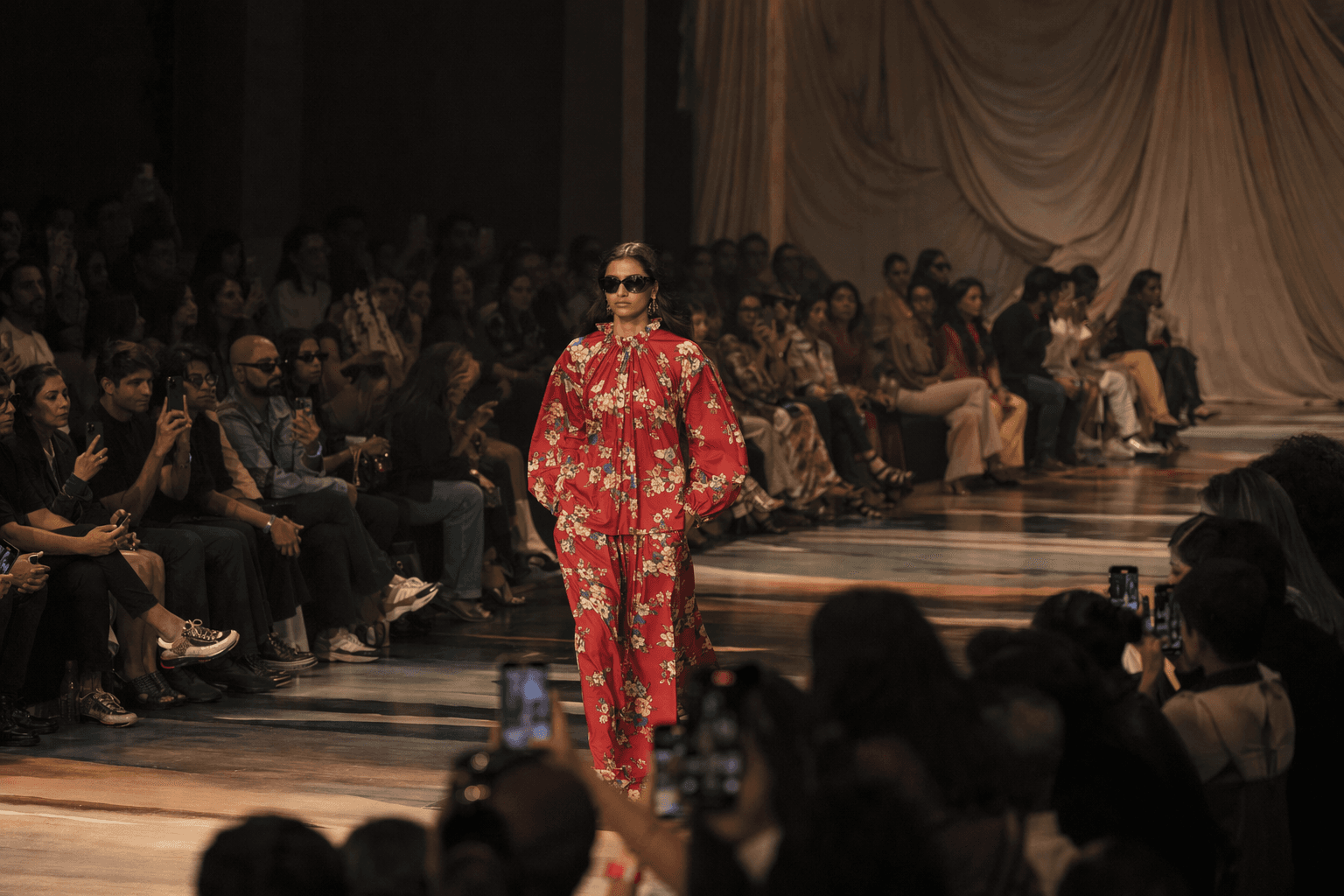
Mumbai is the new luxury proving ground
Luxury is no longer arriving in India as a finished idea. In Mumbai, it is being tested, corrected and, increasingly, rewritten by the market itself. Balenciaga’s debut of Pierpaolo Piccioli’s first collection for the house, titled *The Heartbeat*, and Prada’s Kolhapuri backlash make the same point from opposite sides: India is now where global fashion must earn its relevance.
That shift matters because the stakes are no longer limited to store openings or runway buzz. Mumbai has become a place where international houses are not just selling product, they are absorbing local context, whether through craft, heritage, silhouette or the simple fact that Indian buyers know exactly when a brand is speaking to them, and when it is borrowing from them.
Balenciaga chooses Mumbai as a signal city
Balenciaga presented *The Heartbeat*, Piccioli’s Spring/Summer 2026 debut for the house, at its boutique in Jio World Plaza in Mumbai. The setting was no accident. Jio World Plaza, in Bandra Kurla Complex, has become one of the city’s most important luxury stages, packed with premium brands and built for the kind of shopper who treats retail like a cultural event.
The brand already has a store presence there through Reliance Brands Ltd., which gives the Mumbai moment more weight than a one-off appearance. This is not a house peeking into India from the outside. It is a brand that has planted a flag, then used that foothold to present its new creative direction in front of an Indian audience.
What made the presentation feel especially pointed was the language around it: craftsmanship, silhouette and the body-conscious tailoring Piccioli is known for. That combination tells you everything about where luxury is headed. The loud logo era has given way to clothes that have to look refined at close range, in a room full of people who know how fabric falls and how a jacket shapes the body.
Prada’s Kolhapuri moment changed the conversation
If Balenciaga’s Mumbai unveiling was a declaration, Prada’s sandal controversy was a correction. Prada’s Spring/Summer 2026 menswear show in Milan featured flat, T-strap leather sandals that drew immediate comparisons to Kolhapuri chappals. Prada later acknowledged that the footwear was inspired by Kolhapuri chappals, and that admission transformed a styling debate into a broader conversation about attribution, ownership and respect.
The reaction was swift because Kolhapuris are not just a visual reference. They hold a registered geographical indication in India, granted in 2019, and official craft sources trace their history back to the 13th century under King Bijjala. They are traditionally handmade in parts of Maharashtra and Karnataka, which gives them both cultural weight and economic significance for the makers who preserve the tradition.
That is why the backlash landed so hard in Maharashtra, where makers and industry bodies pushed back and renewed calls to protect GI rights. The argument went beyond one pair of sandals. It asked whether legal protection should go further than a GI tag when global luxury can lift a regional craft into the international spotlight without acknowledging the people and places that sustained it.
The detail that stung most was Prada’s original description of the shoes as “leather sandals,” with no Indian reference attached. In a fashion season obsessed with provenance, that omission felt dated. The eventual acknowledgment opened the door to something more interesting, a willingness to engage with Indian artisans rather than simply mine Indian forms for a runway effect.
Anamika Khanna shows how Indian heritage travels
Against that backdrop, Anamika Khanna’s cross-cultural work feels less like a side note and more like the model luxury should be following. AK|OK Anamika Khanna made its London Fashion Week debut with Spring/Summer 2026, framing the collection around nostalgia, Indian heritage and a fusion of India and London. That is a very different proposition from cultural borrowing. It is translation.
Khanna reworked traditional Indian attire with jeans, skirts and boots, which is exactly why the collection reads as modern rather than theatrical. The clothes did not freeze heritage in amber. They moved it into a wardrobe that can cross cities, climates and social codes without losing its identity.
That balance is what makes Indian design so compelling right now. It understands that craft has to live in motion. A kurta with denim, a skirt with boots, a familiar silhouette cut with sharper lines: these are not costume gestures, they are the language of a globalized wardrobe that still wants to feel rooted.

What to wear, and what to skip, as this trend takes hold
The clearest wardrobe signal in all of this is restraint with purpose. The luxury mood is leaning toward pieces that carry cultural references without shouting them, and that means tailoring matters more than decoration.
- Wear sculpted jackets, softened tailoring and sharply considered proportions.
- Wear heritage details when they are integrated into modern dress, not pasted on as novelty.
- Wear flat sandals or hand-finished footwear that feels grounded in craft, not trend bait.
- Wear denim, skirts and boots together if the combination makes the silhouette feel current rather than themed.
Just as important, skip the lazy version of the trend. Skip costume-like “ethnic” dressing that treats Indian references as surface pattern. Skip sandals or embellishments that borrow the look of craft without acknowledging its source. Skip anything that feels like a global brand trying to decorate itself with India instead of learning from it.
Why this matters now
Balenciaga in Mumbai, Prada in the Kolhapuri conversation and Anamika Khanna in London all point to the same fashion truth: India is no longer peripheral to luxury’s future. It is a market, yes, but also a source of authority, pressure and taste. The brands that understand that will build deeper relevance; the ones that do not will keep being corrected by the very audience they want to impress.
The new luxury playbook is not about arriving in India with answers. It is about arriving ready to be changed by what India already knows.
This article was produced by Prism’s automated news system from verified source data, official records, and press releases, then run through automated quality and moderation checks before publishing. The system is built and supervised by the people who set the standards it runs under. Read our full AI policy.
Did this article answer your question?


