Maria Grazia Chiuri reworks Fendi into quiet luxury and shared wardrobe thinking
Chiuri’s first Fendi cruise turns the Baguette, parchment neutrals and softened tailoring into a quieter, more useful kind of Roman luxury.
Fendi’s new money move is not louder, it is smarter
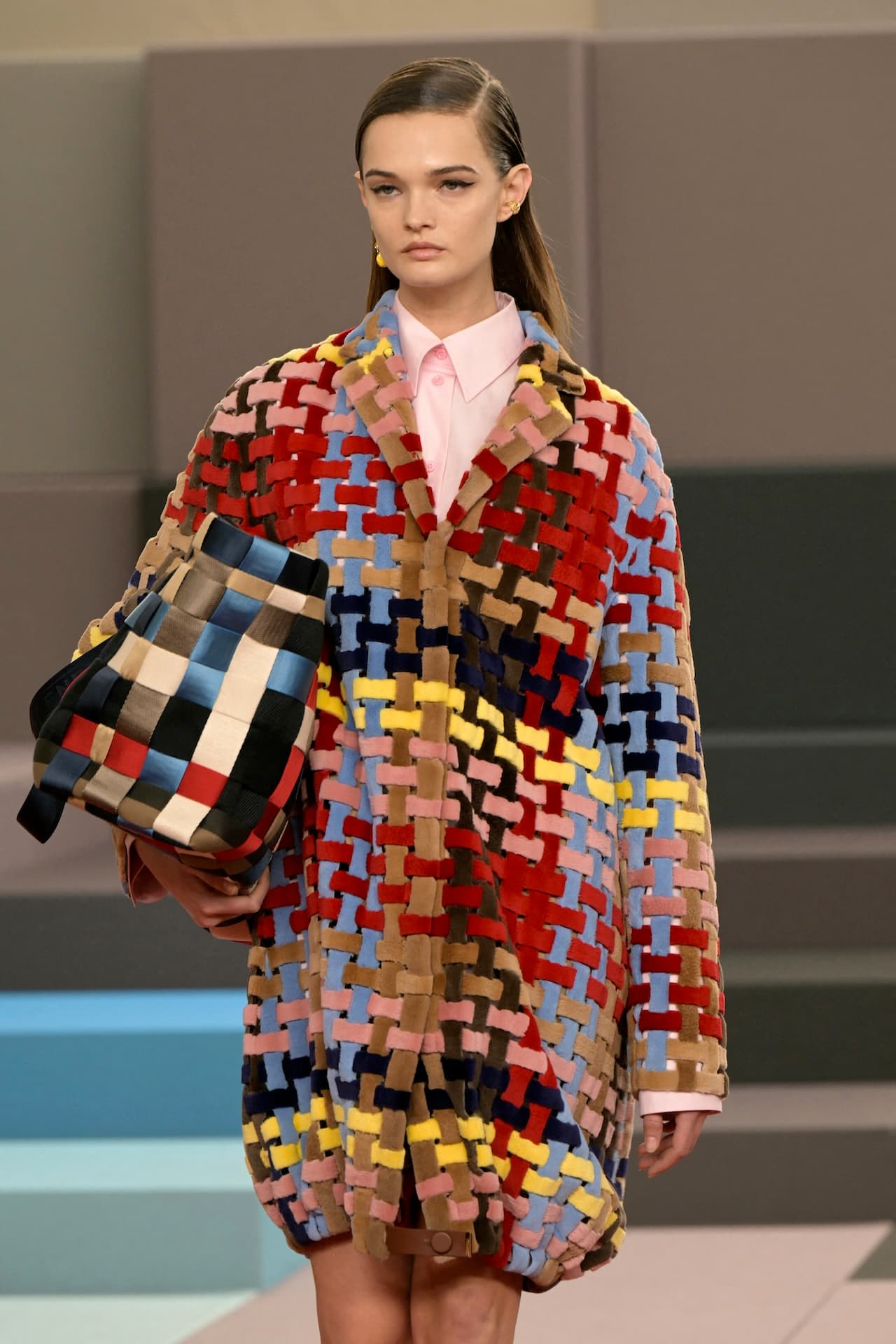
Maria Grazia Chiuri’s first Fendi pre-collection does not chase shock value. It reads like a recalibration of what luxury is supposed to do now: behave like a shared wardrobe, carry the house’s most recognizable codes, and still feel easy enough to live in. The message is sharp. Fendi Cruise 2027 takes the brand’s heritage pieces, especially the Baguette, and filters them through bourgeois neutrals, softened tailoring and a distinctly practical point of view.
That matters because the customer Fendi is speaking to is no longer only buying spectacle. She is buying pieces that move from city to city, from work to dinner, from one closet to another. Chiuri seems to understand that instinctively. The clothes and accessories are tied together by function, but they never lose polish. This is quiet luxury with a Roman accent, and it feels less like a trend exercise than a business strategy.
The new house language is parchment, not logo noise
The collection opens with parchment, a material deeply tied to Fendi’s luggage-making roots. Chiuri did not treat it like a decorative callback. She used it as a structural idea, translating that signature tone into clothing and leather goods so the house’s history becomes something you can actually wear.
That is where the collection gets interesting. The parchment note shows up in a studded black leather Baguette, but also in three-piece suits and trench coats edged in black. The palette stays controlled and expensive looking, the kind of neutral that signals money without needing flash. Chiuri also talked about the technical work of carrying the parchment color from leather into silk and cashmere, using specially developed yarn shades, which tells you this was not just mood-board luxury. It was a fabric problem solved at the level Fendi likes best, through craft.
The Baguette is back, but it is behaving differently
The Baguette is the anchor here, and Chiuri knows exactly why. Designed by Silvia Venturini Fendi in 1997, it is one of the few bags that can still claim true fashion landmark status. More than a million have sold over its history, and it has gone through more than 1,000 iterations since debuting, which means Fendi is not just mining nostalgia. It is mining a proven asset with real commercial muscle.
Chiuri said she was “reedited” the Baguette by taking it back to its origins, and that is the right read. The bag in this collection does not feel like a souvenir of the late 1990s. It feels like a reset, stripped back to the idea of the object rather than the hype around it. In a market where affluent shoppers are increasingly selective, that kind of edited familiarity can be more powerful than a totally new silhouette. It offers recognition, but without the noise.
Shared wardrobe thinking is the real story
Chiuri’s most important move is not a bag or a coat. It is the idea that the collection should work across bodies, habits and categories. Additional coverage describes the lineup as a study in interchangeable dressing for contemporary men and women, and that tracks with the clothes themselves. These are pieces that seem designed to be borrowed, passed along, and repeated without losing edge.
That shared-wardrobe mentality is where the collection stops being purely aesthetic and starts looking like a response to how affluent customers shop now. People want investment pieces, yes, but they also want versatility that feels intelligent rather than basic. A softened suit, a trench with black detailing, a neutral cashmere piece, these are not loud flexes. They are the kind of purchases that justify themselves over and over because they can sit in multiple wardrobes and still hold their own.
Chiuri is building on a very specific Fendi history
This collection also lands differently because of Chiuri’s own path back to the house. She joined Fendi in 1989 at 24, spent about a decade there helping build the accessories business, left for Valentino in 1999, then spent nine years as artistic director of women’s collections at Dior before returning as chief creative officer. That is a long arc, and it gives her return real weight. She is not parachuting in as a fresh face. She is coming home with a point of view.
Her first Fendi runway in February 2026 at Milan Fashion Week on Via Andrea Solari 35 already set the tone, with collective creativity and the legacy of the five Fendi sisters pushed to the front. Cruise 2027 feels like the next step in that same idea. Chiuri is not trying to overwrite Fendi’s identity. She is trying to organize it, to make the house feel legible again through codes that can travel across categories and seasons.
The Tree of Life motif adds the softer layer
If the Baguette and parchment are the hard commercial anchors, the Tree of Life motif gives the collection its symbolic register. It appears as a central image tied to nature, humanity, reason and coexistence, which gives the lineup a slightly more philosophical frame than most cruise collections bother with. But even that idea serves the same larger purpose: it reinforces connection, continuity and the sense that the wardrobe is built for more than one person.
That is really the takeaway from Chiuri’s first Fendi pre-collection. It is not about stripping the house down. It is about tightening the code so it feels useful again. The Baguette gets reworked, the neutrals get richer, the tailoring gets softer, and the message becomes clearer: Fendi is betting that the next wave of luxury spending will favor pieces that are recognizable, wearable and easy to share, not just easy to post.
This article was produced by Prism’s automated news system from verified source data, official records, and press releases, then run through automated quality and moderation checks before publishing. The system is built and supervised by the people who set the standards it runs under. Read our full AI policy.
Know something we missed? Have a correction or additional information?
Submit a Tip