Miami Swim Week spotlights oversized hats, animal prints, and beaded resortwear
Oversized hats and animal prints led the noise, but beading and hard-working resort accessories looked ready for real sell-through, not just the feed.

Miami Swim Week looked less like a trade-calendar checkbox and more like a forecast for what will actually travel from the runway into resort wardrobes. Oversized hats, animal-print swimsuits and beadwork dominated the most memorable looks, but the sharper signal was commercial: the pieces with sun protection, easy packing and a clear styling payoff felt built for retail, not only for the camera.
What actually looks ready to sell
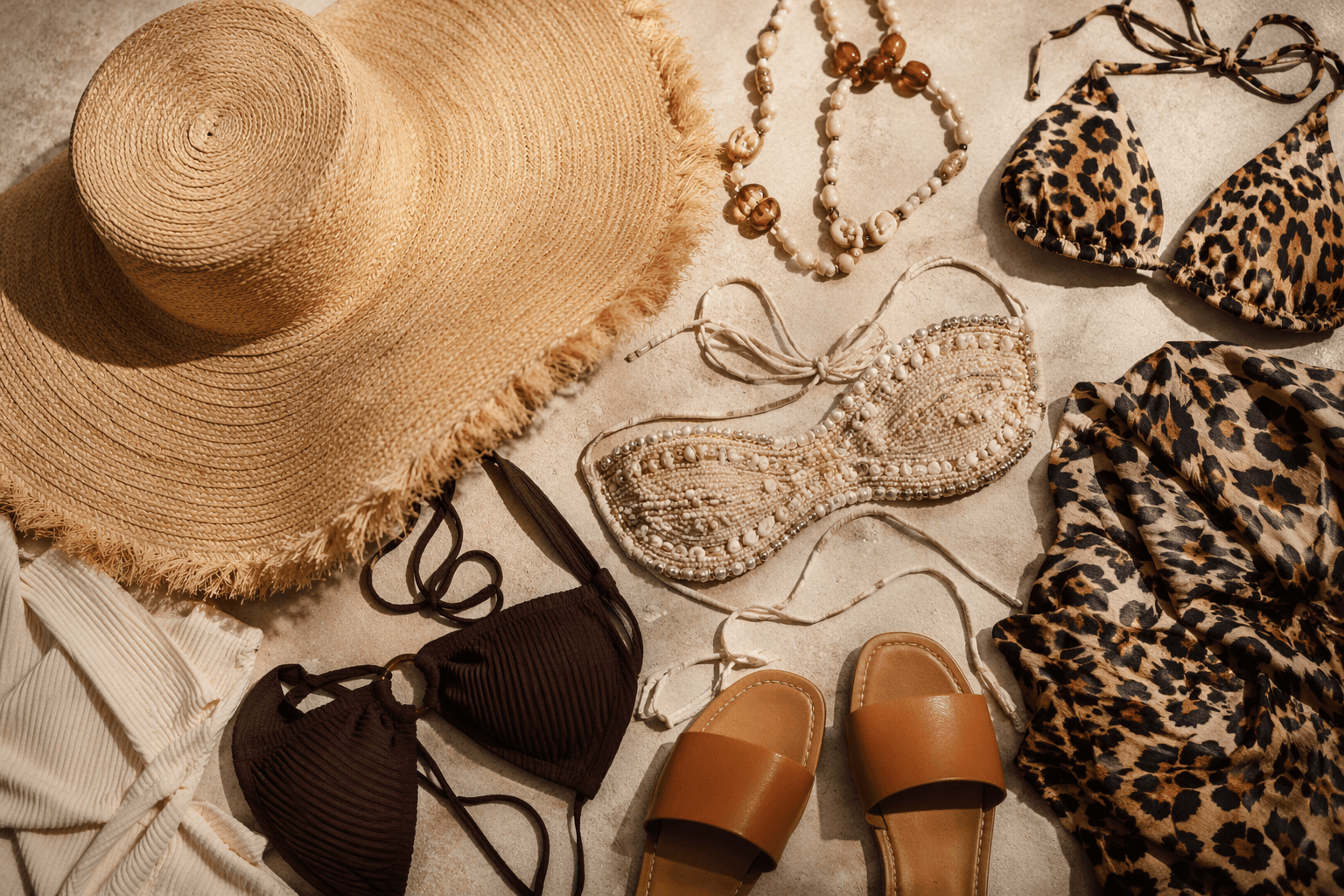
The strongest retail story was not one gimmick but a family of accessories that solve a vacation-dressing problem. Oversized hats, floppy hats, straw hats and silk headscarves read as the most durable buys because they do more than decorate a look; they finish it, shade it and make even the simplest black bikini feel considered. Capacious totes and woven clutches sit in the same camp, because they carry beach-day utility while still looking polished enough for dinner.
Animal print, especially zebra and other high-contrast interpretations, remains one of the easiest runway ideas to convert into sales because it moves across categories. It works on a one-piece, a bikini, a cover-up or a sarong, and it gives shoppers something instantly recognizable without demanding a full costume shift. Beading, by contrast, is more selective: richly beaded resortwear looks expensive and tactile, but the versions most likely to last commercially are the ones used as trim or focal detail, not as head-to-toe sparkle.
The details that feel durable, and the ones that feel like bait
The week also made clear which trends are more feed-friendly than shelf-friendly. Sheer styling, below-the-bust cuts, body jewelry and the most aggressively micro bikinis create striking images and have real editorial heat, but they are more likely to drive conversation than volume. Side-tie silhouettes and statement hardware sit closer to the middle, because they deliver a fresh look without abandoning the fit and adjustability shoppers expect from swim.
That middle ground matters. The most persuasive resort pieces at Miami Swim Week did not scream novelty so much as they updated familiar silhouettes with texture, shine or a sharper cut. A side-tie bikini, for example, is an easy entry point for shoppers who want something trend-aware but not precious, while statement hardware gives a suit the kind of jewelry-like finish that can justify a higher price point. Even the more directional pieces, including double collars, felt like ideas that matter most when they are pared back, not overworked.
PARAISO turned the week into a citywide showcase
PARAISO Miami Swim Week ran May 27 to May 31, wrapping Sunday, May 31, and brought more than 100 swimwear and resortwear brands to Miami Beach. Organizers said buyers from over 60 countries attended, and the combined digital audience reached 100 million, a scale that explains why the week now functions as both a fashion moment and a merchandising signal. PARAISO framed it as the 21st annual PARAISO Miami Swim Week, while broader coverage treated it as the event's 22nd year.
The calendar spread across Miami Beach instead of sitting neatly in one venue, which only sharpened the sense that swimwear now belongs to a full lifestyle ecosystem. Runway shows, satellite events, cocktail hours, designer brunches, media previews, pop-up shops and the inaugural Swimwear Icons Hall of Fame honors night were staged across Mondrian South Beach, The Bass Museum, MILA, 1111 Lincoln Rd, Tala Beach, The Shelborne by Proper, Nikki Beach, The Plymouth Hotel and The Ritz-Carlton, South Beach. The lineup also leaned into brands that define resort and cruise 2027, a reminder that the strongest players are already selling next year's vacation fantasy while this season is still being packed away.
The names that gave the week its sharpest edges
The most commercially savvy moment may have been Megan Thee Stallion’s Hot Girl Summer swim line, which extended beyond swimwear into menswear and pet apparel and was sold in partnership with Walmart. That breadth matters, because it shifts the conversation from a single bikini drop to a broader branded vacation wardrobe, one that can reach a much larger shopper base without losing personality. If the oversized hat is the week’s most elegant accessory, Megan’s line is the clearest example of scale.
Monday Swimwear founders Natasha Oakley and Devin Brugman also used the week to reinforce the brand's place in the conversation, while the guest list and front-row energy reflected Miami Swim Week's hybrid identity as both industry meeting and social spectacle. Names such as Karla Martinez De Salas, Grace Ann Nader, Jenn Tran, Kendall Vertes and Ellen Von Unwerth circulated through the coverage, underscoring how celebrity, editorial taste and commerce now share the same waterfront stage. That blend is part of the draw, but it is also why the most successful labels at Miami have to sell more than a selfie moment.
Among the most visible visual cues were ocean-inspired prints, which softened the harder edge of micro bikinis and statement hardware with a more literal beach reference. Those motifs, along with sheer looks and body jewelry, gave the week its sense of heat and movement, but they also illustrated the central tension in Miami right now: the line between editorial excitement and something a shopper will actually wear to a hotel pool is thinner than ever.
Why Miami keeps setting the swimwear mood
Miami Swim Week has roots in the early 1980s, when it operated as a buyer-focused trade event before expanding into a globally watched platform under later industry production. That history still shows in the clothes: the best collections are the ones that can satisfy both the editor scanning for a strong image and the buyer looking for repeatable sell-through. In 2026, the collection of clues was clear enough to shop with confidence.
Oversized hats, animal print and beading were the opening notes, but the real story was the return of resortwear with purpose. The pieces that balance glamour with utility, sun protection with polish, and fashion shorthand with actual wearability are the ones most likely to outlast the week that introduced them.
This article was produced by Prism’s automated news system from verified source data, official records, and press releases, then run through automated quality and moderation checks before publishing. The system is built and supervised by the people who set the standards it runs under. Read our full AI policy.
Did this article answer your question?


