Mossi Traoré Stages Courtroom Trial at Paris Court of Appeal for Fall 2026
Mossi Traoré turned the Paris Court of Appeal into a runway, staging a 30-minute mock trial complete with judge, jury, and an Anna Wintour impersonator.
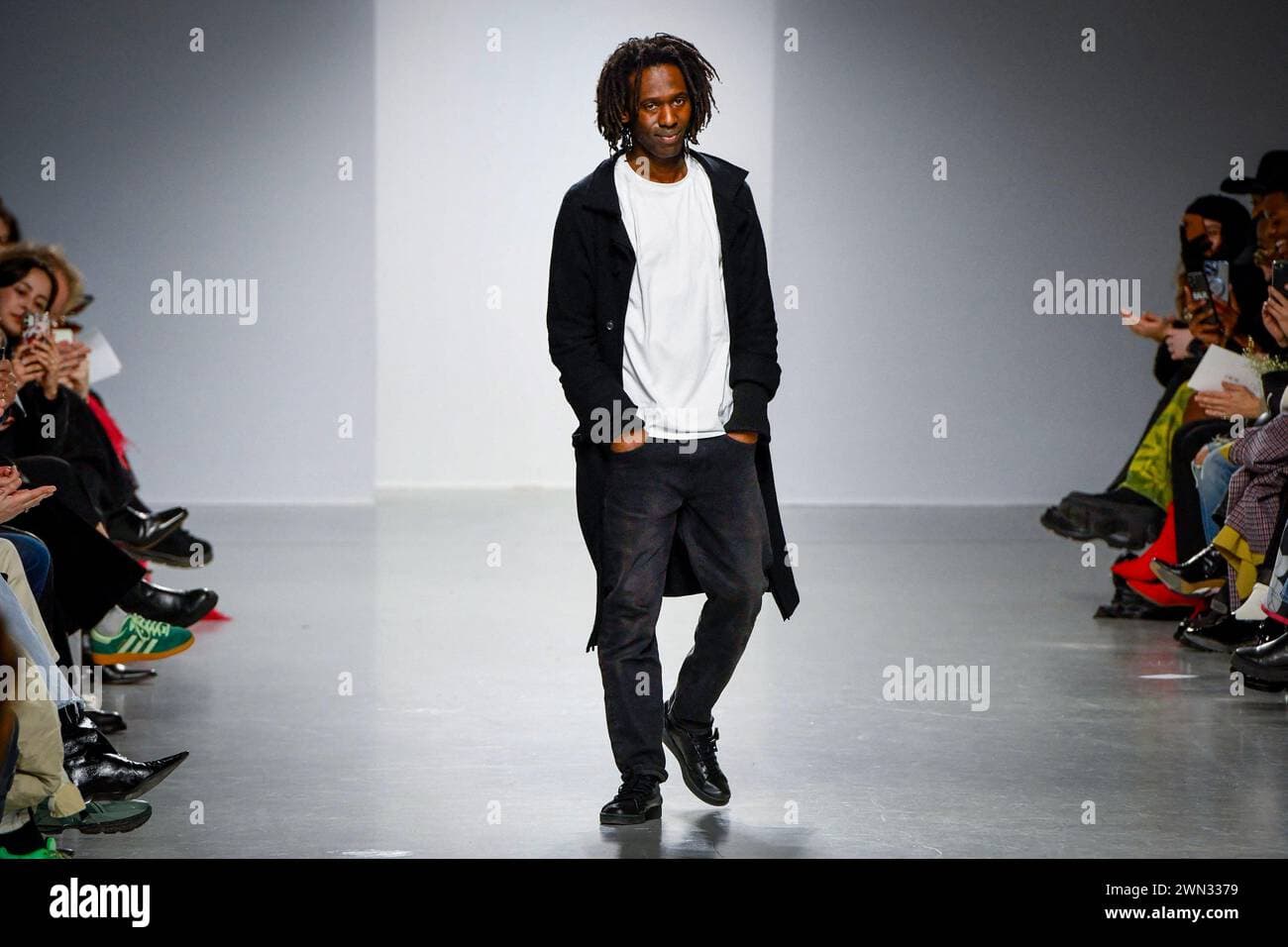
On March 6, 2026, Paris Fashion Week took a surreal turn as spectators watched the "trial" of designer Mossi Traoré, held at the Paris Court of Appeal. Never before had the institution hosted a fashion show. Staging the presentation as a mock court case, Traoré created a 30-minute-long performance with a full cast of characters, including judge, jury, lawyers, victims, and witnesses called to pass judgment on his perceived crimes, including theft and impersonation.
Known for theatrical runway presentations, the brand unveiled its autumn-winter 2026/27 collection in a courtroom adorned with chandeliers and monumental paintings. The tone was tongue-in-cheek, in sharp contrast with the gravitas of the Palais de Justice, which for all its spectacular wood paneling and frescoed ceilings is controlled by the French armed forces. The fashion crowd queued to be allowed into the building one by one, delaying the show start time by nearly an hour. As one official put it: "It's the first time I've seen people in a hurry to go into court."
The prosecution alleged a series of "crimes" committed in the pursuit of fashion: shoplifting Levi's from Le Printemps, identity fraud to bypass Anna Wintour's gatekeepers, an unauthorized photoshoot at the Taj Mahal, and even siphoning electricity from a luxury maison to power his own show. A representative from the department store testified: "Le Printemps is not a flea market for the empty-pocketed." There was also an Anna Wintour impersonator, apparently representing the time the designer pretended to be his own press officer to attract her to one of his shows. The presiding judge was portrayed by Rose Ameziane, a columnist, actress, and head of an employment and retraining agency, with character-models seated on wooden benches who stepped onto the stage when their names were called.
The presiding judge ultimately delivered a poetic verdict: Mossi was sentenced to a lifetime of creativity and mandated to help youth from the suburbs realize their own fashion ambitions. The defense offered no denials along the way. Instead, the argument turned on systemic barriers, with Traoré having stated plainly at a previous discussion at La Caserne: "Today, being a young designer is an uphill battle. Most fashion schools are not financially accessible, and young people struggle to find apprenticeships."
That conviction has a real-world counterpart. Traoré founded Les Ateliers Alix in 2015, a haute couture school with a workshop in the suburbs of Paris. Through his school in Villiers-sur-Marne and with support from the House of Chanel, he helps the unemployed and those on social benefits re-enter the workforce. In terms of sourcing, he draws on Japanese, Korean, Indian, French, and Italian textiles by working with artisans, and all production is carried out in Île-de-France.
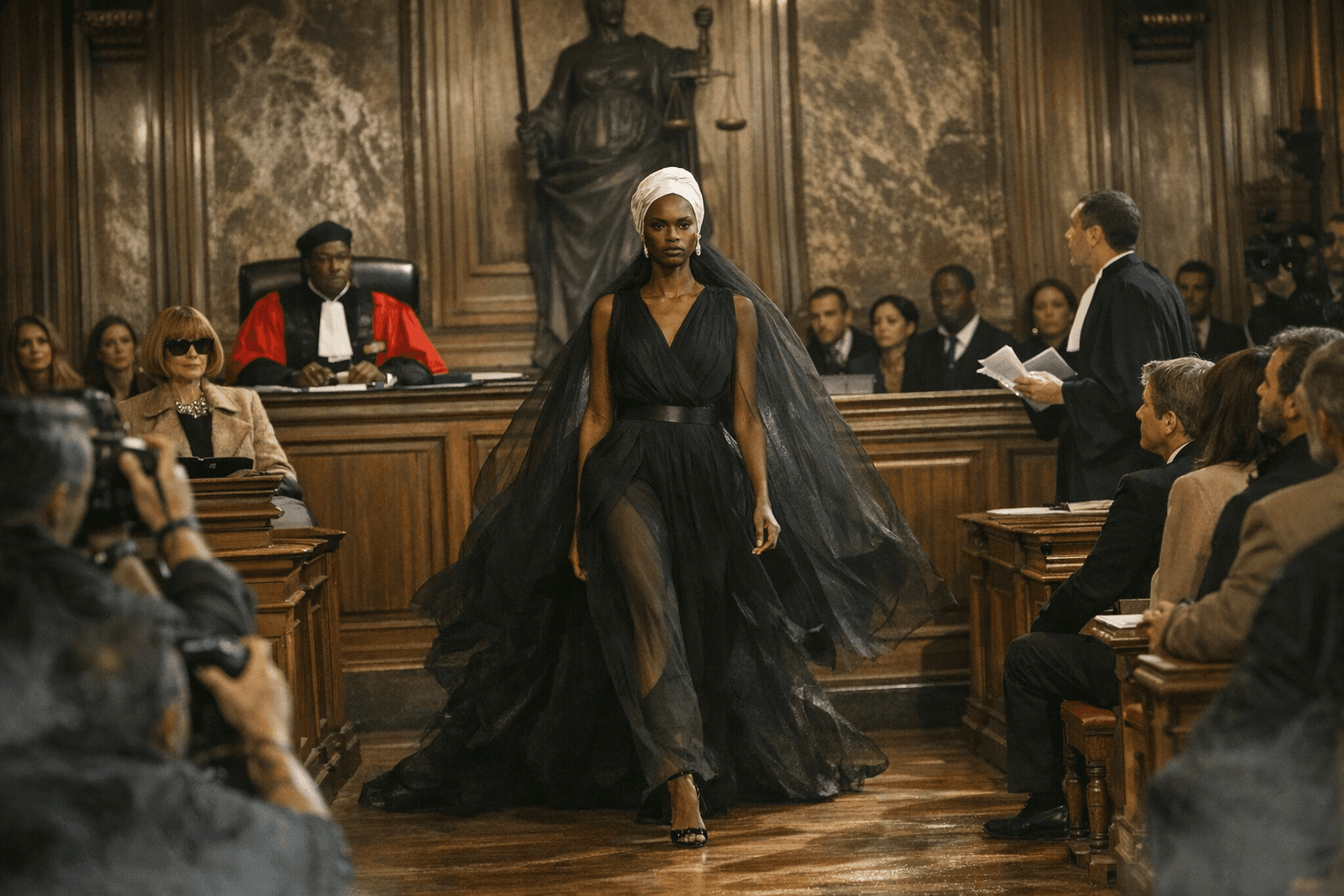
The clothes themselves held up their end of the argument. Drawing directly from the wardrobe of the judiciary, Traoré reinterpreted the robes of judges and the sharp silhouettes of lawyers and prosecutors through MOSSI's distinct design language. Structured volumes met the brand's signature pleating, creating garments that balanced authority with movement. At times, sculptural shapes echoed the futuristic forms of South Korean artist Lee Bul, adding a sense of tension between discipline and experimentation. Traoré layered, draped, and folded volumes of fabric into asymmetric spins on legal garb; a pleated, balloon-sleeved black jacket had shirt cuffs peeping out from front and back like extra arms, while textural play came by way of tweeds, evoking the staged scene in which Traoré supposedly stole electricity for his show from the fictional house of Nachel. The garments served as a tribute to Madame Grès, showcasing the technical mastery and "inner world" Traoré has cultivated despite the odds.
Traoré was direct about his intentions: "It wasn't a political project, it wasn't a trade-union project or a protest; it was really a purely artistic whim," he explained. "I'm in favour of fashion that is useful, that has an impact, that promotes equal opportunity, that is inclusive. So naturally that became part of the project, but it wasn't calculated." He added: "The aim was to bring a bit of freshness and to show that small brands, with fewer resources, are sometimes more daring than the big brands."
His work will be exhibited for the first time at Mucem from May 20, where he will present creations made for the occasion. For a designer who once had to impersonate his own press officer just to get Anna Wintour through the door, a retrospective at a national museum feels less like an arrival than a verdict long overdue.
This article was produced by Prism’s automated news system from verified source data, official records, and press releases, then run through automated quality and moderation checks before publishing. The system is built and supervised by the people who set the standards it runs under. Read our full AI policy.
Did this article answer your question?


