New York’s off-duty celebrity look defines spring 2026 street style
New York’s spring 2026 uniform is all about caps, flip-flops, baggy tees, loose jeans, and flats. The polished look is losing to streetwear that feels lived-in.
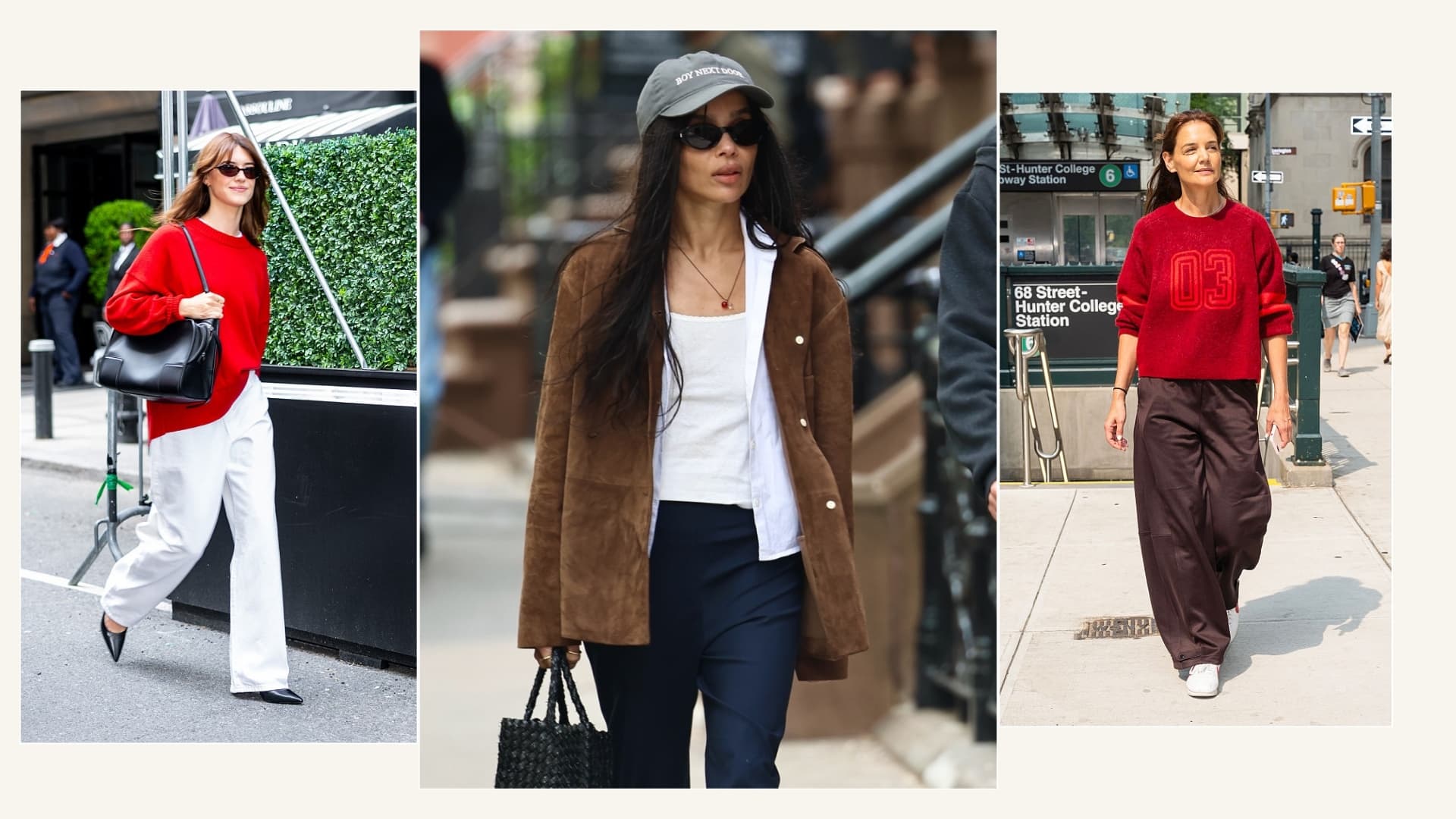
The most convincing spring 2026 street-style look in New York is the one that barely looks styled at all. Baseball caps, flip-flops, baggy tees, loose jeans, and flats are taking over as the city’s anti-polish uniform, and the appeal is exactly how ordinary it feels after so many seasons of overworked luxury.
The new New York uniform
This is not about looking undone in a careless way. It is about a very specific kind of ease: relaxed fits, flat shoes, low-key basics, and a wardrobe that looks chosen in five minutes but still lands with intent. The clothes are stripped back enough to feel honest, but sharp enough to register immediately on the street.
Jennifer Lawrence, Zoë Kravitz, Emily Ratajkowski, and Katie Holmes are part of the current shorthand for the look, especially in their coffee-run and dog-walk versions. The older New York code still hangs over it too, through Mary-Kate Olsen, Ashley Olsen, Paloma Elsesser, and Chloë Sevigny, who built the blueprint for that low-volume, high-attitude mix of slouch and cool.
What makes this version feel different now is the timing. The city has gone from celebrating hyper-styled polish to rewarding clothes that look like they actually get worn. That shift is why the off-duty celebrity look is moving so fast: it is easy to copy, easy to buy into, and easy to understand at a glance.
Why the street beat is beating the red carpet
The real influence no longer starts on the red carpet. It starts on the sidewalk, right after the event, when the glam team is gone and the clothes have to hold up in daylight. That is where the shape of the season lives now: in the walk to the car, the stop for coffee, the dog leash in one hand and a tote in the other.
This matters because the look is an antidote to the season’s louder runway moments. After a run of highly conceptual fashion, the eye is clearly drifting toward clothes that feel wearable and immediate. The celebrity street uniform offers exactly that: baseball caps with no drama, tees that hang loose instead of clinging, denim that sits low and relaxed, and flats that keep the whole thing grounded.
The best part is that the outfit does not rely on a single statement piece. It works because every part of it is slightly relaxed. The cap makes it casual. The loose jean keeps it modern. The flat shoe pulls the whole thing away from preciousness.
The runway clue that made it feel official
The trend was not born only on the pavement. Matthieu Blazy gave it a runway echo when he opened Chanel’s pre-fall show with a camel sweater tucked into loose-leg jeans. That look had the same energy as the best New York off-duty dressing: modest on paper, exact in execution, and instantly readable as fashion without trying too hard.
That is the bigger story underneath the celebrity version. Fashion is leaning into clothes that look like they can survive real life, not just flash photography. The camel sweater and loose jeans combination is important because it takes the language of luxury and strips away the performance. It is polished, but not polished to death.
That runway signal also helps explain why the trend feels ready for mass adoption. When a major house makes relaxed denim and a simple sweater look like the point, the rest of the market usually follows. The street-style version is just the faster, cheaper, more visible translation.
The pieces most likely to break out
The commercial winners here are obvious, and that is part of the point. The strongest breakout pieces are the ones that carry the look with the least effort.
- Baseball caps are the easiest entry point. They are cheap enough, fast enough, and instantly recognizable as part of the New York code.
- Loose jeans are the clearest garment shift. They take the silhouette away from sleek tailoring and into something slouchier, more believable, and much more current.
- Baggy tees will sell because they are the backbone of the whole uniform. They turn styling into fit and fabric rather than decoration.
- Flats are the sleeper hit. They deliver the anti-polish mood without the visual weight of a boot or heel, and they work with almost every version of the look.
- Flip-flops are the most directional piece in the mix. They push the outfit toward summer ease and signal that the style has fully left the realm of dressed-up luxury.
If one item is most likely to move fastest in the market, it is probably the cap-to-flat combination. Those are the pieces people can buy, wear, and understand immediately. The jeans and tees will follow because they are the easiest way to recreate the silhouette without overthinking it.
Why New York is pushing this so hard
The city is making room for this look because the broader fashion calendar is asking for practicality. The preliminary Official NYFW Schedule for spring-summer 2026 ran from September 11 to September 16, 2025, with more than 60 runway shows and designer presentations, plus digital and appointment collections. Michael Kors launched the American Collections on Thursday, September 11, and the week closed on Tuesday, September 16.
The Council of Fashion Designers of America has owned and organized the Fashion Calendar and the Official New York Fashion Week Schedule since October 2014, and that control matters. NYFW is not just a slate of shows anymore; it is a platform for the city’s resilience and commercial relevance. The CFDA’s NYFW Fund, established in 2022, had supported nearly 50 international editors by the September 2025 season and more than 50 international retailers, editors, and media stakeholders by the February 2026 season. Its shuttle program with Google Shopping also keeps show-to-show transit moving while trimming the week’s carbon footprint.
Trade coverage of the February 2026 season made the same point from another angle. Business of Fashion described New York as leaning into practicality and pragmatism, with brands focused on comfort. FASHION Magazine pointed to a record-setting number of creative director debuts, tariffs, shifting consumer tastes, daytime sequins, Western-inspired belts, low-key basics, and a refusal to let go of summer. Put all of that together, and the off-duty celebrity uniform stops looking like a side story. It looks like the clearest commercial language the city has right now.
New York is not dressing up to be admired from a distance. It is dressing for movement, for weather, for real life, and for the kind of clothes that can survive a full day on the street. That is why the spring 2026 uniform feels less like a trend than the next default.
This article was produced by Prism’s automated news system from verified source data, official records, and press releases, then run through automated quality and moderation checks before publishing. The system is built and supervised by the people who set the standards it runs under. Read our full AI policy.
Did this article answer your question?


