Old Hollywood Glamour and Tradwife Aesthetics Define the 98th Oscars Red Carpet
The 98th Oscars red carpet split into two unmistakable camps: old Hollywood silk and pearls versus a quieter, more domestic femininity nobody saw coming.

The 98th Academy Awards red carpet didn't just deliver gowns. It delivered a thesis. Two distinct aesthetic currents ran through the arrivals outside the Dolby Theatre, and together they said something pointed about where fashion's collective head is right now: one foot in the golden age of cinema glamour, the other planted firmly in a softer, more deliberately domestic femininity that critics and commentators have been calling the "tradwife" aesthetic. These weren't random styling choices. They were a cultural statement, whether the women wearing them intended it that way or not.
CNN Style's Hazel Tang broke down the evening's major narratives in a video segment that brought together fashion journalist Rachel Tashjian and WWD's Alex Badia to parse what was actually happening on that carpet. Their read: this was one of the more ideologically loaded red carpets in recent memory, a night where the clothes were doing real semiotic work.
The Return of Old Hollywood
Old Hollywood glamour has been cycling back through fashion for a few seasons now, but the Oscars, more than any other awards show, is where that aesthetic actually lands with conviction. The setting demands it. The history demands it. And this year, the carpet delivered on that promise in a way that felt genuinely considered rather than costume-y.
The silhouettes that defined this thread were the ones you'd expect: bias-cut satin that clung and pooled, strapless column gowns with the kind of structural boning that requires a fitter on call, opera gloves in white and ivory, and hair pinned with that specific old-money tension between effortless and extremely deliberate. The color palette leaned into it too, champagne, champagne, champagne, with cold whites and the occasional deep oxblood thrown in for contrast.
What separates genuine Old Hollywood glamour from the Halloween version of it is restraint. The looks that worked this year understood that. No overwrought embellishment, no trying too hard. The power was in the fabric weight, the fit, the negative space. When it works on the Oscars carpet, it works because the context reinforces it. These women were receiving cinema's highest honors, and the clothes nodded to the institution without being swallowed by it.
The Tradwife Aesthetic: Soft, Deliberate, and More Political Than It Looks
The second current running through the carpet was harder to name in the moment, which is probably why it needed analysts like Tashjian and Badia to articulate it. The "tradwife" aesthetic, loosely defined, draws from mid-century domesticity: modest necklines, feminine but non-threatening silhouettes, a palette of blush, cream, and soft florals, an overall effect that reads as wholesome and quietly correct. It's a look that has been building momentum in broader culture through social media, and its arrival on the Oscars carpet signals something about how far it's traveled from its online origins into mainstream fashion consciousness.
This isn't about literal domesticity, of course. Nobody walking that carpet is making a straightforward political declaration with their gown choice. But the aesthetic carries associations, and those associations are charged right now. The soft-focus femininity of the tradwife look sits in uncomfortable proximity to broader cultural conversations about women's roles, about which versions of womanhood get celebrated and which get complicated. When that aesthetic shows up at the Oscars, in one of the most photographed and analyzed style moments of the year, it becomes something worth examining seriously.
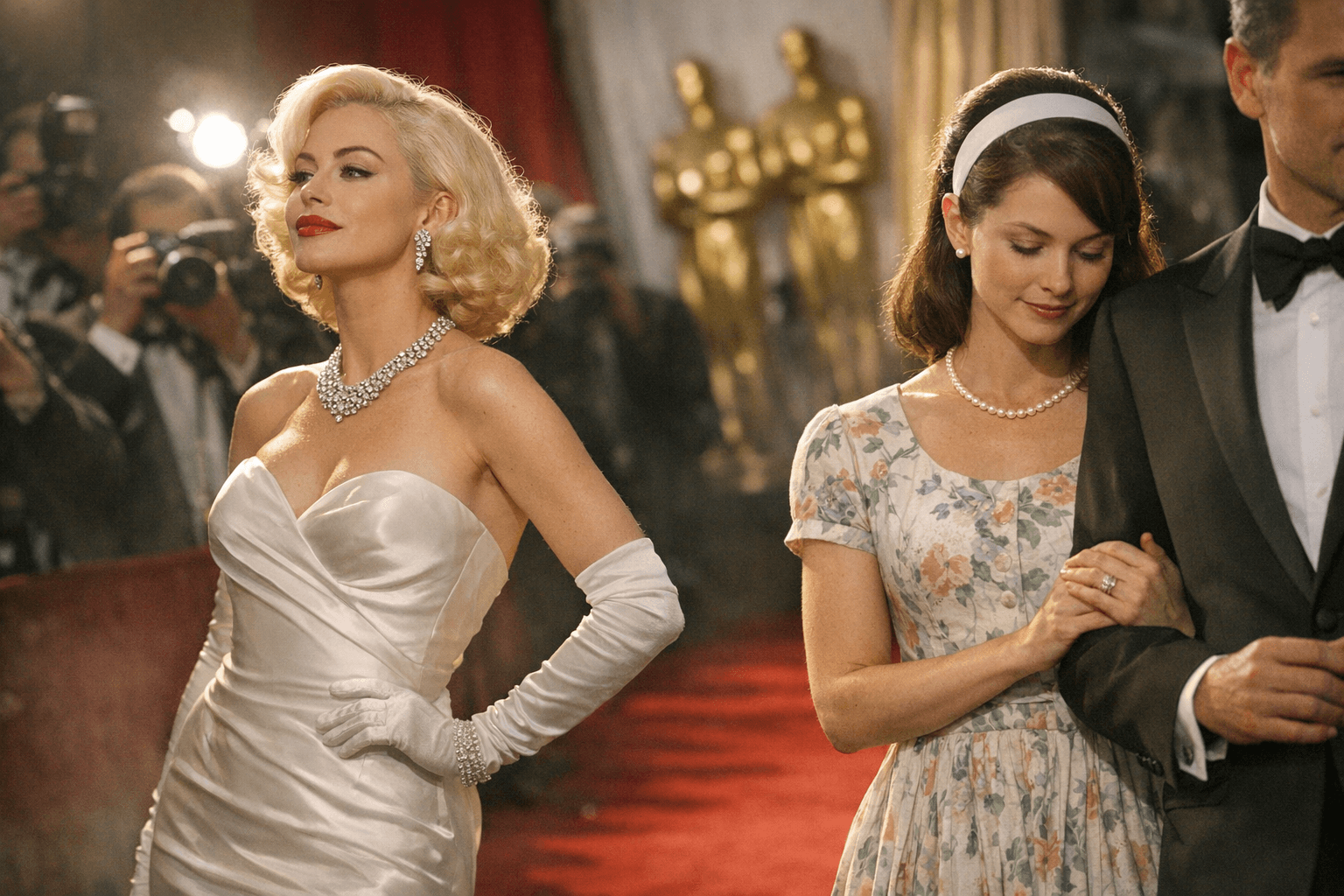
Tashjian and Badia's analysis, as presented through CNN Style, took that examination seriously. The segment positioned the tradwife current not as a coincidence of individual styling decisions but as a legible trend, something stylists and designers were consciously or unconsciously channeling across multiple looks throughout the night.
Why These Two Aesthetics, Why Now
The interesting thing about Old Hollywood glamour and the tradwife aesthetic is that they seem like opposites but actually share a common root: nostalgia for a particular version of femininity. Old Hollywood nostalgia is aspirational and cinematic. Tradwife nostalgia is domestic and intimate. But both are looking backward, both are reaching for an idealized past, and both are thriving in a cultural moment that seems genuinely uncertain about what contemporary femininity is supposed to look like.
Fashion has always processed cultural anxiety through aesthetics, and the Oscars carpet, with its global visibility and its role as a barometer for where the industry's taste is pointed, is one of the clearest places to watch that processing happen in real time. The convergence of these two specific aesthetics at the 98th Academy Awards suggests that the nostalgia current in fashion isn't slowing down. It's deepening, and it's branching.
What Comes Next
Red carpet moments like this one have a way of accelerating trends that were already building. The tradwife aesthetic's visibility at the Oscars will almost certainly push it further into the mainstream, into the spring and summer collections that haven't been shown yet, into the styling choices for the next round of awards events, into the mood boards of designers who are already watching and taking notes.
Old Hollywood glamour, meanwhile, isn't going anywhere. It's too embedded in the Oscars' own mythology to fade quickly. But the specific iteration we saw this year, restrained, fabric-forward, more interested in cut than in ornamentation, points toward a more refined version of that aesthetic moving forward. Less maximalism, more precision.
The 98th Oscars carpet was, by any measure, a stylistically cohesive night. That coherence wasn't accidental. It reflects a fashion industry that is, for the moment, united in its pull toward the past, even if the versions of the past it's reaching for say very different things about the present.
This article was produced by Prism’s automated news system from verified source data, official records, and press releases, then run through automated quality and moderation checks before publishing. The system is built and supervised by the people who set the standards it runs under. Read our full AI policy.
Did this article answer your question?


