Paris menswear heat wave tests luxury's summer style playbook
Paris menswear's summer sprint turned into a climate test, with ice packs and mist machines trying to outrun a red heat alert.
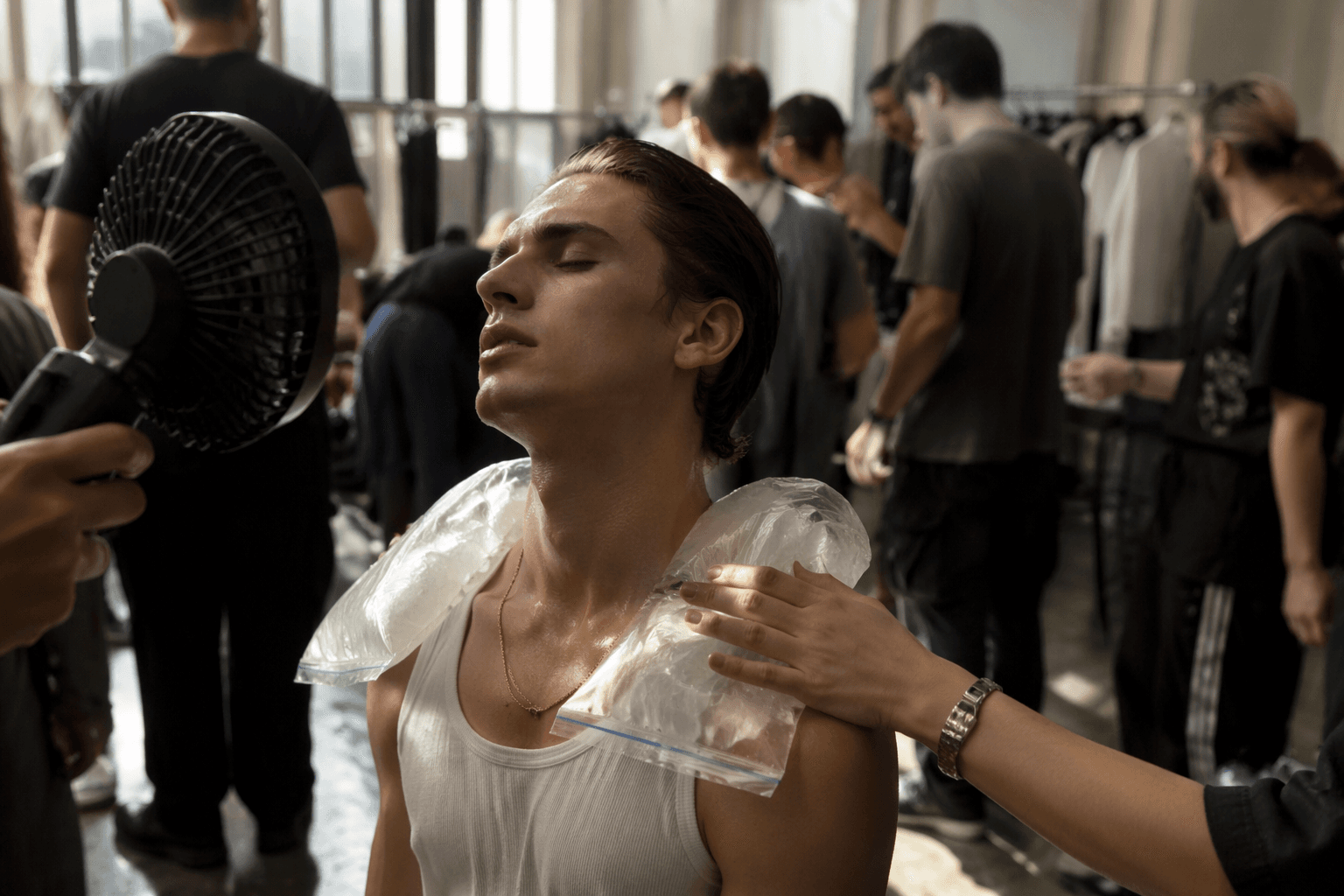
With Paris and Île-de-France under a red heat alert and temperatures pushing toward 40°C, Paris Men’s Fashion Week for Spring/Summer 2027 turned relief into the week’s real accessory story.
Heat changed the dress code in real time
The official calendar ran from June 23 to June 28, 2026, with 74 brands on the schedule, and the timing could not have been harsher. The Fédération de la Haute Couture et de la Mode placed the menswear showroom session at the Palais de Tokyo from Wednesday, June 24, just as the city moved into peak heat. Late-June nights stayed unusually hot, which meant the discomfort did not end when the shows did.
Paris menswear sells a fantasy of precision: immaculate tailoring, controlled entrances, and front rows that look as composed as the clothes. This season, the air itself challenged that idea. The weather did not just make people sweat; it changed how they moved, how long they stayed seated, and how much polish the room could realistically sustain.
The survival kit replaced the status symbols
Fashion houses did what they could to keep guests from overheating. Ice packs, mist machines, and iced Evian on silver platters became part of the show environment, a kind of backstage service moved into public view. The line between hospitality and emergency response blurred fast when some venues still lacked adequate air conditioning and water ran short.
“The most coveted accessory at the Paris Fashion Week shows this week was not a bag, a sneaker or a watch. It was an ice pack.” In a season built on image, the most desirable object was the thing that made the image bearable.
This was “shvitzing,” not simply hot. It was the kind of heat that forces improvisation, where guests start dressing for survival instead of for the camera.
What actually worked when the room overheated
Summer luxury needs to stop pretending that polish and practicality are always the same thing. Heavy layers, rigid construction, and anything that traps heat became liabilities the moment guests stepped away from a fan or into a sun-baked queue. Clothes had to allow movement, air, and a little forgiveness.
That is why the week’s most believable looks were not necessarily the most elaborate ones. The real winning formula was easy to read on the street and impossible to fake in the room: lighter structure, less insulation, and the kind of styling that can survive a long day without turning theatrical discomfort into the point. When temperatures are approaching 40°C, the smartest outfit is the one that still looks intentional after an hour indoors and ten minutes outside.
The heat wave exposed how often fashion still depends on ideal conditions that no longer exist every June.
The calendar itself is starting to look out of season
The week also raised a bigger question than what guests should wear: whether Paris should keep staging menswear at the height of summer if extreme heat keeps arriving with this kind of force. Some front-row attendees were already saying the city may eventually need to move fashion week away from the hottest stretch of the season.
If air conditioning is patchy, water becomes scarce, and outdoor travel between venues feels punishing, then the calendar itself becomes part of the problem.
The shows were still there, but the weather took the lead
The collections were part of the week’s essential fashion conversation, yet the weather kept cutting into the frame. Even the most watched houses could not escape the larger story: the city was hosting a major luxury event while the conditions felt increasingly hostile to normal front-row ritual.
FHCM scheduled Saint Laurent and Louis Vuitton on June 23 and Dior Homme, 3.PARADIS, and Lemaire on June 24, just as the heat alert settled in. That sequencing turned Paris menswear into a live stress test for the entire system, from guest comfort to venue readiness.
This article was produced by Prism’s automated news system from verified source data, official records, and press releases, then run through automated quality and moderation checks before publishing. The system is built and supervised by the people who set the standards it runs under. Read our full AI policy.
Did this article answer your question?


