Pucci’s printed bikinis revive retro swimwear for summer 2026
Pucci’s swimwear revival is less a trend than a house reset, with Camille Miceli turning archival prints into bikinis, one-pieces, and full resort dressing.
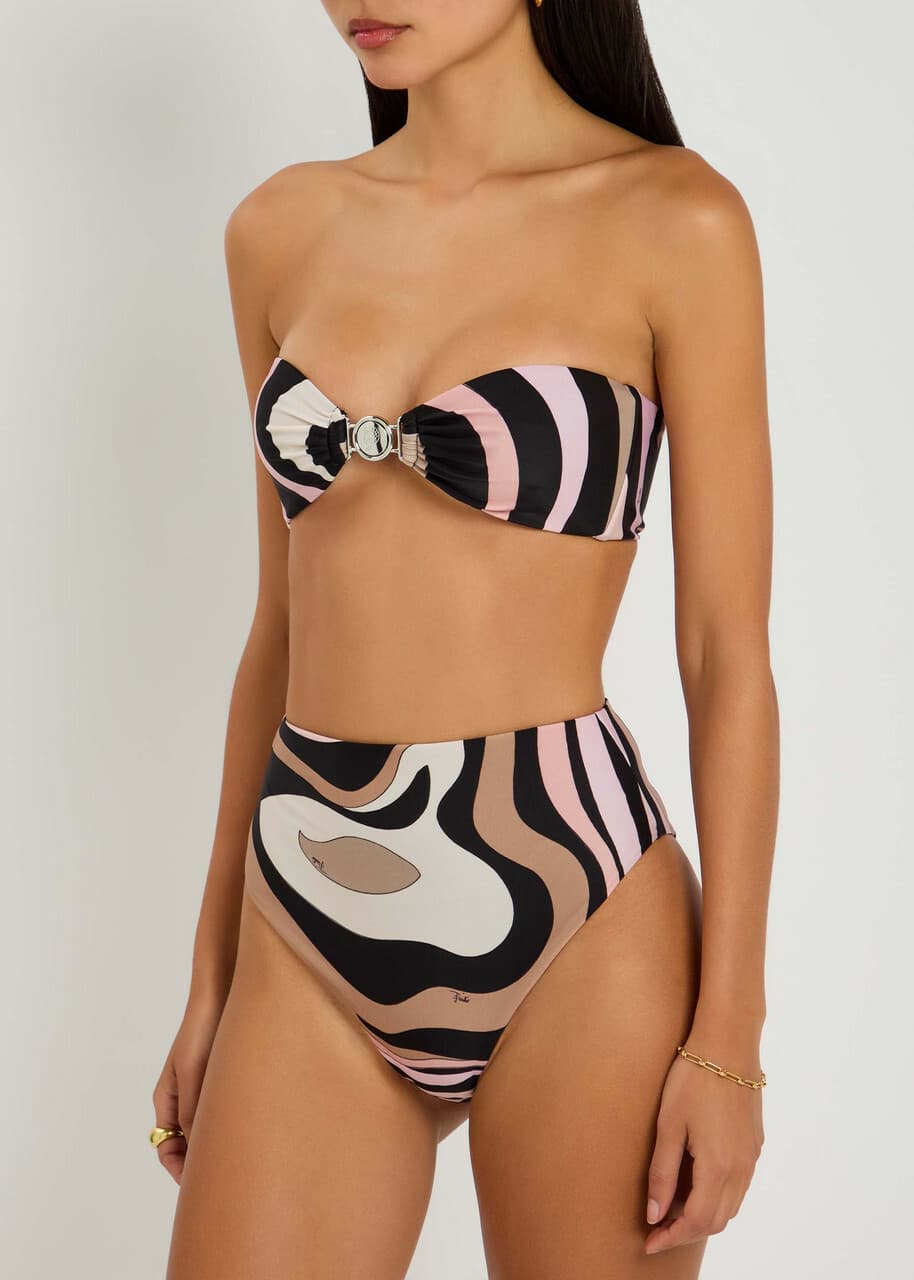
Pucci’s print language is back in the water, and it looks far bigger than a bikini story. Camille Miceli has taken the house’s most recognizable asset, its feverish, kaleidoscopic print vocabulary, and pushed it into swimwear with real commercial force. The result is a summer lineup of printed bikinis and one-pieces that reads as both nostalgic and sharply current, the kind of swim proposition that feels as ready for a hotel terrace as it does for the sand.
A house code, not a passing mood
What makes this revival distinct is that it comes from Pucci’s core identity rather than from a generic return to retro swim. Emilio Pucci founded the brand in 1947, and LVMH still frames his legacy through the nickname “Prince of Prints,” which remains the most useful lens for understanding the house now. Under Miceli, those signature codes are not being treated like archival decor. They are being used as a business language, one that can carry bikinis, one-pieces, playsuits, and mini jersey dresses across the same fantasy of easy, polished travel.
That matters because the swim category can be brutally disposable. Most brands chase a single summer motif and move on. Pucci’s approach feels sturdier: the prints are not being borrowed from a trend board, they are the trend board. When the house leans into psychedelic patterning, jet-set glamour, and body-skimming silhouettes, it is selling an entire resort mood, not just a suit.
Camille Miceli’s revival has a clear point of view
Miceli was appointed artistic director on September 1, 2021, after LVMH took full control of Emilio Pucci. Since then, she has sharpened the brand’s vacation-wear roots rather than sanding them down for broad mass appeal. That choice has given Pucci a more legible identity in a luxury market that often blurs together at the edges.
The clearest proof is in the show destinations. Miceli staged Pucci’s spring 2025 collection in Portofino, a setting that already carries a certain Italian social register: sun-bleached glamour, polished leisure, and just enough exclusivity to feel enviable rather than remote. The spring 2026 collection moved to Sicily and was titled L’Alba, with Miceli describing it as a celebration of “pure vitality.” That phrase fits the collection’s purpose well. Pucci under Miceli is not selling stillness or softness; it is selling movement, heat, and the energy of a life lived outdoors.
What the bikinis are actually saying
The pieces driving the comeback are recognizable at a glance. Psychedelic prints remain the anchor, but the cut matters just as much. Retro bikini shapes and one-piece silhouettes give the graphics a frame that feels lifted from a glamorous archive rather than from algorithm-friendly beachwear. There is an appeal in that tension: the prints are exuberant, but the lines are clean enough to make them wearable.
The range also extends beyond swim, which is why the story has teeth. Shoppers are not stopping at bikinis. They are also buying playsuits and mini jersey dresses, pieces that make the collection function as beach-to-bar dressing rather than isolated vacation wardrobe. That is the key commercial move. A printed bikini may be the headline item, but the brand is building a system around it, one that lets the same visual language travel from deck chair to dinner.
Why retro feels fresh again
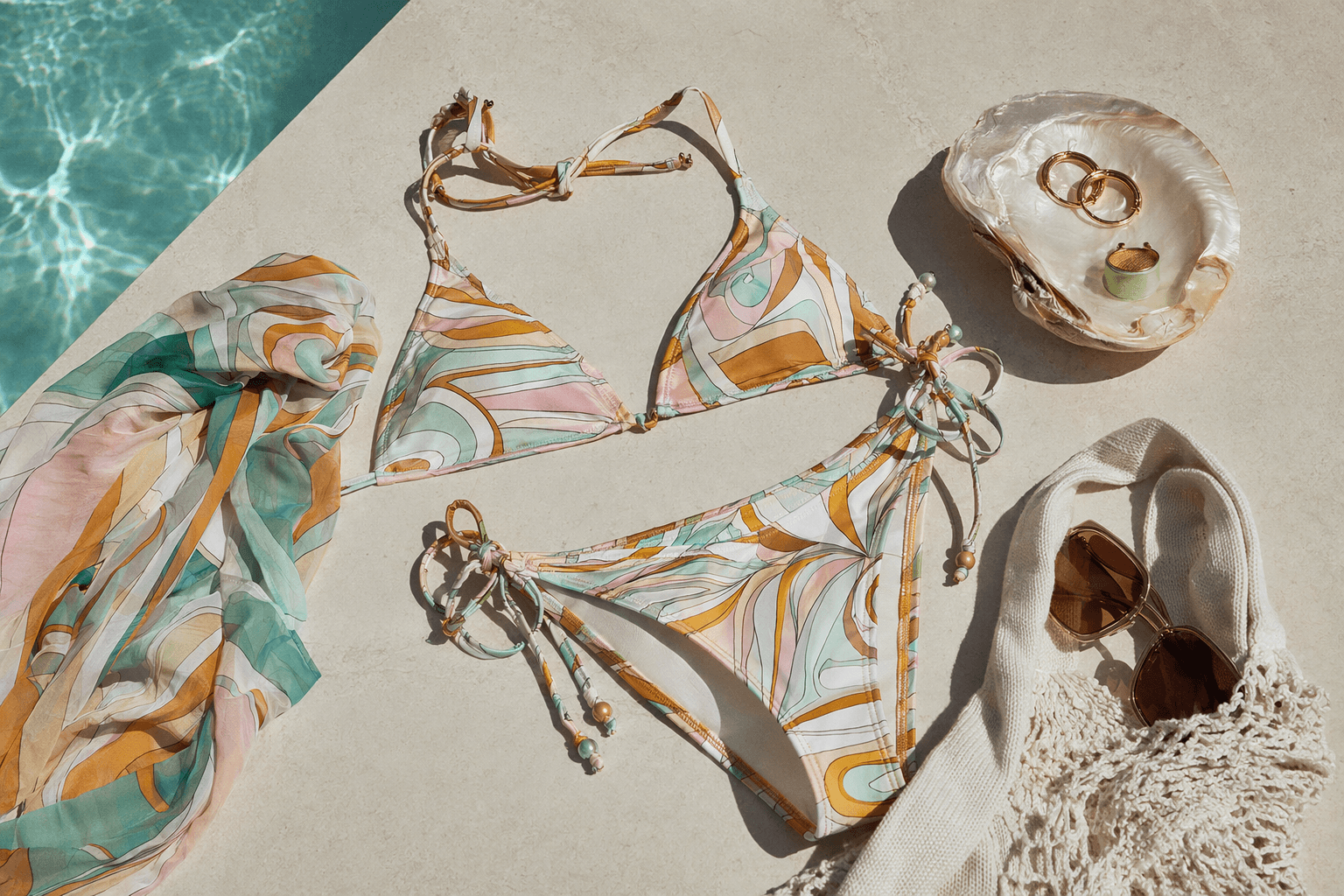
The current appetite for Pucci’s swimwear comes from a familiar fashion instinct, but it is being handled with more discipline than a simple nostalgia play. Jet-set references can easily tip into costume. Here, they land because the house has never really abandoned its own syntax. The prints are loud, yes, but they are also historically grounded in a brand that was built around movement, destinations, and a very specific idea of leisure.
That is why the comeback feels credible. The bikinis tap into the pleasures readers can picture immediately: a high-cut leg, a sculptural top, a swirl of color against sun-warmed skin, and the sense that the same outfit can work under a kaftan at noon and under a blazer at sunset. It is retro, but not museum-bound. It is nostalgic, but not lazy.
The larger luxury resort strategy
Pucci’s swim push lands at a moment when consumers appear more willing to spend on summer wardrobe refreshes. In a recent survey of 648 U.S. consumers with household incomes above $75,000, 52 percent said they planned to spend more this summer than in 2025, while 31 percent expected to spend the same and 17 percent planned to spend less. Clothing and swimwear were among the leading categories.
That backdrop helps explain why Pucci’s move feels timely, but the brand is doing more than riding a spending uptick. It is using its heritage to occupy a better position than trend-driven swim labels can. A strong print archive, a recognizable founder story, and destination-led presentation give the house something durable to sell every summer: not just a suit, but a point of view.
The detail that makes it stick
Pucci’s current momentum is really about coherence. The spring 2025 Portofino show, the Sicilian spring 2026 presentation, the title L’Alba, the “pure vitality” framing, the return of psychedelic prints, and the expansion into playsuits and mini jersey dresses all point in the same direction. Miceli has not reinvented Pucci by stripping it back. She has revived it by making the archive usable again, which is a much rarer and more valuable trick.
That is why these printed bikinis read less like a microtrend and more like a brand-led movement. They are part of a larger luxury resort strategy built on heritage, destination dressing, and the kind of visual confidence only a house with real print authority can sustain.
This article was produced by Prism’s automated news system from verified source data, official records, and press releases, then run through automated quality and moderation checks before publishing. The system is built and supervised by the people who set the standards it runs under. Read our full AI policy.
Did this article answer your question?


