Reju Uses Chemical Recycling to Tackle the Fashion Industry's Textile Waste Crisis
Reju's chemical recycling process breaks polyester down to its molecular components and rebuilds it into higher-quality fiber, with only 3% of the world's plastic-based textiles currently recycled.
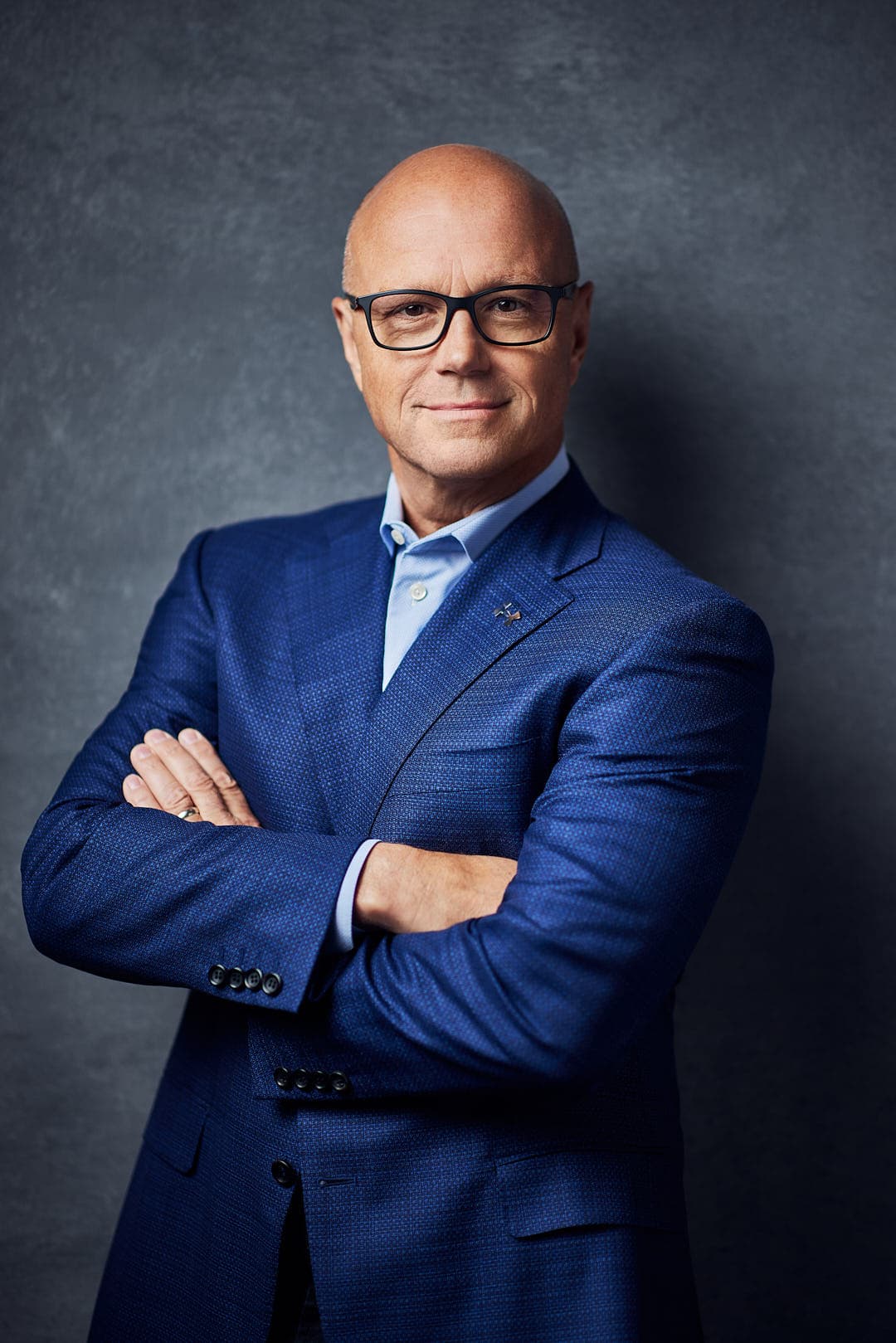
Nearly 100 million tons of annual global textile waste go into landfills or are burned. Reju, a polyester chemical-recycling company founded in 2023, is betting that number is not a crisis to be managed but a feedstock to be mined.
Reju repurposes polyester, a synthetic material made from petroleum that can take up to 200 years to disintegrate, by breaking it down to its molecular components and then rebuilding it into a stronger, better-quality fiber, ready to be made into completely new garments. The process is called glycolysis. Reju's chemical recycling process relies on glycolysis, which uses a liquid called ethylene glycol to break the bonds between polyester molecules. Once the polyester has been separated into molecules, Reju cleans it of additives, colors, and bacteria before re-polymerizing it and turning it back into clean polyester. CEO Patrik Frisk, a former Under Armour chief executive with decades at The North Face, Timberland and Gore-Tex, frames the output as a quality story, not just a sustainability one: "The idea here is to take this mixed post-consumer textile, extract the polyester, cleanse it of any impurities, de-polymerize it…then re-polymerize it and make new yarns and fabrics at a higher quality than what you got coming in," Frisk explained. The commercial logic is pointed: one material scientist told Morning Brew that Reju's method is the "holy grail" of the circular economy.
The scale of the problem makes that ambition necessary. Technip Energies is diversifying through Reju in order to capture part of the 121 million tons of textile waste generated annually worldwide, of which a mere 1% is currently reintroduced within the apparel supply chain. Reju is a subsidiary of Technip Energies, a France-based energy engineering giant that formed in 2021 as a spinoff of TechnipFMC. What separates Reju from other textile and polyester recycling companies is that its process uses both mechanical and chemical recycling and does so using less energy than competitors, according to CTO Antoni Mairata.
To feed its process, Reju has built what it calls Regeneration Hubs, each sited for proximity to post-consumer textile waste. At its Regeneration Hub Zero in Frankfurt, Germany, Reju takes textile waste destined to be burned or tossed in a landfill and uses it as feedstock for its polyester recycling process. That demo plant is expected to officially come online in 2026. From Frankfurt, the company is moving fast: the Frankfurt site is now complemented by recently announced sites being built in Chemelot, the Netherlands, and Rochester in the USA, with an additional industrial-scale hub announced at Lacq, a small village in the Pyrénées-Atlantiques department of southwestern France.
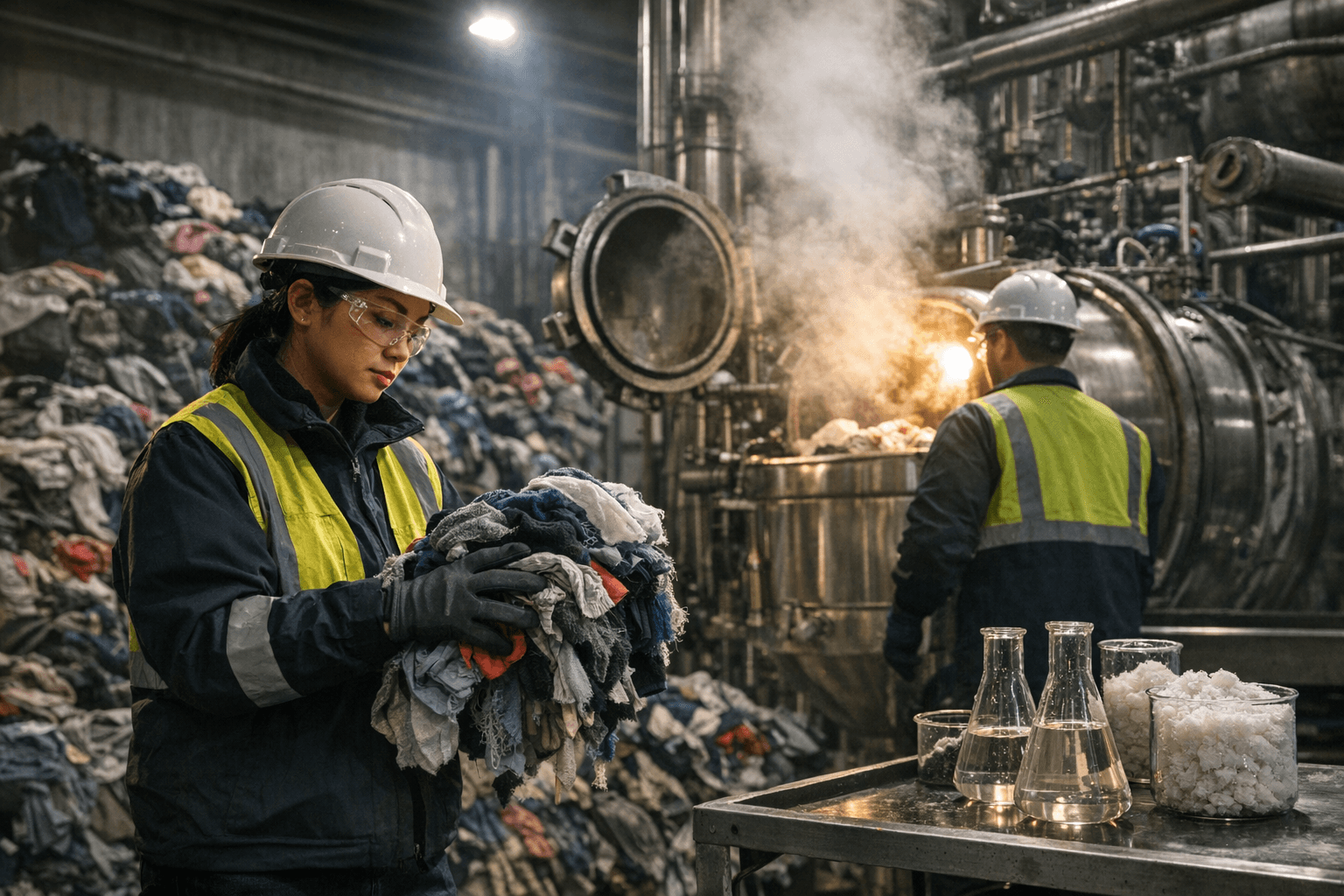
The Rochester site is the most developed of the U.S. plans. Reju plans a $390 million textile-to-textile regeneration hub at Eastman Business Park, its first in the Americas, and the project is expected to create roughly 70 new jobs, including engineers, technicians, and production roles, with operations targeted by the end of 2029. The 18-acre site has ambitions to regenerate the equivalent of 300 million articles annually that would otherwise end up as textile waste. To secure feedstock for the facility, the Northeast Goodwill Circularity Hub, a collective of eleven Goodwills led by Goodwill of the Finger Lakes, has signed an agreement with Reju to supply polyester-rich materials to the Regeneration Hub. The project is backed by a $4 million capital grant from Empire State Development.
The regenerated material carries a 50 percent lower carbon footprint than virgin polyester and is engineered to be recyclable multiple times, reducing the industry's reliance on fossil-based inputs. Reju's pitch to brands goes beyond carbon math: the company argues directly that premium performance, not green credentials, is what closes commercial deals. "We know that although the consumer might not necessarily pay for something green, they'll pay for something better or higher performing. Nicer to wear, better drape, that's what the consumer will pay for," Frisk said in a Textile Exchange conversation.
The road to scale has claimed victims before. Two years ago, Swedish recycler Renewcell filed for bankruptcy, shuttering its chemical recycling plant in Sundsvall and dashing the fashion industry's hopes for commercial textile-to-textile recycling. The site has since been taken over and rebranded as Circulose, which announced plans to reopen with new pulp expected by the end of 2026. Meanwhile, US-based Circ unveiled plans in May 2025 to build a $500 million plant at Saint-Avold in northeastern France, targeting 70,000 metric tons of recycled polycotton per year from 2028. The race is real and the stakes are enormous: Reju has teamed up with Circle-8, a British company that will furnish its European Regeneration Hubs with feedstock supply from post-consumer textile waste processed through an Automated Textile Sorting and Preprocessing facility, and has spoken with more than 100 brands and retailers to generate demand for Reju Polyester. Whether the infrastructure can be assembled fast enough to match the chemistry is the only question left worth asking.
This article was produced by Prism’s automated news system from verified source data, official records, and press releases, then run through automated quality and moderation checks before publishing. The system is built and supervised by the people who set the standards it runs under. Read our full AI policy.
Did this article answer your question?


