Royal Ascot style turns to butter yellow, tomato red and bold hats
Royal Ascot kept its strict dress code, but the standout looks were brighter, softer and bolder. Butter yellow, tomato red and sculptural hats set the tone.

Butter-yellow tailoring, tomato-red Erdem and aquamarine maxi dresses pushed the Royal Enclosure into a brighter register across Royal Ascot 2026’s five days at Ascot Racecourse in Berkshire, from Tuesday 16 June to Saturday 20 June 2026. Serious hats carried the kind of drama fascinators used to supply.
The new language of formality
Ascot still treats Royal Ascot as Britain’s most valuable race meeting, and the event remains one of the summer’s major social occasions. This year, dressing shifted away from heavy embellishment and ultra-traditional neutrals. The strongest looks used color as the headline and tailoring as the frame.
Butter yellow read soft rather than sugary, tomato red looked assertive without fuss, and aquamarine brought a fresher, airier note to the kind of occasion that can easily tip into costume.
The dress code still draws the line
Royal Ascot has not relaxed its rules to get here. In the Royal Enclosure, women must wear a dress or skirt that falls just above the knee or longer, shoulder straps must be at least 2.5cm wide, and hats must have a solid base measuring at least 10cm across. Fascinators are not permitted.
With length, coverage and headwear already defined, the room for expression shifts into fabrication, color and silhouette. A sharply cut butter-yellow suit looks modern because it respects the structure of the rules; an aquamarine maxi dress looks elegant because it uses sweep and movement instead of surface noise.
Bright Tomato gives the season its anchor
Ascot introduced its first-ever Royal Ascot Colour of the Year for 2026, and Bright Tomato took the slot. The shade is a bold orange-red, chosen to reflect the season’s runway direction and to give the event a clear style message.
Tomato red stood out because it does not need much help. Against the racecourse backdrop, Bright Tomato has the clarity of a statement accessory and the confidence of a full look. One saturated color is enough. A tomato-red dress, a sharp red trouser suit or even a red hat can carry the whole outfit.
Millinery is doing more than finishing the look
The 2026 Royal Ascot Millinery Collective was the 11th year of the project, and it was unveiled on 22 February 2026 at Claridge’s during London Fashion Week under the creative direction of British designer Daniel Fletcher. Ascot showed the Collective there for a second consecutive year, and the project sits within its role as the only sporting venue and event to be a Patron of the British Fashion Council.
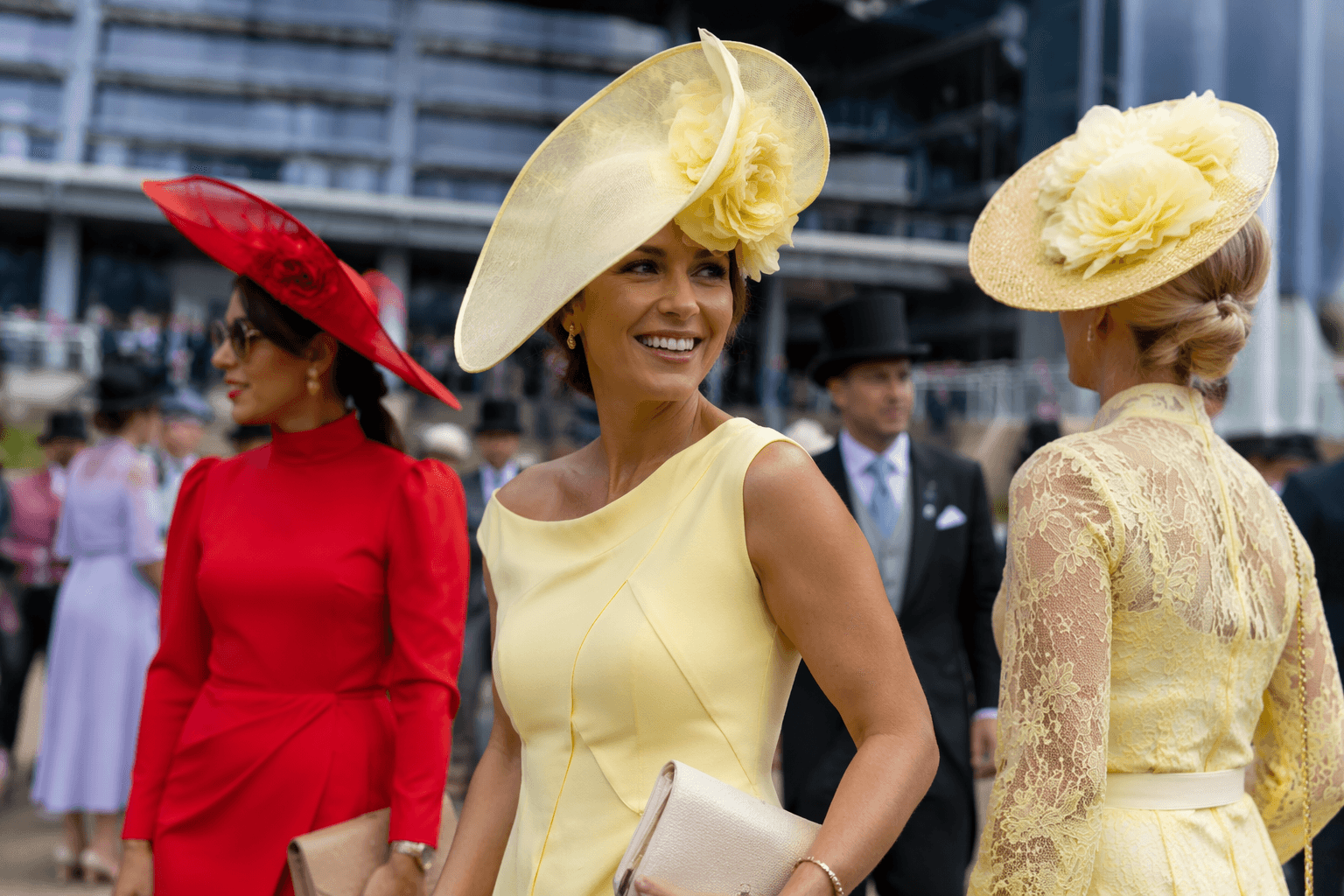
Fletcher and the team drew on Cecil Beaton’s Bright Young Things and the glamour of the early 20th century, especially the 1920s and 30s. The millinery has a slightly theatrical polish without feeling dated. The shapes suggest confidence and wit rather than pure formality.
Choose a hat with presence. A structured brim, a sculptural crown or a neatly proportioned base can do more for an outfit than a cascade of embellishment.
What to wear, and what to skip
The easiest way to translate Ascot now is to simplify the body of the outfit and sharpen the details around it.
- Wear butter yellow if you want something elegant but light. It flatters tailoring especially well, because the color softens the severity of a blazer or trouser line.
- Wear tomato red if you want the outfit to read instantly. Bright Tomato has enough force to stand on its own, so keep the cut clean and the accessories controlled.
- Wear aquamarine if you want movement. A maxi dress in that shade gives a softer, more fluid version of formal dressing.
- Choose a proper hat if the dress code calls for one. In the Royal Enclosure, a solid base matters, and fascinators are out.
- Skip over-decoration if the silhouette already has presence. A crisp shoulder, a long hem or a vivid color often needs very little else.
Ascot’s young design talent initiative tied to Royal Ascot 2026 involved 172 students.
This article was produced by Prism’s automated news system from verified source data, official records, and press releases, then run through automated quality and moderation checks before publishing. The system is built and supervised by the people who set the standards it runs under. Read our full AI policy.
Did this article answer your question?


