Ruffles return across Fall 2026 runways in New York, Paris and Milan
Ruffles are back for Fall 2026, but the season splits them into architecture, romance, severity and overload. The smartest looks treat them as structure, not decoration.

Ruffles are back for Fall 2026, but this is not the sweet, frothy version that once read as mere prettiness. WWD's gallery threads Aknvas, Alaïa, Blumarine, Carolina Herrera and Christian Siriano through New York, Paris, Milan and even London imagery, and the message is clear: the ruffle has become a silhouette tool. The most interesting designers are using it to carve shape, sharpen line, or send a gown into full theatrical motion.
The new ruffle vocabulary
The easiest way to read the season is to separate the ruffles into distinct types, because they are doing very different jobs. The architectural ruffle builds form, often behaving like a seam or a sculptural edge rather than a flourish. The romantic ruffle softens the body, but not in a saccharine way. It adds air, movement and a little instability to the look.
- Architectural ruffles are the most directional. They sit inside the construction of the garment and make the clothes feel engineered rather than decorated.
- Romantic ruffles are lighter and more fluid. They drift across dresses and blouses, adding softness without collapsing the shape.
- Severe ruffles are stripped back and controlled. They sharpen a line, turning a traditionally decorative detail into something almost stern.
- Exaggerated ruffles are the season's loudest statement. They are there to create drama, volume and a sense of motion that can be felt from across the room.
That taxonomy matters because it shows how far the detail has moved from generic femininity. In the right hands, a ruffle is no longer a garnish at the hem or collar. It is the thing that determines how a dress stands, sways, or confronts the body.
New York makes the case for ruffles as structure
New York gave the trend some of its clearest examples. At Collina Strada, dramatic sheer ruffs appeared as accessories, a version of the motif that felt deliberately light and a little uncanny, like costume history filtered through downtown instinct. Coach and Carolina Herrera took a different route, building ruffs into dresses and blouses so the detail became part of the garment's architecture.
That distinction is the whole story. When ruffles are attached like ornaments, they can feel like excess for its own sake. When they are cut into a dress or blouse, as they were at Coach and Carolina Herrera, they change the line of the body and the way fabric falls. WWD described that whole New York ruff moment as a trip back to the Elizabethan era, and the comparison makes sense, because the detail was doing what it did centuries ago: framing the face, lifting the neckline, and making the wearer feel ceremonious.
Aknvas sat comfortably inside that same conversation, because the label's inclusion in the gallery points to a broader truth about the season. The ruffle is not confined to overtly feminine dressing. It can be contemporary, sharp and precise when it is placed against a cleaner silhouette.

Paris and Milan push the ruffle toward mood and discipline
Paris turns the ruffle darker and more architectural. Alaïa's Fall 2026 collection, shown at the old Cartier Foundation on March 5, was Pieter Mulier's final collection for Maison Alaïa, and that context matters. In a house so closely associated with body-conscious precision, the ruffle reads less like frill and more like a controlled interruption, a line that cuts across the body with intention.
Blumarine in Milan keeps the motif on the more indulgent side of the spectrum, which is exactly why the season feels balanced rather than one-note. Where Alaïa leans into severity, Blumarine reminds you that ruffles still know how to flirt with excess. Together, they show the range of the trend: one designer uses the detail to discipline the silhouette, while another uses it to amplify movement and surface.
Christian Siriano belongs to that wider field as well, because his presence in the ruffle gallery reinforces how adaptable the motif remains. It can be grand, romantic or sharply tailored, depending on where it sits in the garment and how much air the designer allows around it.
Why the season feels theatrical again
The larger mood helps explain why ruffles have returned with this much confidence. Shopify's fashion-trends guide says Fall 2026 runway collections were punctuated by bold reds and pinks, dramatic trains, botanical details and cascading ruffles. James DeMolet, vice president of brand and creative at Betsey Johnson, put the feeling plainly: "I love that things feel theatrical again."
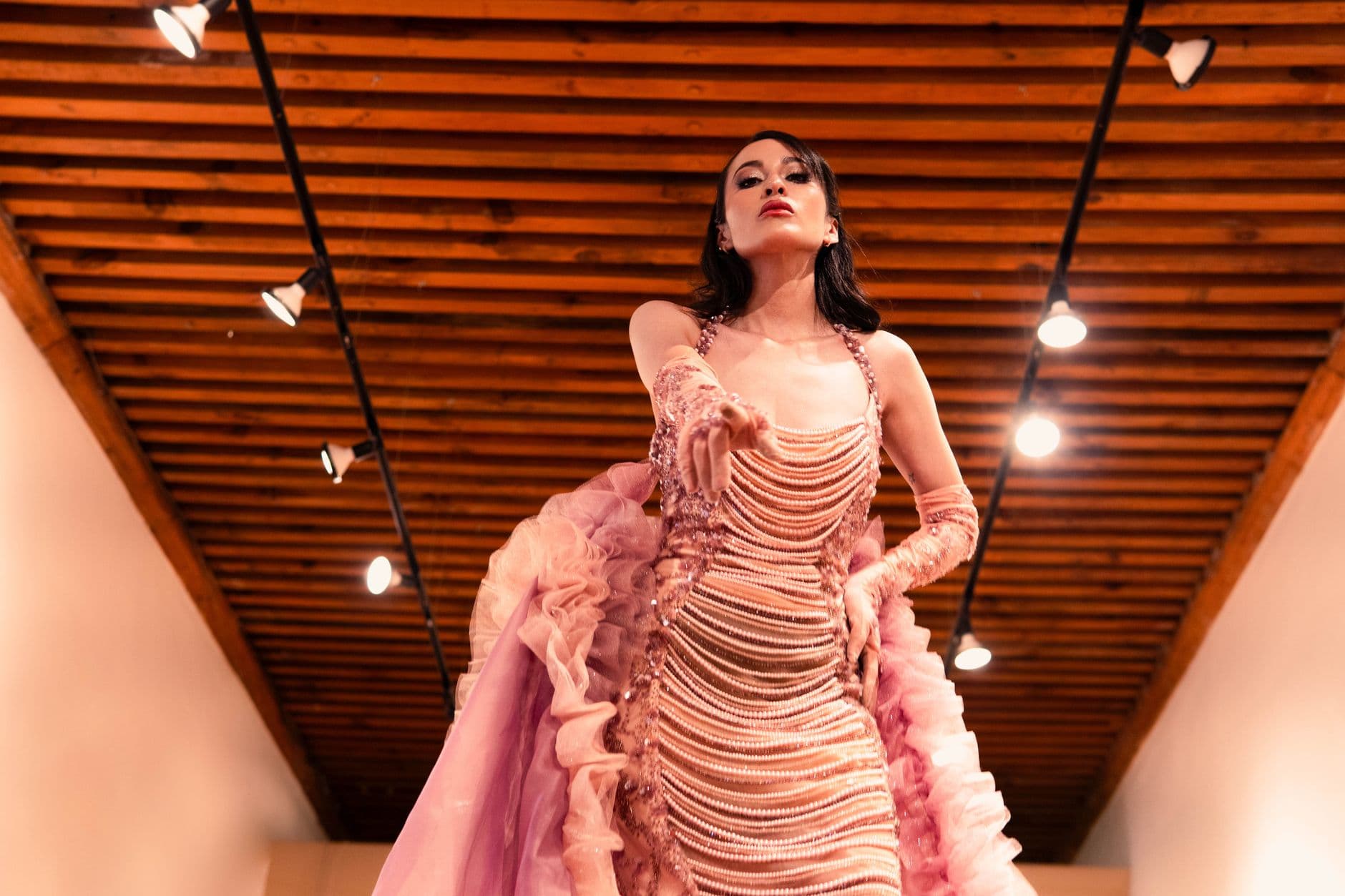
That word, theatrical, is the key. It suggests not only ornament but performance, a willingness to let clothes announce themselves. Ruffles fit neatly into that shift, especially as the season's broader runway index places them alongside tailoring and bodycon, two categories that are usually read as structurally disciplined. In other words, ruffles are not operating at the margins of the season. They are part of the main argument about what a Fall 2026 silhouette should look like.
The detail also benefits from the current appetite for expressive dressing. Bold color, botanical motifs and long, dramatic trains all point in the same direction: fashion wants clothes that carry emotion in the cut, not just in styling. Ruffles answer that desire because they can be intimate or operatic, depending on scale.
A motif with a long memory
The ruffle's return does not feel arbitrary because fashion has been here before. The Fashion History Timeline notes that early 1870s dress featured flounces, frills and ruffles, and FIT's historical reporting shows the detail recurring throughout the 19th century and back into modern fashion cycles. That history gives the current moment more weight than a simple nostalgia play.
What Fall 2026 seems to understand is that ruffles work best when they are treated as a means of shaping the body rather than decorating it after the fact. That is why the season's most convincing versions feel purposeful, whether they arrive as sheer ruffs, built-in flounces, or extravagant cascades. The ruffle is back, but its real power this season lies in how it redraws the silhouette.
This article was produced by Prism’s automated news system from verified source data, official records, and press releases, then run through automated quality and moderation checks before publishing. The system is built and supervised by the people who set the standards it runs under. Read our full AI policy.
Did this article answer your question?


