Selena Quintanilla's Estate Sues SHEIN Over Unauthorized Branded Merchandise Sales
Selena's estate sued SHEIN in federal court after the retailer allegedly ignored a cease-and-desist for months and kept selling unauthorized Selena-branded merchandise.

Suzette Quintanilla and Q Productions filed a federal lawsuit against SHEIN on March 11 in California's Central District Court, accusing the fast-fashion giant of selling "countless T-shirts and related merchandise" bearing her late sister's image without permission, compensation, or a license. The complaint followed seven months of inaction after Q Productions sent a cease-and-desist letter in August 2025 demanding the retailer pull the listings. SHEIN, the complaint alleges, ignored it.
The claims are sweeping: trademark infringement, unfair competition, false designation of origin, dilution, and violations of Selena's publicity rights. The estate is seeking both a court injunction to halt further production or sale and disgorgement of whatever profits SHEIN and its marketplace sellers collected. Q Productions, founded by Selena's father, Abraham Quintanilla, controls the singer's trademarks, branding, and licensing. Suzette now manages those rights, and the family has long been protective of Selena's commercial legacy. Letting unauthorized merchandise circulate at the scale SHEIN operates doesn't just dilute the brand; it siphons revenue directly from legitimate licensing deals.
After the lawsuit became public, SHEIN did what it hadn't done in response to the cease-and-desist: it removed the listings. A company spokesperson stated, "When we were made aware that the products in question were being sold on SHEIN Marketplace by third-party sellers, we immediately removed the listings from our platform and launched an investigation." That framing, placing responsibility on third-party sellers rather than SHEIN itself, signals the defense strategy the company is likely to pursue.
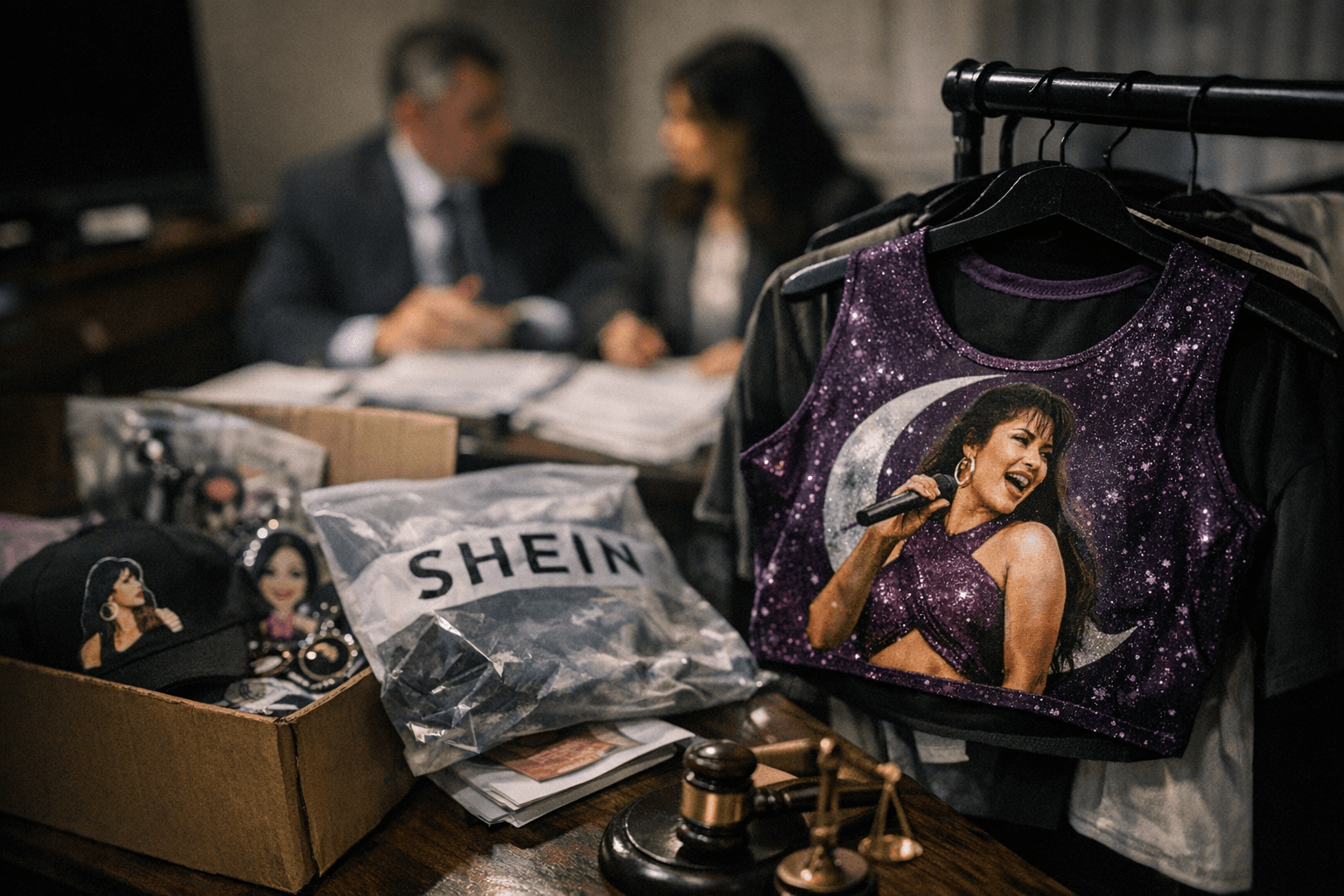
It is a familiar maneuver in platform litigation. The central legal question is not simply whether the goods were unauthorized; it is how much the platform knew, when it knew it, and whether its marketplace infrastructure made it a passive host or an active participant in the sales. Attorneys for Quintanilla and Q Productions allege the products were advertised not just on SHEIN's website but across its social media channels and other U.S. retail outlets, a detail that complicates any passive-host defense considerably. Discovery will pressure SHEIN to account for how the listings proliferated and what, precisely, happened after the August cease-and-desist arrived.
The case arrives as SHEIN has become a recurring target for artists and estates challenging the platform over unlicensed merchandise. For Suzette Quintanilla and Q Productions, the lawsuit is also a declaration of value. More than three decades after Selena's death, her name and likeness remain commercially potent, and the outcome here could set a meaningful precedent for how far estate rights extend when a legacy artist's image travels through the layered supply chains of global fast fashion.
This article was produced by Prism’s automated news system from verified source data, official records, and press releases, then run through automated quality and moderation checks before publishing. The system is built and supervised by the people who set the standards it runs under. Read our full AI policy.
Did this article answer your question?


