Soccer style takes over summer wardrobes ahead of World Cup
The football shirt is shedding stadium baggage and slipping into summer wardrobes. With the 2026 World Cup nearing, brands are softening the look for everyday wear.
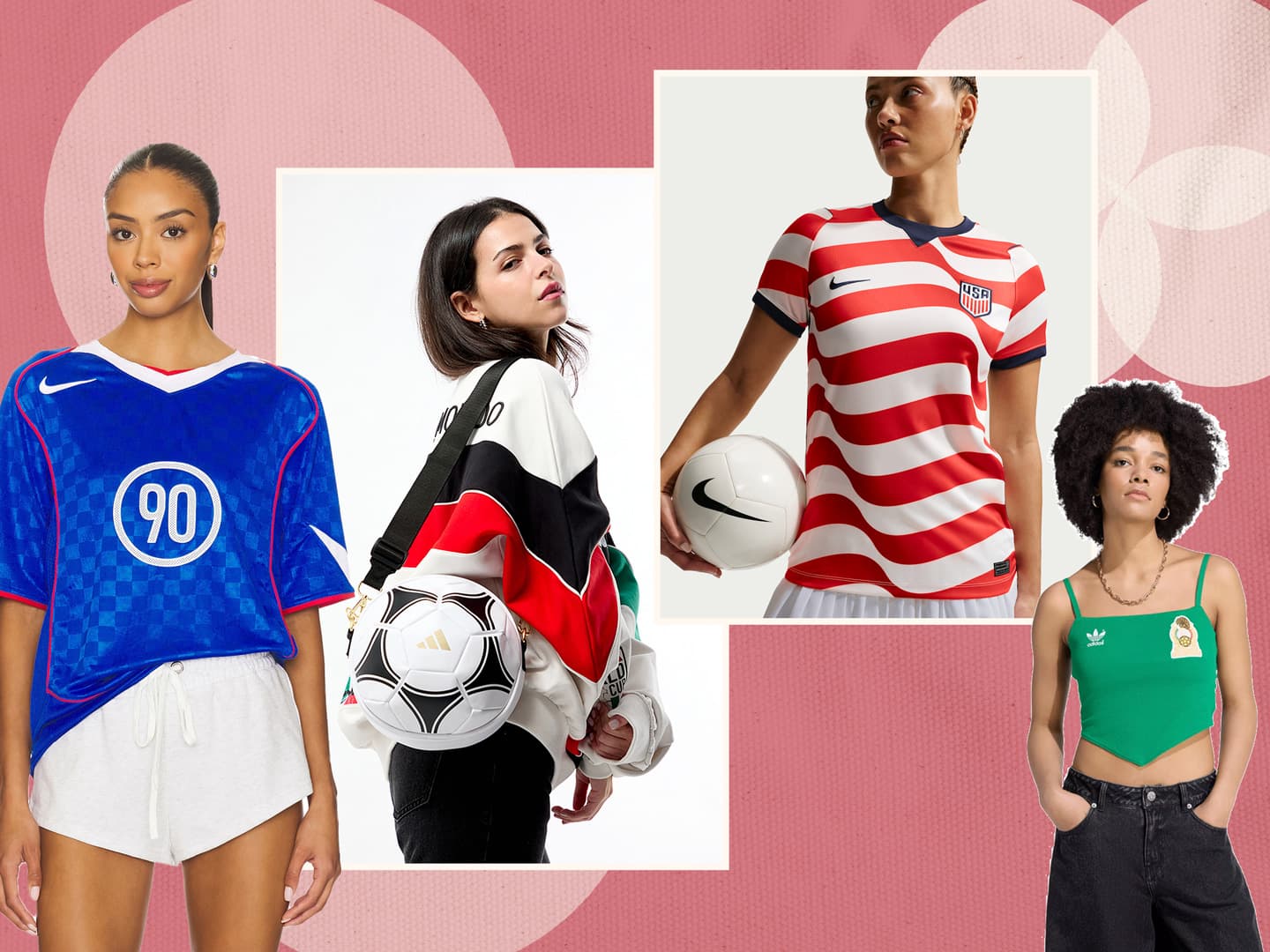
The jersey is no longer just for match day
The football shirt has crossed a neat little line. What used to read as fan gear now looks like a summer staple, with jerseys, crest details, and club-color references showing up in everyday wardrobes instead of staying locked to stadium seats and screen-time rituals. WWD describes the shift as soccer style moving into the mainstream, and the change is especially visible in the way women are wearing it: less literal, more polished, and far more interested in the silhouette than the scoreboard.
That matters because the look is not arriving as a gimmick. It is arriving as a category shift. The football shirt is being treated the way fashion treats any strong uniform, then softened just enough to work outside the match-day context. The result is a piece that carries the charge of sport but can still live with summer denim, tailored shorts, or cleaner, more feminine separates. In other words, the shirt is keeping its attitude while losing its exclusivity.
Why the World Cup is accelerating the crossover
The timing is doing a lot of the work here. The 2026 FIFA World Cup runs from June 11 to July 19, 2026, across 16 host cities in the United States, Mexico, and Canada. It is the first men’s World Cup to feature 48 teams, and FIFA’s official schedule lists 104 matches, starting with the opener in Mexico City on June 11.
That scale makes the tournament bigger than a sports event. It becomes a merchandising engine, a color story, and a summer dress-code cue all at once. When the sport is this visible, the wardrobe effect spreads quickly, especially in retail categories that already trade on national identity, logo recognition, and easy-to-wear separates. The World Cup is not just driving demand for replicas. It is helping turn football references into a broader fashion language.
The brands are already translating the look
Adidas has moved early with women’s FIFA World Cup 26 clothing and streetwear, a clear signal that brands see the opportunity beyond traditional kits. The collection leans on national-team-inspired colors and crest details, then pushes those references into everyday styles. That is the key move: not a costume, not a full replica, but something that can sit in a summer wardrobe without requiring a game ticket.
Nike is taking a similar route with its 2026 federation kits, which emphasize heritage, identity, and Aero-FIT cooling technology for the heat of the tournament season. The practical note matters as much as the cultural one. Cooling performance keeps the product tethered to sport, while the heritage angle gives it emotional weight. Together, those cues make the shirt feel less like promotional merchandise and more like a contemporary uniform with a point of view.
What is getting softened, in fashion terms, is the bluntness of the reference. Crest placement, team colors, and athletic construction are still there, but they are being filtered through cleaner styling, lighter fabrication, and a more fashion-conscious fit. That is why the look is working beyond the terrace. It reads as purposeful rather than costume-y.
The women’s angle is where the trend gets interesting
Women are driving a big part of the momentum, and that is changing the way the look is styled. The football shirt no longer has to be oversized in the old, borrowed-from-the-boys sense, nor does it need to lean aggressively sporty to feel current. Instead, it is being reinterpreted with softer styling that gives it shape, ease, and a little more polish.
That shift is visible in the broader sports-fashion conversation. The blokecore or football-shirt aesthetic has already spent time on terraces and catwalks, and it kept showing up through Spring/Summer 2025 runway coverage. What was once treated as a niche subculture has become a recognizable fashion code. The difference now is that the women’s version is less about posturing and more about making the shirt work in a real wardrobe, where it has to pair with everything from elevated basics to cleaner summer separates.
This is where the jersey becomes more than a novelty. In womenswear, it is being read as a graphic top, a color block, a logo piece, and a casual statement all at once. That versatility is what gives it staying power.
What to wear, and what to skip
The most convincing versions of the trend are the ones that treat the football shirt as a design object, not a shouty souvenir. Look for pieces that keep the team reference visible but not overwhelming, especially those with sharper crest placement, refined color combinations, or a streetwear finish that feels deliberate. The goal is to let the shirt do one strong thing, then balance it with the rest of the outfit.
- Wear it where the contrast feels clean: with tailored shorts, crisp skirts, or simple denim
- Favor colorways that feel graphic but not costume-like, especially combinations that read as wardrobe colors rather than novelty merch
- Let crest details and team references stay sharp, then keep the rest of the outfit calm
- Skip anything that feels over-accessorized or too literal, because the trend works best when it looks edited
The strongest versions of the look are also the easiest to imagine buying into a summer rotation. That is the real commercial signal here. Brands are not just selling fandom. They are selling an easy entry point into a trend that looks current without demanding much styling work.
Why this one may last longer than the tournament
The momentum behind women’s soccer helps explain why the fashion response feels bigger than a one-season story. UEFA reported a record 657,291 total attendance at Women’s EURO 2025 in Switzerland, up from the previous record of 574,875 set in 2022. That kind of growth gives brands a wider audience to speak to, and it confirms that women’s football is no longer a side story in the sports calendar. It is a cultural force with real retail pull.
That is also why the jersey is changing shape in fashion. It is becoming less about being read as a fan and more about being read as someone who understands the moment. The shirt’s appeal is its mix of identity, utility, and visual punch. With the 2026 World Cup looming, that mix is only getting stronger, and summer wardrobes are about to wear the proof.
This article was produced by Prism’s automated news system from verified source data, official records, and press releases, then run through automated quality and moderation checks before publishing. The system is built and supervised by the people who set the standards it runs under. Read our full AI policy.
Did this article answer your question?


