Sundae School Opens Chinatown Flagship, Blending Hanbok Heritage and Temple-Inspired Design
Sundae School turned a 500-square-foot Chinatown shop into a temple-like retreat, making its first permanent store feel more like ritual than retail.

Sundae School’s first permanent store did not arrive looking like a standard streetwear rollout. At 117 Hester Street in Manhattan’s Chinatown, the Korean American label opened a 500-square-foot space that feels less like a shop floor than a controlled exhale, with floor-to-ceiling pastel pink curtains, metal pillars and gates guiding visitors through a sequence inspired by a traditional Korean Buddhist temple.
That restraint is the point. Designed by Nohar Lim Zask-Agadi and artist-sculptor Andy Kim, the flagship gave Sundae School a physical setting for the hybrid identity it has built since 2017, when Dae Lim launched the brand in a New York apartment as a thought experiment. The store sits a short distance from that original apartment, a neat piece of fashion geography that makes the opening feel personal rather than merely expansionist.
Sundae School has always sold a distinct point of view: craft cannabis culture translated through Korean heritage, with smokewear silhouettes that borrow from hanbok structure instead of flattening it into trend. The brand’s current assortment includes hanbok chino pants, hanbok hoodies, hanbok tie blazers, jeogori tie jackets and wrap sweatbaji, pieces that turn familiar American casualwear into something softer, looser and more ceremonially layered. On the rack, that means volume, wrap closures and a relaxed drape that reads as tailored without losing ease.
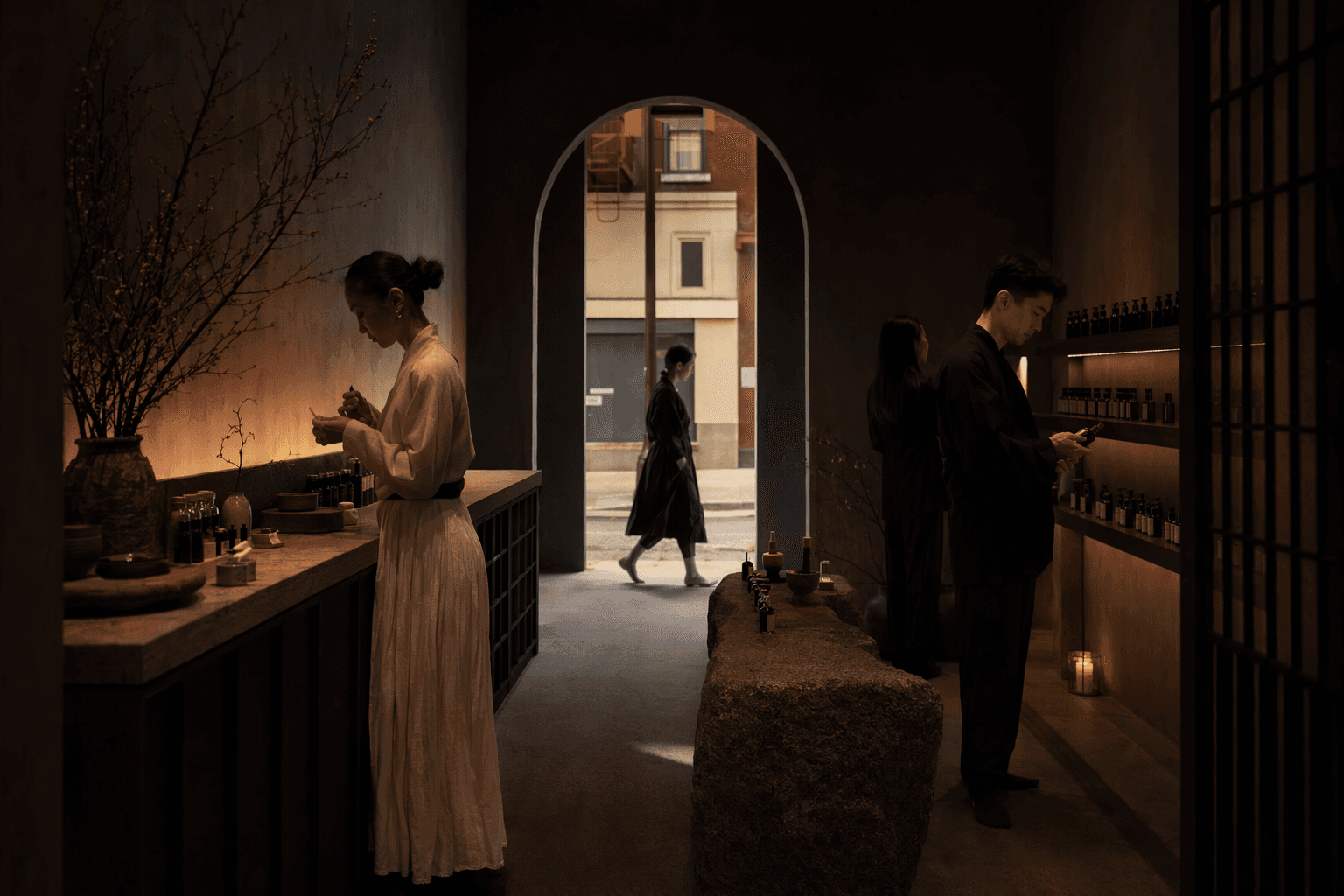
The new store gives those clothes a setting that reinforces the brand’s mood of calm and ritual. Rather than packing the space with product, Sundae School used its footprint to create a meditative sequence, the kind of retail environment younger labels are increasingly using to make a stronger emotional impression than a traditional storefront ever could. It is a sharper business move than a simple opening statement. In a city where retail often shouts for attention, Sundae School chose stillness.
The flagship is also meant to function as a community hub for indie brands, pop-ups and creatives, a role that fits a label born between Seoul and California and now rooted in Chinatown. In an era when the most interesting stores increasingly operate as small-scale cultural rooms, Sundae School’s opening suggested a broader shift: the shop is no longer just where the clothes live, but where the brand’s world finally has a room of its own.
This article was produced by Prism’s automated news system from verified source data, official records, and press releases, then run through automated quality and moderation checks before publishing. The system is built and supervised by the people who set the standards it runs under. Read our full AI policy.
Did this article answer your question?


