Sustainable Fashion Gains Momentum With Regulation, Resale, and Recycling Breakthroughs
Regulation, resale, and recycling are reshaping fashion's future faster than most brands expected.
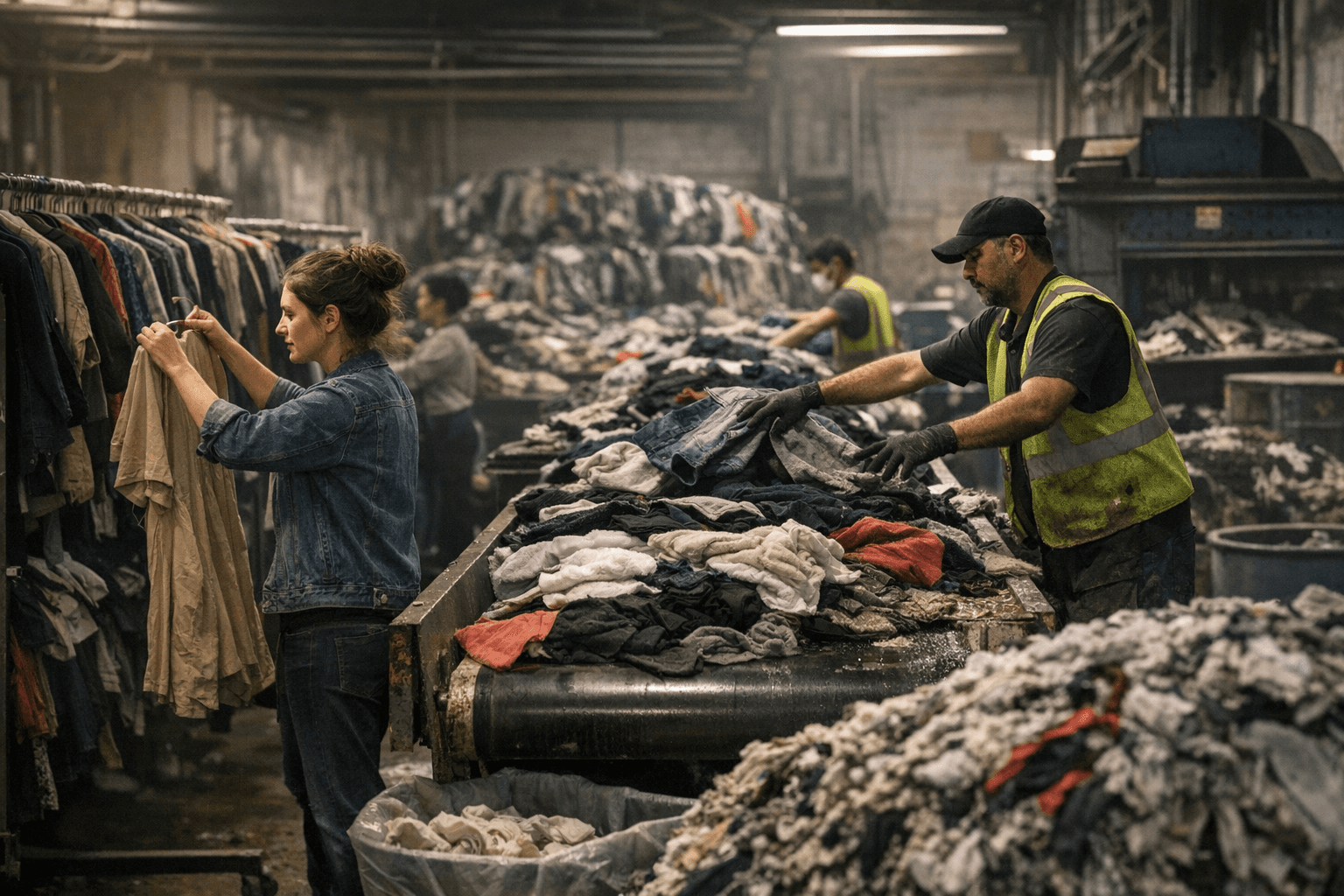
Sustainable fashion has spent years being dismissed as a niche concern, the province of linen-clad idealists and specialty boutiques. That era is over. The convergence of regulatory pressure, booming resale markets, and genuinely breakthrough recycling technology is forcing the entire industry, from fast fashion giants to luxury houses, to reckon with how clothes are made, sold, and disposed of. Good On You's March roundup of 15 sustainability-related developments makes the scope of this shift impossible to ignore.
Regulators Are Coming for Fast Fashion's Claims
The most consequential pressure point right now is legal. SHEIN, the ultra-fast fashion platform that built its empire on $6 tops and algorithmic trend-chasing, is facing regulatory scrutiny in Germany and across the EU over its sustainability claims. This matters because it signals that greenwashing, the practice of marketing products as environmentally responsible without substantive evidence, is no longer a reputational risk alone. It is becoming a legal one. European regulators have been sharpening their tools for exactly this kind of enforcement, and SHEIN's scale makes it a high-profile test case for how seriously those tools will be applied.
The EU's broader push on greenwashing has been building for years, but seeing it applied directly to one of the world's largest fast fashion operations marks a turning point. Brands that have leaned on vague language like "conscious collection" or "eco-friendly" without rigorous certification are watching this case closely. The message is clear: claims must be substantiated, or they become liability.
Resale Is No Longer a Subculture
While regulators tighten the screws on production claims, the resale market is absorbing consumer appetite at a staggering rate. Etsy, Depop, and eBay are all central players in what has become a mainstream re-commerce ecosystem. Depop, which Etsy acquired for $1.6 billion, has become the go-to platform for Gen Z sellers and buyers who treat secondhand shopping not as a compromise but as a first choice. eBay, meanwhile, has repositioned itself as a serious destination for authenticated pre-loved fashion, particularly in categories like sneakers and designer handbags.
What makes the current resale moment different from earlier waves of thrift culture is infrastructure. These platforms have invested in authentication, streamlined shipping, and seller tools that make the experience competitive with traditional retail. The friction has been removed. Buying a secondhand coat on Depop now feels as easy as buying a new one from a high street brand, and for a growing segment of shoppers, it feels considerably better.
Material Innovation: Circulose and the Recycling Frontier
On the production side, material innovation is closing the loop in ways that felt theoretical just a few years ago. Circulose, the Swedish material innovation company, has developed a process that turns worn-out cotton garments into a dissolving pulp that can be used to create new, virgin-quality textile fibers. The result is a material that carries none of the degraded quality typically associated with recycled textiles. Brands that have worked with Circulose include H&M and Levi's, both of which have used the material in limited collections to test consumer and market response.
The significance of Circulose's approach lies in what it solves: the longstanding problem of fiber-to-fiber recycling at scale. Most textile recycling has historically resulted in downcycled products, think industrial rags or insulation, rather than new garments. Circulose breaks that ceiling. If the technology scales as its developers intend, it could fundamentally alter the math on fashion waste, turning discarded wardrobes into raw material pipelines rather than landfill contributions.
The Regulatory Landscape Is Expanding
Beyond the SHEIN case, the broader EU regulatory landscape is shifting in ways that will affect every brand selling into European markets. Extended producer responsibility frameworks, which require brands to take financial responsibility for the end-of-life management of their products, are being rolled out across multiple member states. These rules are not optional, and they are not distant. Brands that sell in Germany, France, and other major EU markets are already navigating compliance requirements that their counterparts in less regulated markets have yet to face.
This regulatory divergence is creating a two-speed industry. Brands that have invested early in supply chain transparency and circular design are finding compliance relatively manageable. Those that haven't are facing sudden, expensive retrofitting of their entire production and reporting infrastructure.
Resale Platforms as Style Authorities
One underappreciated dimension of the resale boom is how platforms like Depop and eBay are functioning as taste-makers, not just transaction facilitators. Depop's trend data, drawn from millions of listings and searches, now offers a real-time read on what styles are resonating with younger consumers. Vintage silhouettes, deadstock fabrics, and brand collaborations from a decade ago are surfacing as genuinely desirable objects, not nostalgia props. This reframes the entire concept of trend forecasting.
For fashion editors and buyers, resale platform data is becoming as relevant as traditional runway coverage. The velocity with which a particular style moves on Depop can signal its cultural moment far earlier than it registers in conventional retail analytics.
Why All of This Matters Now
The 15 developments tracked by Good On You don't read as isolated news items. They read as a system in motion. Regulation is raising the cost of unsustainable production. Resale is capturing consumer spending that might otherwise flow to new, cheaply made garments. And recycling technology is beginning to offer genuine material alternatives to virgin fiber production. These three forces, moving simultaneously, represent a structural shift rather than a trend cycle.
The fashion industry has survived many sustainability moments that turned out to be marketing cycles. What makes this one different is the combination of legal enforcement, consumer behavior change that is measurable at platform scale, and technology that has crossed from prototype to production. SHEIN's legal exposure in the EU, Depop's mainstream ascent, and Circulose's fiber-to-fiber recycling breakthrough are not stories about what fashion could become. They are stories about what it is already becoming. The brands that treat this as the new operating environment, rather than a PR opportunity, are the ones building for the next decade.
Know something we missed? Have a correction or additional information?
Submit a Tip
