Trump Orders FTC to Crack Down on False Made in America Claims
Trump's executive order puts Amazon, Walmart, and brands on notice: slapping a "Made in USA" label on foreign-made goods just got a lot riskier.
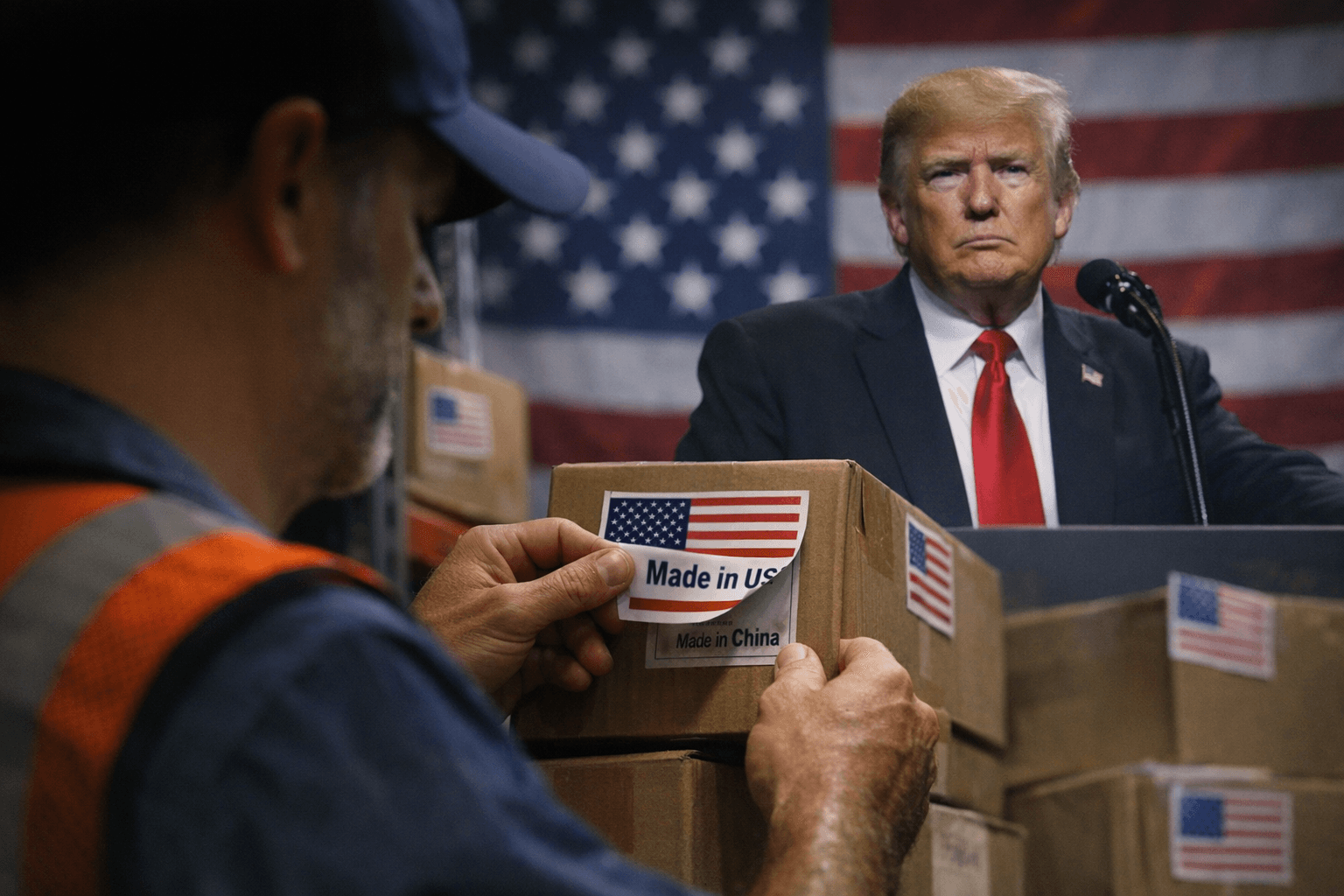
Slapping a "Made in USA" label on a product assembled overseas has long been a low-risk gamble for foreign manufacturers chasing patriotic American consumers. President Donald Trump's executive order signed March 13, titled "Ensuring Truthful Advertising of Products Claiming To Be Made in America," just changed the math on that bet.
The order directs the FTC chair to prioritize enforcement actions against deceptive origin claims, with the operative language leaving little room for ambiguity: "The Chairman of the Federal Trade Commission shall, wherever appropriate, prioritize enforcement actions in cases in which a seller's or manufacturer's claim that a product is 'Made in America' or 'Made in the U.S.A.', or any similar American-origin claims, constitutes a violation of law." The order frames the problem squarely: "Americans have a right to clear, accurate, substantiated, and accessible information regarding whether products advertised as 'Made in America' are actually made in the United States."
Critically, the executive order does not create new legal requirements. It reinforces the FTC's existing "all or virtually all" standard, which holds that a product must have all or virtually all of its content originate domestically to carry an unqualified "Made in USA" claim. What changes is the enforcement intensity, following what legal observers have characterized as a relative lull in public FTC case activity in recent years.
The order's most consequential new pressure point may be directed at online marketplaces. The FTC is instructed to consider issuing proposed regulations providing that a marketplace's failure to establish procedures for verifying third-party sellers' country-of-origin claims could constitute an unfair or deceptive act or practice under the FTC Act. The order does not define what those verification systems would need to look like, but failure to implement them could shift significant compliance exposure onto platforms. The FTC had already signaled where this was heading: ahead of the executive order, the agency contacted both Amazon and Walmart directly, urging stronger oversight of third-party seller origin claims.
The FTC's prior enforcement record offers some precedent. In July 2025, the agency designated a full month as "Made in the USA" Month and sent warning letters to four manufacturers regarding potentially deceptive origin claims. The executive order accelerates that trajectory into formal enforcement priority.
The directives extend beyond the FTC. All federal agencies with country-of-origin labeling oversight are instructed, in consultation with the FTC chair, to consider new regulations and ensure consistent guidance. Federal procurement agencies face tighter obligations as well: they must increase oversight of Buy American Act compliance and refer violations to the Department of Justice, which raises potential exposure under the False Claims Act for contractors who misrepresent product origin. The DOJ is already prosecuting two federal contractors who allegedly misrepresented the origins of forklifts sold to the U.S. government, a case that illustrates the real legal stakes of origin fraud in government contracting.
For brands, retailers, and online platforms that have leaned on "Made in USA" marketing without rigorous substantiation, the window to get compliant has narrowed considerably.
Know something we missed? Have a correction or additional information?
Submit a Tip
