Venice label Lido makes minimalist swimwear feel modern and sustainable
Lido turns swimwear's sustainability question into something chic: regenerated nylon, Venetian craft, and a stripped-back look that still flatters.

Lido is one of those labels that understands the modern swimwear brief: look clean, feel good, and justify the spend. The Venice-based brand has built its reputation on minimalist bikinis and one-pieces that read quietly luxurious, but the real appeal is how seriously it takes the idea of sustainable swimwear without making the clothes feel dutiful or plain.
A Venice story with actual substance
Founded in 2017 by Daria Stankiewicz, a Polish-born designer who now lives in Venice, Lido takes its name from Lido di Venezia, the 11-kilometer barrier island that serves as Venice’s official beach. That matters, because the label’s identity is not a borrowed aesthetic of Italian ease, but something anchored in place, water, and a very specific coastal way of dressing. Stankiewicz started the brand after years in fashion because she felt there was a gap for swimwear that was simple, lightweight, monochromatic and still desirable.
That instinct still defines the label. Lido remains an independent project run by a small team in the Venetian lagoon, and its pieces are designed and produced in Northern Italy by skilled artisans. In a market crowded with loud prints, logos, and overworked cutouts, that kind of restraint feels sharp rather than safe.
What the sustainability claim really means
The most important question with any swim label is not whether it uses the word sustainable, but whether the materials and construction can hold up once the marketing gloss fades. Lido’s answer begins with regenerated nylon, which gives the line a more responsible material story than standard virgin synthetics, and the brand says it uses as little plastic as possible. That is a meaningful position in swimwear, where stretch, recovery, and durability often depend on petroleum-based fibers, and where too many labels treat eco language as an accessory.
The good news is that the sustainability pitch is paired with local production. Ethical manufacturing in Northern Italy gives the brand a tighter supply chain and a craft narrative that feels more believable than a far-flung, fast-fashion version of resortwear. For shoppers, that combination matters: regenerated nylon can reduce the guilt, but local production and artisan construction are what help a bikini survive more than one summer.
Why the fit looks so current
Lido’s strongest selling point is that its clothes understand the body without over-explaining it. Retail descriptions highlight minimal, form-fitting shapes with scooped necklines, crossover straps and plunging backs, details that make the line feel sleek rather than stark. The pieces are made in fast-drying technical fabrics, which is exactly what you want from swimwear that has to move from sea to chair to lunch without losing shape or looking soggy.
The standout styles named by WWD, the Venti triangle bikini, the Tre one-piece and the Trentasei one-piece, show how the brand balances simplicity with enough design tension to stay memorable. A triangle bikini can disappear into the category of basics if it is not cut well. Lido’s version, along with its one-pieces, seems to rely on proportion and line rather than ornament, which is often what makes minimalist swimwear feel expensive instead of empty.
Minimal branding is doing real work here
Lido’s visual identity started in monochrome, and that original restraint still helps the brand stand apart. Swimwear is one of the most overdesigned corners of fashion, full of neon, hardware, jangling straps, and branding that tries too hard to announce itself. Lido’s low-volume approach lets the silhouette do the talking, and that is exactly why it feels modern rather than severe.
The brand has since expanded beyond its original monochrome palette into gradient prints and jacquards, which is smart evolution rather than dilution. Those additions bring texture and depth without breaking the label’s clean line. It is a useful reminder that minimalism does not have to mean sameness, especially in swimwear, where a little surface interest can keep a collection from sliding into uniformity.
From niche project to global stocklist
Lido has moved well beyond the intimate scale of an early Venice label. It is now stocked by Net-a-Porter, Farfetch and Elyse Walker, a retail mix that tells you the brand has found an audience among shoppers who want swimwear that feels polished and intentional. The collaborations have widened its reach too, including projects with Lié Studio and Venezia Football Club.
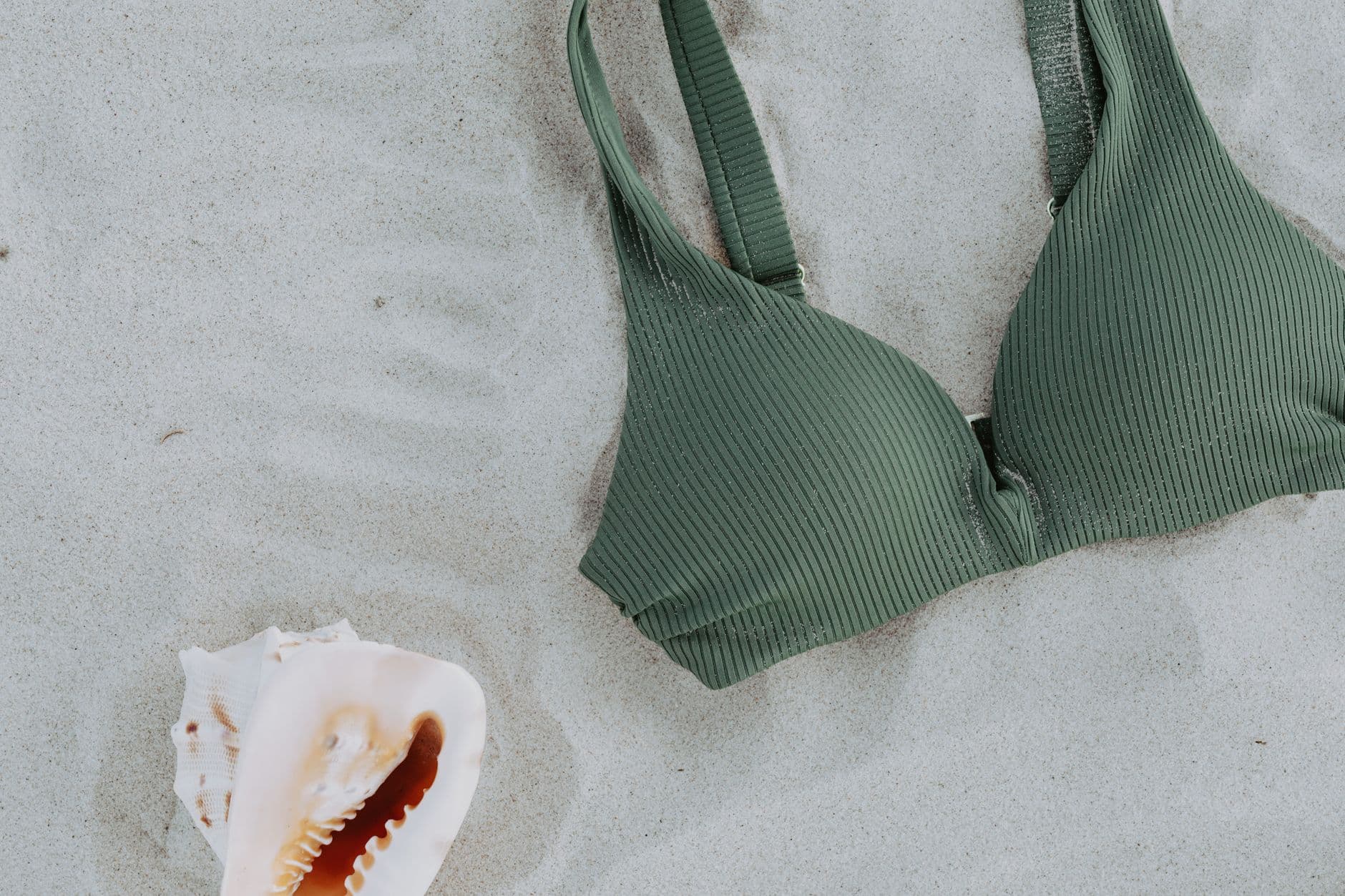
That breadth matters because it shows the brand is not surviving only on a single aesthetic mood. Lido can sit comfortably next to fashion jewelry and a football club, which says something about the flexibility of its language. The brand is specific enough to be recognizable and restrained enough to travel.
The price point and the appeal
WWD reports that Lido’s bikinis start at $150 and its coverups are around $400. That places the label firmly in the premium swimwear space, but not in the rarefied territory where price is inflated by novelty alone. A $150 bikini is not cheap, yet it is competitive for a brand offering regenerated nylon, local production, and a cut that looks designed rather than mass-produced. The $400 coverup pushes higher, but the value proposition is clearer when you factor in craft, fabric performance, and the kind of polished finish that can make one piece work across multiple trips.
The brand’s appeal is not just that it is sustainable, or Italian, or minimal. It is that those ideas have been edited into a coherent point of view. Lido makes the case that swimwear can be responsible, sexy, and easy to wear at the same time, which is still rarer than it should be. In a saturated market, that balance is exactly what makes it worth noticing now.
This article was produced by Prism’s automated news system from verified source data, official records, and press releases, then run through automated quality and moderation checks before publishing. The system is built and supervised by the people who set the standards it runs under. Read our full AI policy.
Did this article answer your question?


