Vintage athleticwear drives resale boom as shoppers hunt secondhand sportswear
Secondhand sportswear is moving mainstream fast, with ThredUp projecting a $393 billion global market by 2030 and brand-backed resale easing the trust gap.

Sports bras, leggings and running shorts are becoming the practical buy in resale, saving money, cutting waste and still looking sharp enough for Pilates, brunch or the airport.
ThredUp projects the global market will reach $393 billion by 2030, equal to roughly 10% of total apparel spend.
Why secondhand sportswear is taking off
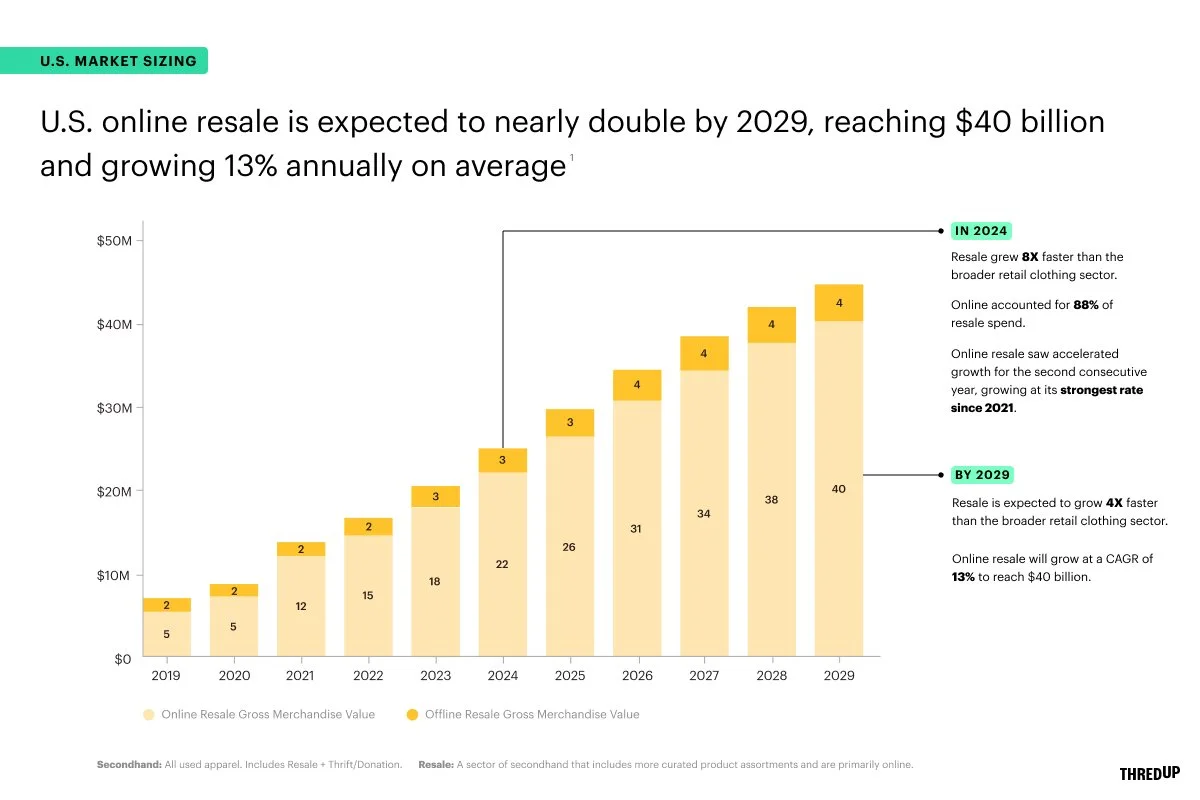
ThredUp estimates U.S. secondhand sales grew nearly 4x faster than the broader retail clothing market in 2025. The category is getting pulled forward by shoppers who want performance-adjacent pieces, not just pretty old clothes.
You can see that appetite in the specific items people are hunting down: sports bras, leggings and running shorts. Those pieces sit right in the zone where value and utility meet, because one good pair of leggings or a supportive bra can get worn constantly, and worn hard, without feeling disposable.
The feed is replacing the fitting room
ThredUp projects 71% of all market growth through 2030 will come from Gen Z and Millennials. Younger shoppers are not treating resale as a compromise; they are treating it as the default way to find things with a story, a lower price and a smaller footprint.
ThredUp says nearly 50% of shoppers now discover secondhand finds through social media, creators and influencer feeds rather than traditional search. A pair of technical leggings can now travel through a TikTok or Instagram feed the way a sneaker release used to move through hype culture, and that visibility is making resale feel current instead of cautious.
Online resale made the category bigger, faster
Secondhand fashion has existed for decades in thrift and vintage stores, but online resale platforms changed the pace entirely. Since 2019, the digital market has seen at least 13 new resale entrants, 6 resale-as-a-service launches and 14 major brand partnerships.
For sportswear, that makes the search far less random. Instead of digging through a single rack and hoping for a miracle, shoppers can move through platform filters, brand-run buyback systems and dedicated resale assortments until they find the right rise, inseam, compression level or colorway. Depop and eBay helped normalize that behavior early; now the whole market is organized around it.
Lululemon made resale feel less fringe
Lululemon launched Like New, its first trade-in and resale program, in 2021. The program expanded nationwide on Earth Day, April 22, 2022, after a two-state pilot in California and Texas, and shoppers could trade in gently used apparel and bags for gift cards.
Brand-backed trade-in programs make secondhand feel cleaner, more controlled and easier to trust than a random listing with no story behind it. Lululemon says profits from Like New support its Impact Agenda, including a 2030 goal of using 100% sustainable raw materials and end-of-use solutions, but environmental campaigners have still pressed the brand on supply-chain emissions and fossil fuels.
How to buy secondhand sportswear without getting burned
The trust issue is real. A sports bra with dead elastic, leggings with stretched knees or running shorts with a tired liner can turn a bargain into clutter fast. Hygiene matters too, especially with close-to-skin pieces, so the smartest buys are the ones where condition is obvious and the construction is still intact.
- Check waistband snapback on leggings and shorts
- Look for loosened elastic under the bust and around the rib cage
- Inspect inner thighs, gussets and seams for thinning or puckering
- Watch for odor, staining and pilling on brushed performance fabrics
- Favor pieces with clear photos of tags, lining and stitching
Start with the stress points:
Brand trade-in programs help because they reduce the mystery around provenance, and that is part of why resale is moving from fringe to routine. When the seller has already filtered, cleaned or graded the item, the category becomes much easier to shop for the things that touch skin and move with the body.
Why the timing is right
Price hikes, economic uncertainty and microtrend fatigue are driving the current resale momentum. Shoppers are less interested in buying a new workout set for one weekend post and more interested in pieces that will survive repeated wear, wash cycles and a real schedule.
This article was produced by Prism’s automated news system from verified source data, official records, and press releases, then run through automated quality and moderation checks before publishing. The system is built and supervised by the people who set the standards it runs under. Read our full AI policy.
Did this article answer your question?


