Vogue India Spotlights London Craft Week’s Venetian Beads Reimagined in Rajasthan
A beaded craft reset: Venetian glass, rerouted through Rajasthan, is back as jewelry with memory, not just sparkle.
A reset, not a replay
London Craft Week is using a small object to make a big argument. At Unbound By Beads, on view at The Lavery from 13 to 16 May 2026, Venetian glass beads are not treated like pretty relics. They are being recast as a living fashion language, one that runs through western India and pushes jewelry away from simple ornament and toward cultural memory. The festival itself stretches across 11 to 17 May and, by one count, gathers around 1,000 makers across 150 venues, which tells you this is not a niche side show. It is the kind of platform where craft starts acting like trend forecasting.
What the bead route really means
The core of the story is movement. Glass beads once traveled out of Arikamedu in Tamil Nadu for roughly 1,500 years, moved through Muziris near Kochi, and later lost ground to Venice before tracing new routes back through trade, migration, and regional craft systems. Another thread brought beadwork traditions into Rajasthan and Gujarat with migrant pastoral communities from West Asia, and by the 17th century brides in Kutch and Kathiawar were making entire wedding trousseaus out of glass beads. That history matters because it shows beads as a global material with local accents, not as a static “Indian” or “European” object.
Moi, the fine jewelry brand behind Unbound By Beads, is leaning straight into that complexity. The project is research-led, and its final output is The Jaipur Collectibles, a capsule of editioned works that rework beadwork’s structure inside contemporary gold and silver frameworks. The point is not nostalgia. It is a shift in value, where beadwork is placed back into the jewelry lexicon as a serious design system, with grids, repetition, and handmade precision doing the heavy lifting instead of surface sparkle alone.
Why this crossover feels right now
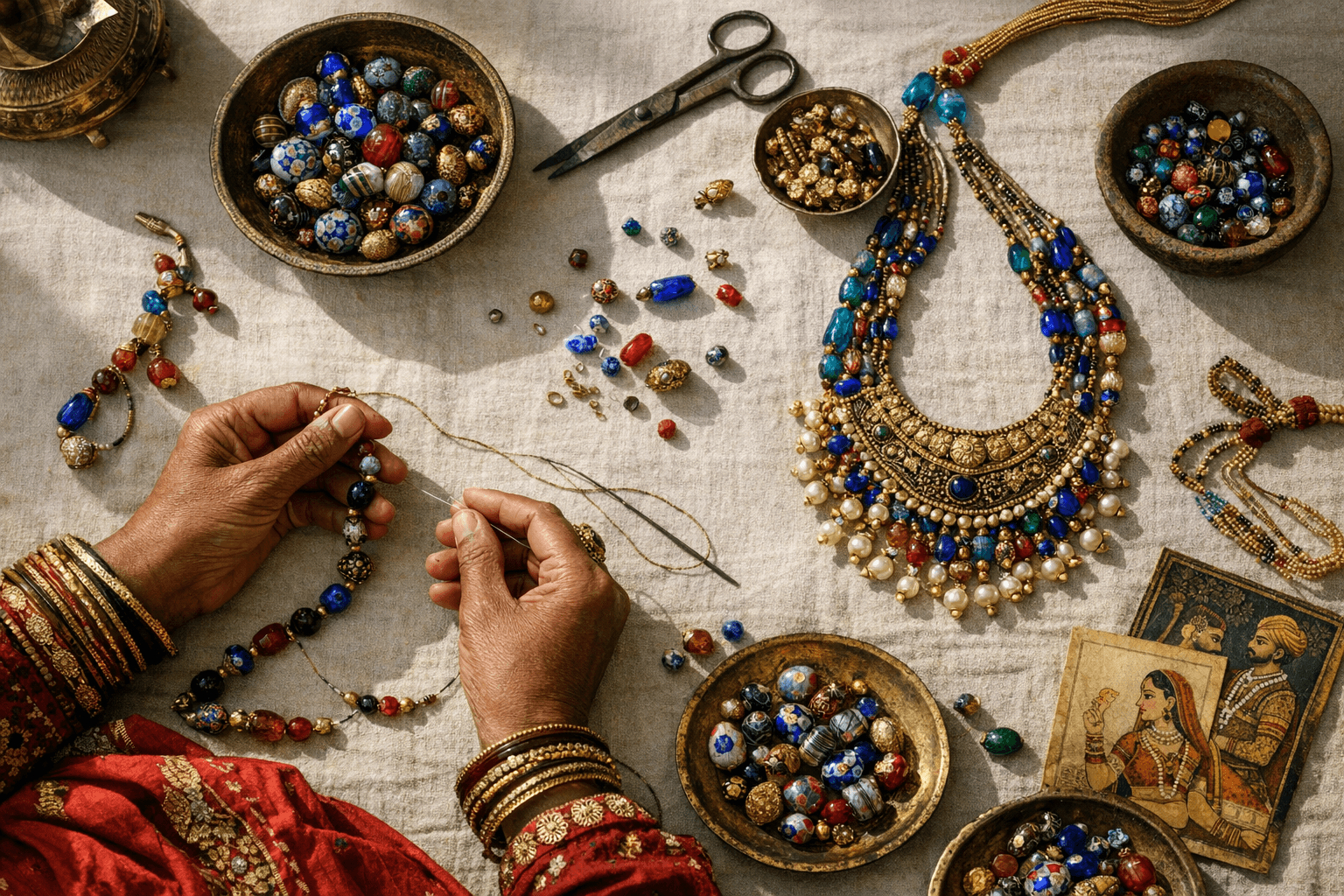
Fashion and jewelry have been circling this exact mood for a while: craft with receipts, not craft as costume. What makes the Venetian-to-Rajasthan route feel current is the way it turns beads into architecture. In the project text, the beads become vessels of memory, arranged into structured grids and embroidered forms, which is a much sharper proposition than the usual “handcrafted” label slapped onto luxury. That language is already visible in the broader market appetite for pieces that feel built, collectible, and emotionally coded rather than merely decorative.
The design cues here are worth watching because they are the ones most likely to keep circulating. Expect more of the tight grid layout, the embroidered surface, the mixed-metal frame, and the editioned object that reads like a wearable archive. The best part is that these elements do not flatten into one aesthetic. They hold tension between restraint and opulence, between a pastoral craft logic and the polish of contemporary luxury. That is exactly the kind of contradiction fashion keeps returning to when it wants depth without losing glamour.
Where exchange ends and appropriation begins
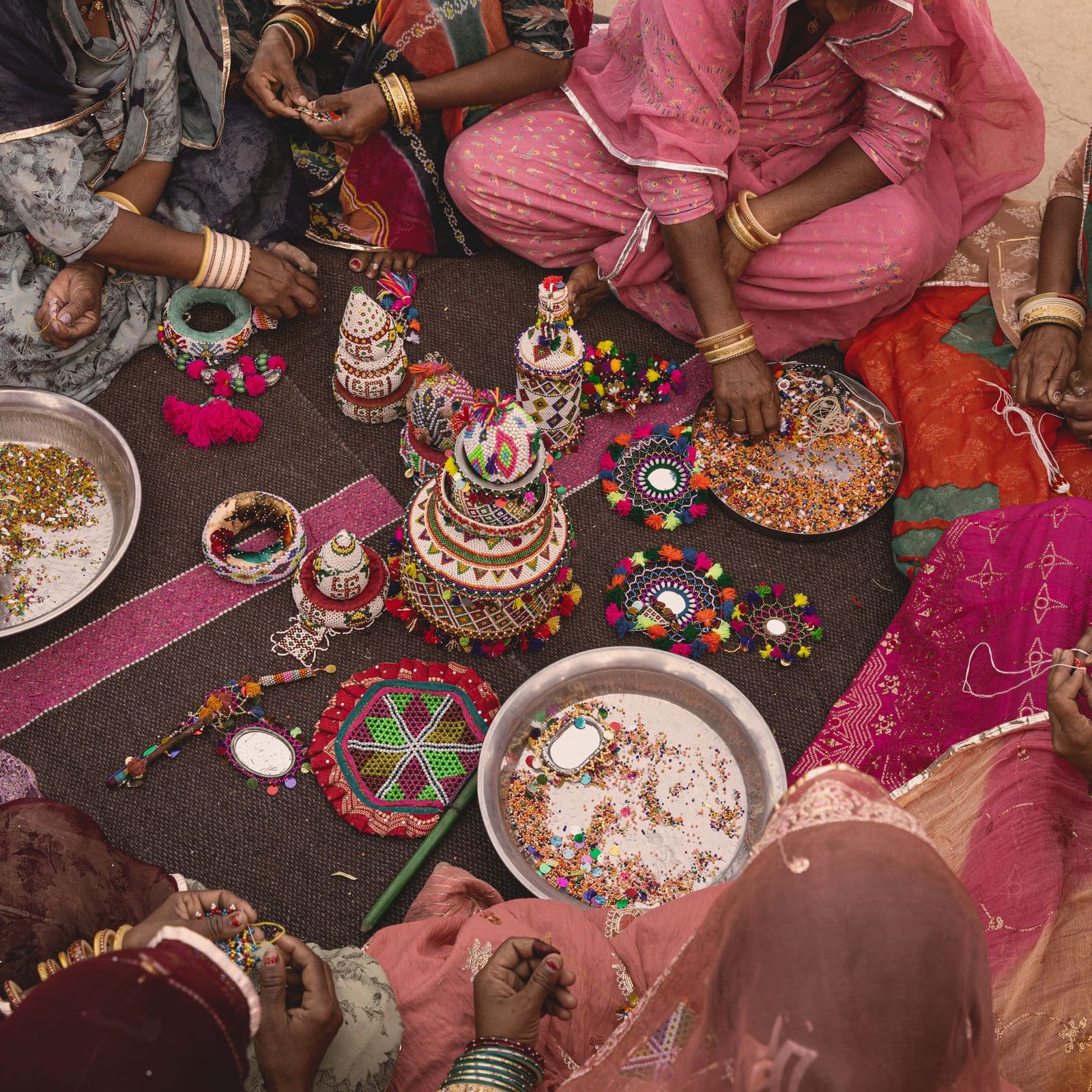
This is also where the conversation gets more serious. Unbound By Beads centers the Meghwal community of Barmer, historically land-poor and socially marginalised, and treats beadwork as a portable home carried through movement, scarcity, and resilience. It also unfolds in collaboration with the PDKF Artisan Collective, championed by Princess Gauravi Kumari of Jaipur, with an emphasis on documenting living craft clusters and supporting women artisans through education and craft-based livelihoods. That is the difference between a borrowed motif and a living practice: the people who hold the skill are in the room, not mined from the sidelines.
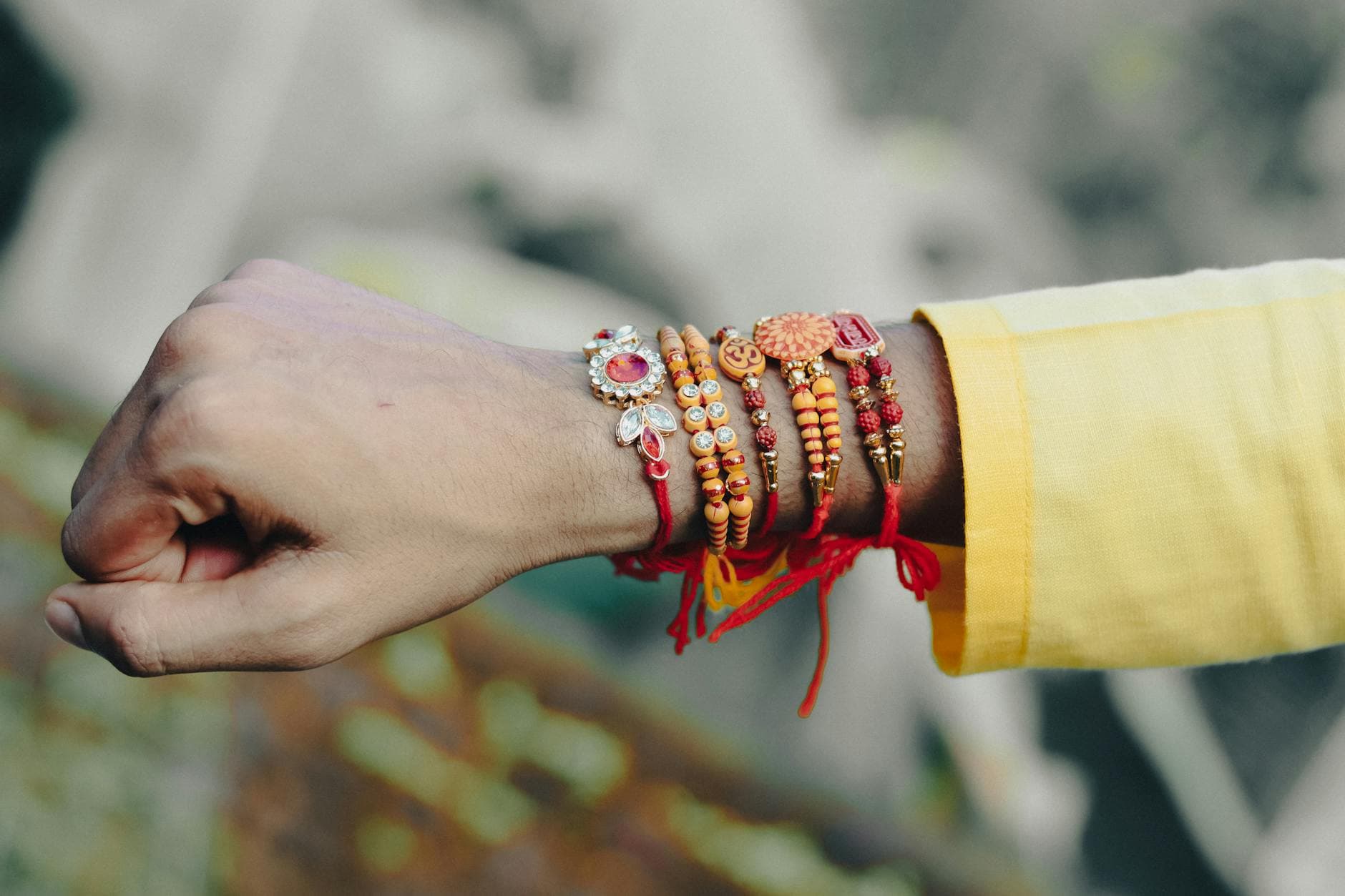
That distinction is the line the fashion world keeps trying to redraw. Cross-cultural design becomes exchange when it acknowledges where the material came from, who preserved it, and who benefits when it is recirculated. It slips into appropriation when the aesthetic is extracted from the community and stripped of context, leaving only the look. This project works because it keeps the handwork, the history, and the contemporary jewelry object in the same frame.
What to read in the jewelry now
Read the beads as more than embellishment. Read them as a system of line, repetition, and memory that can move from bridal trousseau to collector-grade jewelry without losing meaning. Read the gold and silver settings as a way of giving the beadwork a harder, more architectural edge. And read the whole project as a sign that craft heritage is no longer being positioned as a soft-trend detour. It is becoming one of fashion’s clearest ways to talk about provenance, identity, and luxury with a backbone.
The bigger takeaway is simple: Venetian glass beads, filtered through Rajasthan, are not back because fashion suddenly discovered craft. They are back because craft now carries the kind of specificity the market wants and the kind of meaning style can still use. That is a rare overlap, and it is exactly why this bead story has legs.
This article was produced by Prism’s automated news system from verified source data, official records, and press releases, then run through automated quality and moderation checks before publishing. The system is built and supervised by the people who set the standards it runs under. Read our full AI policy.
Did this article answer your question?


